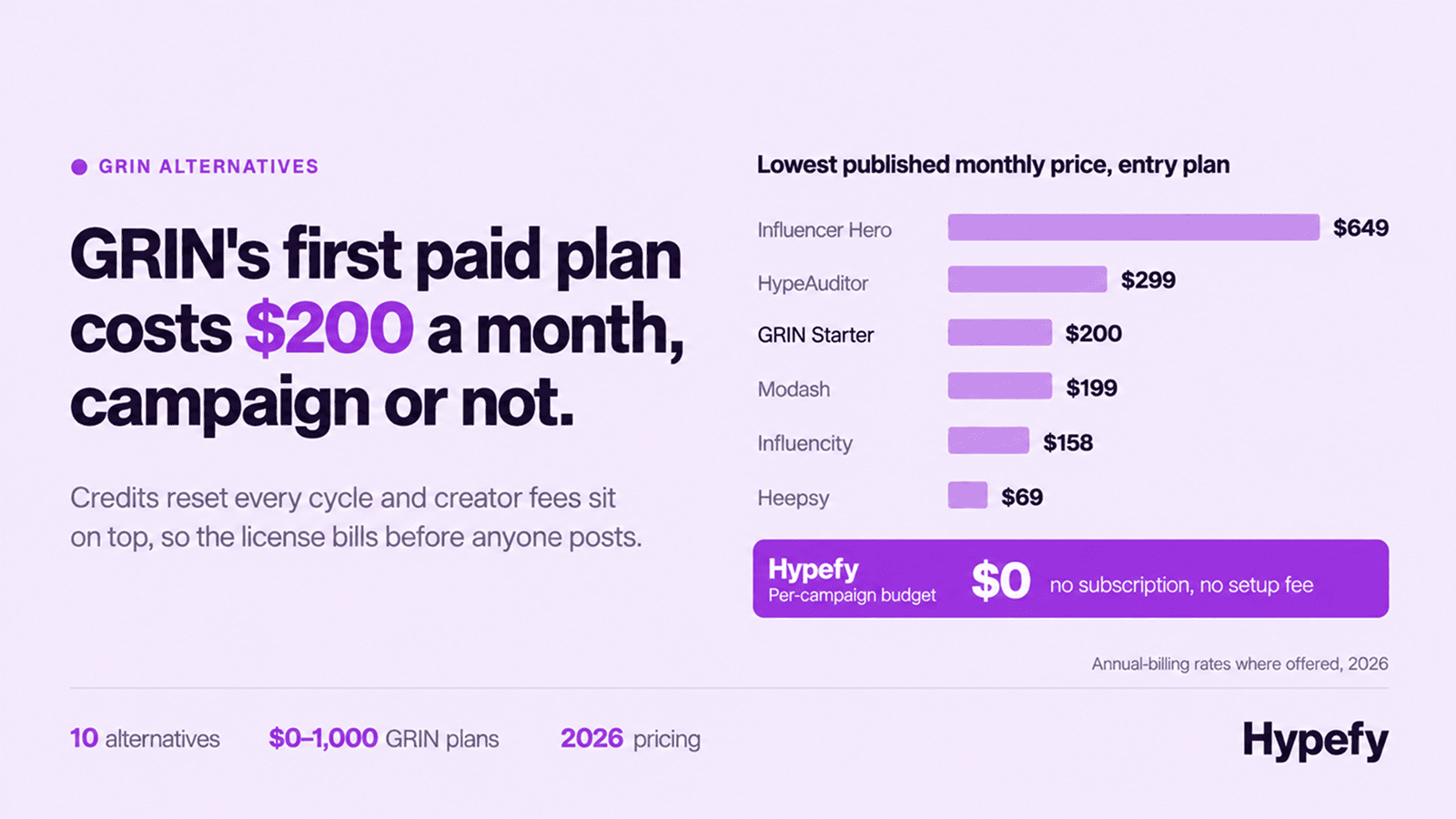
The best GRIN alternatives in 2026 are Influencer Hero, Modash, Hypefy, Influencity, Heepsy, Upfluence, Aspire, CreatorIQ, HypeAuditor, and Collabstr.
Each suits a different team, from brands that want cheaper discovery software to brands with nobody in-house to run campaigns.
GRIN is a creator management platform for eCommerce brands, built around gifting, affiliate links, and a creator relationship database. Some of the alternatives below are software you run yourself, and others take the work off your team.
What GRIN Costs in 2026
GRIN's four published plans run from $0 to $1,000 a month, all billed month-to-month. Plans are priced by credits, the units that measure how much work Gia, GRIN's AI assistant, does for you.
Each plan's price, credits, and added features are listed here as they appear on GRIN's pricing page in October 2026.
Plan | Monthly Price | Gia Credits per Month | What the Plan Adds |
|---|---|---|---|
Free | $0 | 50 | Creator CRM, affiliate links and codes, sales tracking |
Starter | $200 | 2,000 | Gia's Desk, which automates day-to-day creator operations, and customizable dashboards |
Growth | $500 | 7,500 | Multiple brands, multiple currencies, paid boosting |
Scale | $1,000 | 20,000 | Growth features with a larger credit allowance |
Three parts of GRIN's pricing model shape the bill.
Credits meter Gia's work instead of seats, so the bill follows how much she does. Sending outreach counts as light work, while running reports, gifting workflows, and campaign setup use more credits.
Included credits reset each billing cycle and don't roll over. Paid plans can buy more when the bundle runs out, which the Free plan doesn't allow.
The plan price covers the software, so creator fees and the product you ship sit on top. GRIN doesn't charge for every tracked affiliate sale, though creating a commission payment for one uses credits.
Any paid GRIN plan is a fixed monthly cost that starts before a single campaign goes live, so hold that number against every alternative below.
5 Reasons Brands Look for a GRIN Alternative
The five reasons below are practical ones, and each depends on how your team is set up and how often you run campaigns:
GRIN is software your team operates, so someone in-house still runs the program. Gia prepares and speeds up sourcing and outreach, but your team approves the messages, the money, and the contracts.
Working across several brands or currencies starts on Growth at $500 a month, more than double the $200 Starter price. Plan for the Growth price if your program runs in more than one market.
A busy launch month can use up your credits early, because reports, gifting workflows, and campaign setup all count as heavy work. Estimate how many credits a big campaign will need before it starts, so extra purchases don't catch you off guard.
Capterra reviewers describe a learning curve at the start, so allow time for setup before you expect results. Many of them also praise how quickly GRIN's support team responds.
Gifting, affiliate codes, and a creator database are most useful when you work with the same creators month after month, so GRIN suits always-on programs best. If you run only one or two campaigns a year, you'd need to upgrade and downgrade around each one to avoid paying through the quiet months.
If you want to pay only when campaigns run, see how Hypefy's campaign-based model works.
The 10 Best GRIN Alternatives at a Glance
Here's how the 10 GRIN competitors compare on price, contract, and the networks they cover.
Platform | What It Is | Pricing Model | Contract | Platforms Covered | Best For |
|---|---|---|---|---|---|
Influencer Hero | All-in-one influencer marketing software | From $649/month | Three-month minimum | Instagram, TikTok, YouTube | eCommerce brands wanting discovery to payout in one platform |
Modash | Discovery and program software | From $199/month billed annually, or $299 monthly | Monthly or annual | Instagram, TikTok, YouTube | Shopify brands running programs in-house |
Hypefy | Done-for-you campaign platform | Campaign budget from €2,500, no subscription | None, per campaign | Instagram, TikTok | Teams without campaign managers |
Influencity | All-in-one influencer software | From $158/month billed annually, or $198 monthly | Monthly or annual | Instagram, TikTok, YouTube | Agencies managing several clients |
Heepsy | Discovery database and marketplace | Free plan; from $69/month billed annually | Monthly or annual | Instagram, TikTok, YouTube, LinkedIn | Small teams on a tight budget |
Upfluence | eCommerce influencer suite | Not published | 12-month minimum | Instagram, TikTok, YouTube and more | Shopify and affiliate-heavy brands |
Aspire | Ambassador and affiliate platform | Not published | Set in the sales process | Instagram, TikTok, YouTube, Pinterest | Brand communities and ambassadors |
CreatorIQ | Enterprise creator platform | Not published | Set in the sales process | Instagram, TikTok, YouTube, Facebook, Snapchat | Global enterprise teams |
HypeAuditor | Analytics and vetting platform | From $299/month billed annually | Annual | Instagram, TikTok, YouTube, X, Twitch | Audience and fraud checks |
Collabstr | Creator marketplace | Free to join; 10% fee per order | None on Free | Instagram, TikTok, YouTube and more | One-off UGC purchases |
The 10 Alternatives to Grin, One by One
Influencer Hero comes first as the closest all-in-one replacement for GRIN.
The other nine appear in order of how well they solve GRIN's two main problems, the fixed software cost and the work that still falls on your team.
1. Influencer Hero
Influencer Hero is all-in-one influencer marketing software that puts creator discovery, outreach, campaign management, and payouts in one system for eCommerce brands, direct-to-consumer teams, and agencies.
Good for: eCommerce brands running gifting, affiliate, and ambassador programs together that want one platform to manage all three.
Limitations: Plans start at $649 a month, more than GRIN's Starter and Growth plans, and smaller teams may find that high for occasional campaigns.
Pricing: Plans start at $649 a month with a three-month minimum, and consultation and training are included.
What it does well: Discovery covers more than 450 million creators across Instagram, TikTok, and YouTube, and a Chrome extension shows fake follower percentage and earned media value (EMV) on any creator’s profile. AI-personalized email sequences average a 43% response rate, and Campaign Board automations handle Shopify gifting, affiliate links, and DocuSign contracts as each creator moves through the campaign. Its 45+ integrations, including Shopify and Klaviyo, track clicks and sales per creator.
2. Modash
Modash is influencer software for discovery, outreach, and content tracking, with a native Shopify integration and creator payments on its higher plan.
Good for: eCommerce brands that want GRIN-style program tools at a lower, published price.
Limitations: Every plan comes with usage caps, and on Essentials two team members share 300 opened profiles and 150 email unlocks a month, plus 100 tracked creators. Your team also still runs every campaign itself.
Pricing: Essentials costs $199 a month billed annually ($2,388 a year), or $299 billed monthly. Performance costs $499 a month billed annually or $599 monthly, and both plans come with a 14-day free trial.
What it does well: Discovery covers public profiles on Instagram, TikTok, and YouTube. For Shopify stores, gifting, discount codes, and sales tracking are handled in the same tool, and monthly billing lets you leave without an annual contract.
See our full list of Modash alternatives.
3. Hypefy
Hypefy is an influencer marketing platform that matches Instagram and TikTok creators to your audience and then runs the campaign.
Good for: brands with nobody in-house to find, brief, and chase creators.
Limitations: Coverage is Instagram and TikTok only, campaigns typically start from a €2,500 budget, and Hypefy doesn't manage always-on affiliate or ambassador programs the way GRIN does.
Pricing: You set a campaign budget, invoiced once at launch. There's no subscription or setup fee, and nothing is charged if a campaign never goes live.
What it does well: Hypefy's platform, with a team behind the workflow, handles matching, outreach, contracts, content review, payments, and reporting. You approve the creators, the brief, and the final content.
4. Influencity
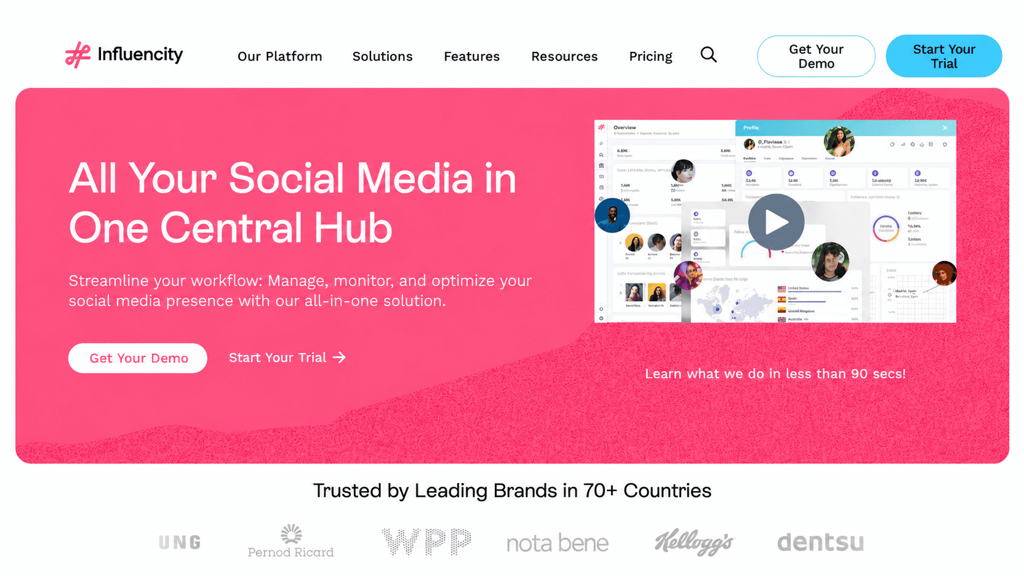
Influencity is an all-in-one influencer platform covering discovery, relationship management, campaigns, and reporting.
Good for: agencies managing several clients and brands that want one tool for the whole workflow.
Limitations: The usage caps are lower if you pay monthly. On monthly billing, Discover gives one user 2,500 discovery results a month, and Shopify sales tracking only comes with the Business plan.
Pricing: Discover costs $158 a month billed annually, or $198 billed monthly. Professional is $318 ($398 monthly), and Business is $1,118 ($1,398 monthly), while Enterprise is quoted on request. Every plan comes with a 7-day free trial.
What it does well: Search, audience-quality checks, outreach emails, and campaign reports all live under one login.
See our full list of Influencity alternatives.
5. Heepsy
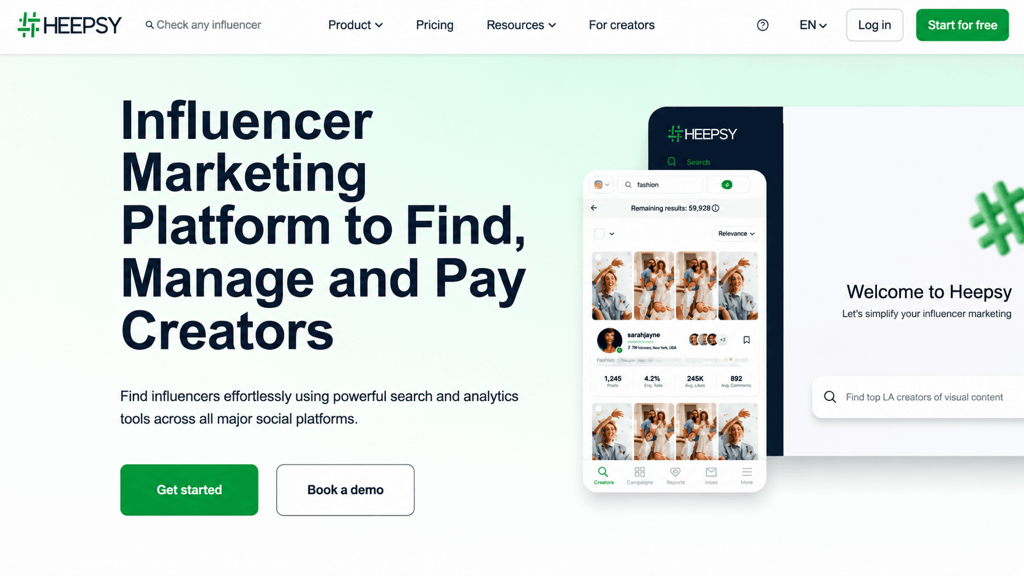
Heepsy is an influencer discovery platform with a searchable database of Instagram, TikTok, YouTube, and LinkedIn creators, plus a marketplace where creators apply to your campaigns.
Good for: small teams that want audience data on a tight budget.
Limitations: Monthly caps on advanced profiles (100 on Starter) limit how widely you can vet, and creator payments only start on the Plus plan.
Pricing: Heepsy has a free plan, and paid plans billed annually cost $69 a month for Starter, $149 for Plus, and $229 for Advanced. Paying monthly raises those prices to $89, $199, and $299.
What it does well: Advanced profiles show where a creator's audience lives, how old it is, and what it's interested in, and they flag suspicious followers. On Plus, Heepsy also holds creator payments until the work is delivered.
6. Upfluence
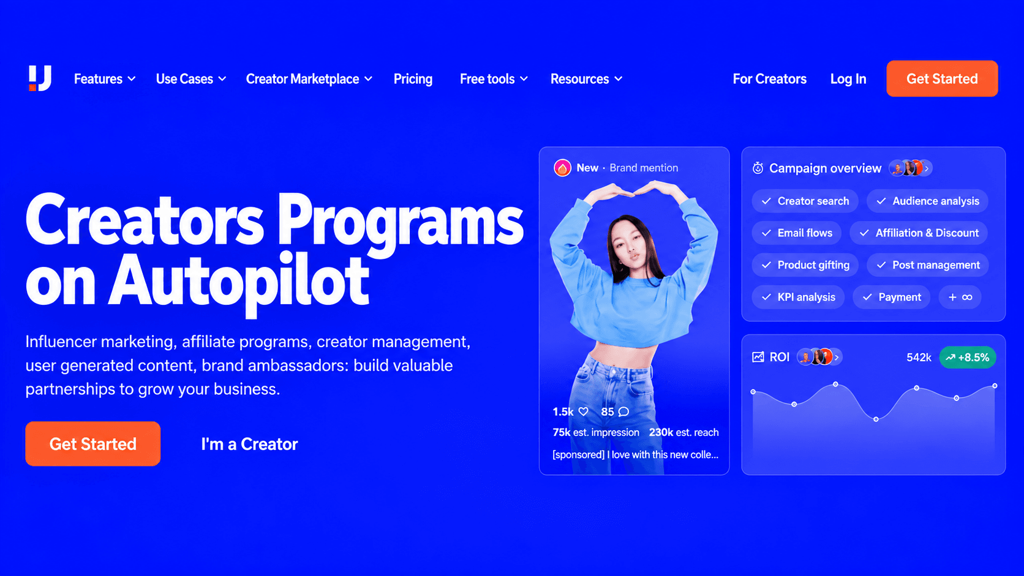
Upfluence is an eCommerce influencer and affiliate suite that can find creators among your existing customers through Shopify and other store integrations.
Good for: Shopify brands where affiliate sales matter most.
Limitations: The contract is the biggest difference in a GRIN vs Upfluence comparison. Upfluence asks for a 12-month minimum while GRIN bills month-to-month, and its prices aren't public.
Pricing: Upfluence quotes custom pricing built from three modules, and every plan is a fixed platform fee with no percentage of sales.
What it does well: Affiliate links, discount codes, and creator payments are managed in the same platform as discovery, and every plan comes with a dedicated account manager.
See our full list of Upfluence alternatives.
7. Aspire
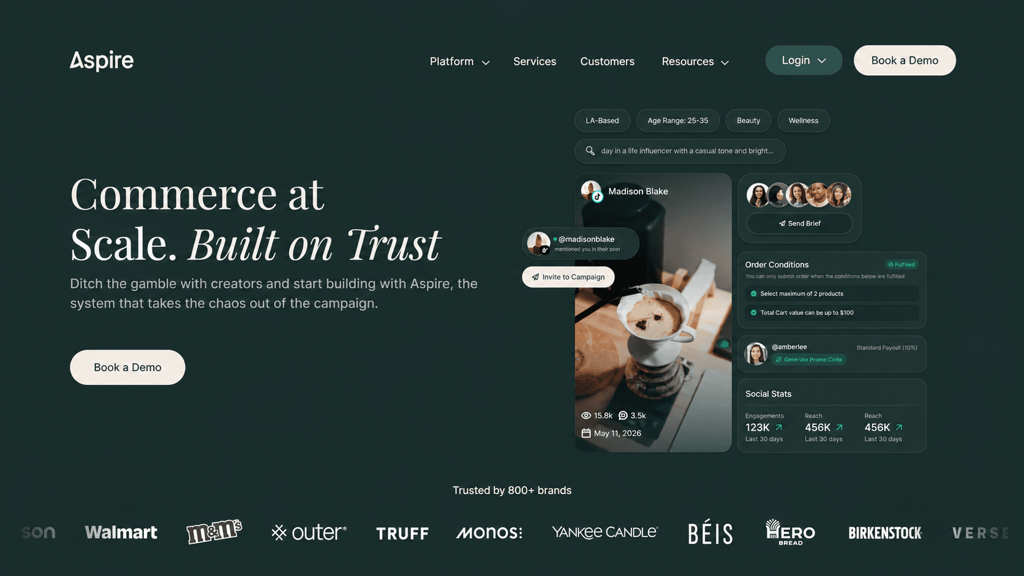
Aspire is a platform for ambassador, affiliate, and influencer programs, with a creator marketplace and Shopify and Klaviyo integrations.
Good for: brands building long-term creator communities.
Limitations: There's no self-serve signup, so in a GRIN vs Aspire comparison, GRIN is the only one you can try before talking to sales.
Pricing: Aspire doesn't publish plans or prices, and access starts with a demo.
What it does well: Creators apply to your campaigns through Aspire's marketplace. Once they're in, product seeding, affiliate tracking, and content collection are handled in one workspace built for long-term relationships.
See our full list of Aspire alternatives.
8. CreatorIQ
CreatorIQ is an enterprise creator marketing platform that says it works with more than 1,300 brands and agencies.
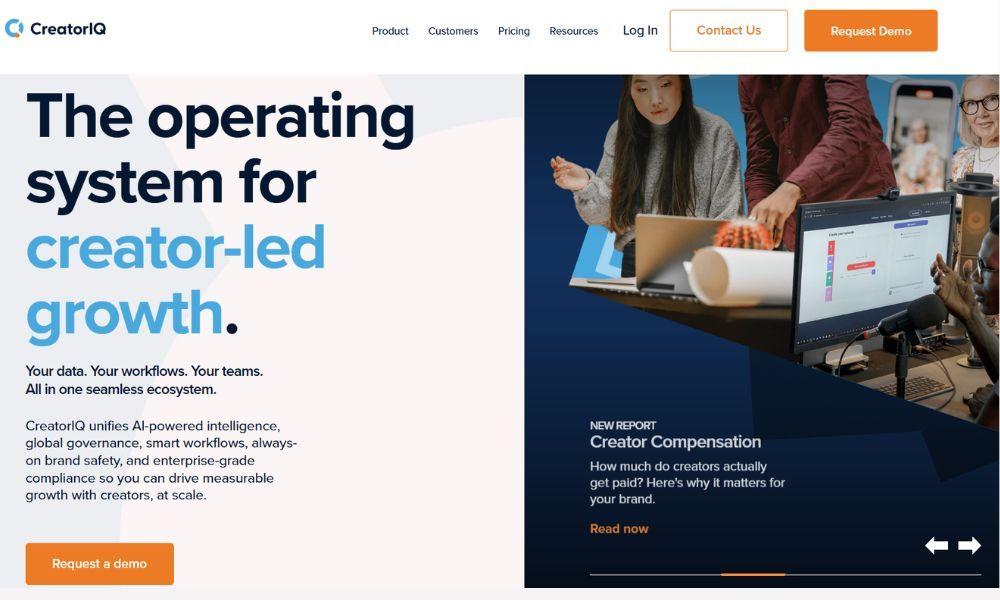
Good for: large teams running programs across many markets with strict governance needs.
Limitations: You can't try CreatorIQ before a sales call, which rules it out for teams that want to test software first.
Pricing: Not published. CreatorIQ quotes a price after a call with its sales team.
What it does well: CreatorIQ handles discovery, campaign management, creator payments, brand safety checks, and measurement in one system. It also connects to tools large marketing teams already use, including Shopify and Google Analytics.
See our full list of CreatorIQ alternatives.
9. HypeAuditor
HypeAuditor is an influencer analytics platform known for audience-quality scoring and fraud detection, with discovery and campaign tools on top.
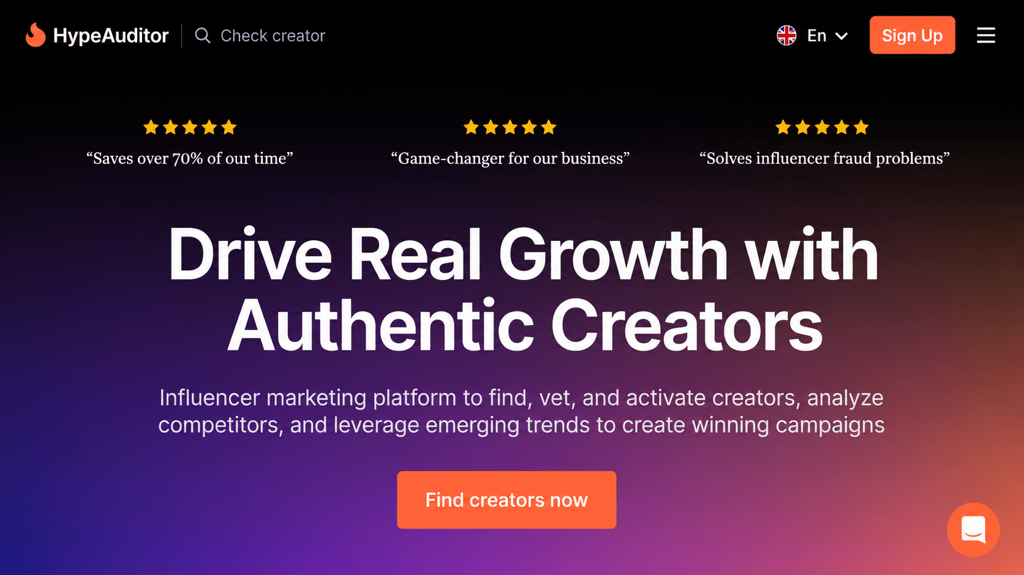
Good for: teams whose main worry is fake followers and audience fit.
Limitations: The Basic plan limits discovery filters and leaves out AI search and lookalike search, so deeper searches need a higher tier.
Pricing: The Basic plan starts at $299 a month, billed annually, and HypeAuditor's best rates come with two-year agreements.
What it does well: Reports break down audience quality, demographics, and engagement for Instagram, TikTok, YouTube, X, and Twitch creators before you commit to a budget.
See our full list of HypeAuditor alternatives.
10. Collabstr
Collabstr is a creator marketplace where vetted creators list fixed-price packages, and brands buy directly.
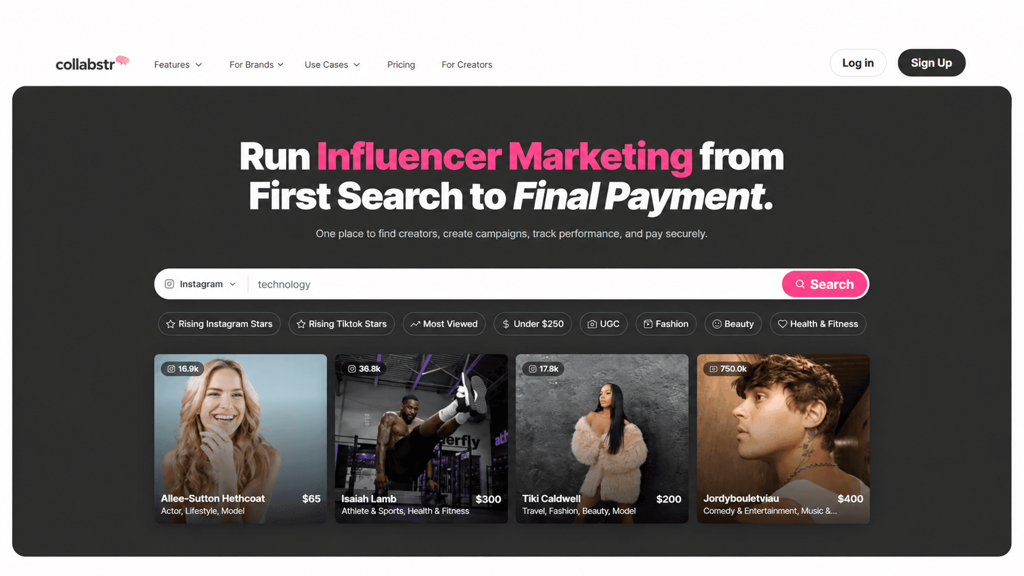
Good for: brands buying one or two pieces of user-generated content (UGC) without a software commitment.
Limitations: Collabstr is a place to buy content, so the campaign work stays with you. You can also only choose from creators who've listed themselves.
Pricing: Collabstr is free to join with a 10% fee per order, and Pro and Premium cost $249 and $333 a month, billed annually.
What it does well: Payment sits in escrow until you approve the content, and profiles show audience demographics before you buy.
See our full list of Collabstr alternatives.
The Best GRIN Alternative for Small Teams
The best GRIN alternative for a small team depends on whether anyone has time to run campaigns.
If someone does, Heepsy or Modash gives you the tools at a low monthly price, and if nobody does, Hypefy runs the campaign for you.
None of the cheaper options ask for an annual contract, since Modash, Heepsy, and Influencity all bill monthly, Collabstr charges per order, and Hypefy charges per campaign with no subscription.
Other options stop making sense below a certain budget.
Upfluence, Aspire, and CreatorIQ don't publish prices, which makes them hard to plan for when you spend a few thousand a year on creators. Upfluence also asks for a 12-month minimum.
For a one-off video, Collabstr is the better fit, while Hypefy runs full campaigns that average around €2,500.
A cheaper license still leaves the work with your team. Modash Essentials costs $299 a month on monthly billing and includes 300 opened profiles and 150 email unlocks.
Someone has to vet and pitch each of those creators and manage the deal through to delivery, so put a price on that time before comparing licenses.
The German delivery brand burgerme ran five campaigns in five months with 19 creators and 48 pieces of content. Its social media manager wrote the briefs and confirmed the creators, while Hypefy handled matching, price negotiations, communication, and content approval.
If nobody on your team has time to run campaigns, choose a platform that runs them, which on Instagram and TikTok means Hypefy. For other networks, you'll still need a person in-house working with one of the software options above.
If you're deciding between running campaigns in-house and handing them off, read the influencer marketing agency vs platform guide.
What GRIN Users Say in Reviews
GRIN's reviews on G2 and Capterra point to a few consistent strengths and weak spots.
What GRIN users praise. G2's review summary highlights GRIN's all-in-one setup and helpful support team.
What GRIN users flag. G2 reviewers mention bugs, slow loading, and reporting gaps, while Capterra reviewers describe a learning curve and trouble connecting creators' Instagram accounts.
Brands leaving for cheaper discovery tend to land on Modash or Heepsy, which comparison roundups consistently name for published pricing and audience data.
Brands leaving for enterprise scale move toward CreatorIQ, while affiliate-first brands look at Aspire and Upfluence.
How to Pick the Right GRIN Alternative
Answer these five questions in order, and stop at the first one that settles it.
Is there someone to run campaigns? If not, choose Hypefy for Instagram and TikTok.
How many markets are involved? For a handful of European markets on Instagram and TikTok, choose Hypefy, which Argeta used to run 21 campaigns across 14 markets. For a global program, choose CreatorIQ.
Is the budget per campaign or annual? For per-campaign spend, choose Hypefy. For a fixed annual software budget, choose Modash or Influencity.
Do you need networks beyond Instagram and TikTok? For YouTube, choose Modash. For a wider spread that includes X and Twitch, choose HypeAuditor.
Is the work ambassador and affiliate management? Choose Aspire or Upfluence, or stay on GRIN, which is built for exactly this. If you want gifting, affiliate, and ambassador programs in one platform with a 450M+ creator database built in, choose Influencer Hero.
Switching From GRIN Checklist:
Export your data before you cancel, including:
the creator list with contact details and agreed rates
signed contracts and usage-rights terms
content files
affiliate links and codes
past campaign reports
Tell active creators you're moving, and keep old affiliate codes live until each creator has a new one.
Check your notice terms before you set a date. Current GRIN influencer marketing plans are month-to-month and stay active until the end of the billing cycle, while an older annual agreement may have its own renewal and notice clause.
Run both platforms in parallel for one cycle by launching one campaign on the new platform while GRIN still runs, then cancel once the new setup has delivered a full report.
Before you switch, check the influencer marketing checklist so nothing gets missed.
Running Campaigns Instead of Operating Software
GRIN gives your team software to run, and Hypefy runs the campaign. Hypefy's platform matches Instagram and TikTok creators to your audience, then handles everything from outreach and contracts to content approval, payment, and reporting in one place.
Hypefy's commercial model removes the fixed monthly cost, since there's no subscription and no setup fee, and the cost sits inside the campaign budget.
NIVEA has run 129 campaigns across four markets over three years on Hypefy, reaching more than 43 million people.
You can preview the creators Hypefy would match to your brief before you commit a budget.
See what your campaign could look like. Book a demo with our team.
GRIN Alternatives FAQs
1. What are the best GRIN alternatives?
The best GRIN alternatives are Influencer Hero, Modash, Hypefy, Influencity, Heepsy, Upfluence, Aspire, CreatorIQ, HypeAuditor, and Collabstr.
Influencer Hero is the closest all-in-one replacement, Modash is the closest self-serve match, and Hypefy suits teams that want the campaign run for them.
2. How much does GRIN cost?
GRIN costs $0 to $1,000 a month across four published plans, all billed month-to-month.
The Free plan includes 50 credits a month. Starter costs $200, Growth $500, and Scale $1,000.
3. Is there a cheaper alternative to GRIN?
Yes, Heepsy and Collabstr are cheaper alternatives to GRIN's paid plans.
Heepsy has a free plan and paid plans from $69 a month billed annually, compared with $200 a month for GRIN Starter. Collabstr is free to join and charges a 10% fee per order.
4. What is the best GRIN alternative for a small team?
Hypefy is the best GRIN alternative for a small team with nobody to run campaigns, since one budget covers the creators and the work.
A small team with time to run campaigns itself gets more from Heepsy or Modash.
5. Does GRIN require an annual contract?
No, GRIN doesn't require an annual contract. Its current plans are month-to-month, with no minimum commitment.
Older agreements signed under GRIN's previous model may still carry annual terms.
6. What is the difference between GRIN and Modash?
The difference between GRIN and Modash is how each one charges. GRIN prices its plans by the credits its AI assistant uses, from $0 to $1,000 a month.
Modash charges a set price per plan, from $199 a month billed annually or $299 monthly, with caps on opened profiles and email unlocks.
7. What is the difference between GRIN and Upfluence?
The difference between GRIN and Upfluence is in pricing and commitment. GRIN publishes month-to-month plans, while Upfluence quotes custom pricing with a 12-month minimum contract.
Both focus on eCommerce, affiliate, and gifting programs.
8. Can I switch from GRIN mid-contract?
Yes, you can switch from GRIN at any time on its current month-to-month plans. After you cancel, the plan stays active until the end of the billing cycle.
On an older annual agreement, check the renewal and notice clause first.
In both cases, run one campaign on the new platform before you cancel.
9. Which GRIN alternative works best for Instagram and TikTok?
Hypefy works best for Instagram and TikTok when you want the campaign run for you.
Modash suits teams that want to run those channels themselves and add YouTube.
10. Do I need an in-house team to run influencer campaigns?
No, you don't always need an in-house team to run influencer campaigns. Software such as GRIN, Modash, and Heepsy needs someone to operate it.
Hypefy runs the campaign for you, and you approve the creators, the brief, and the final content.