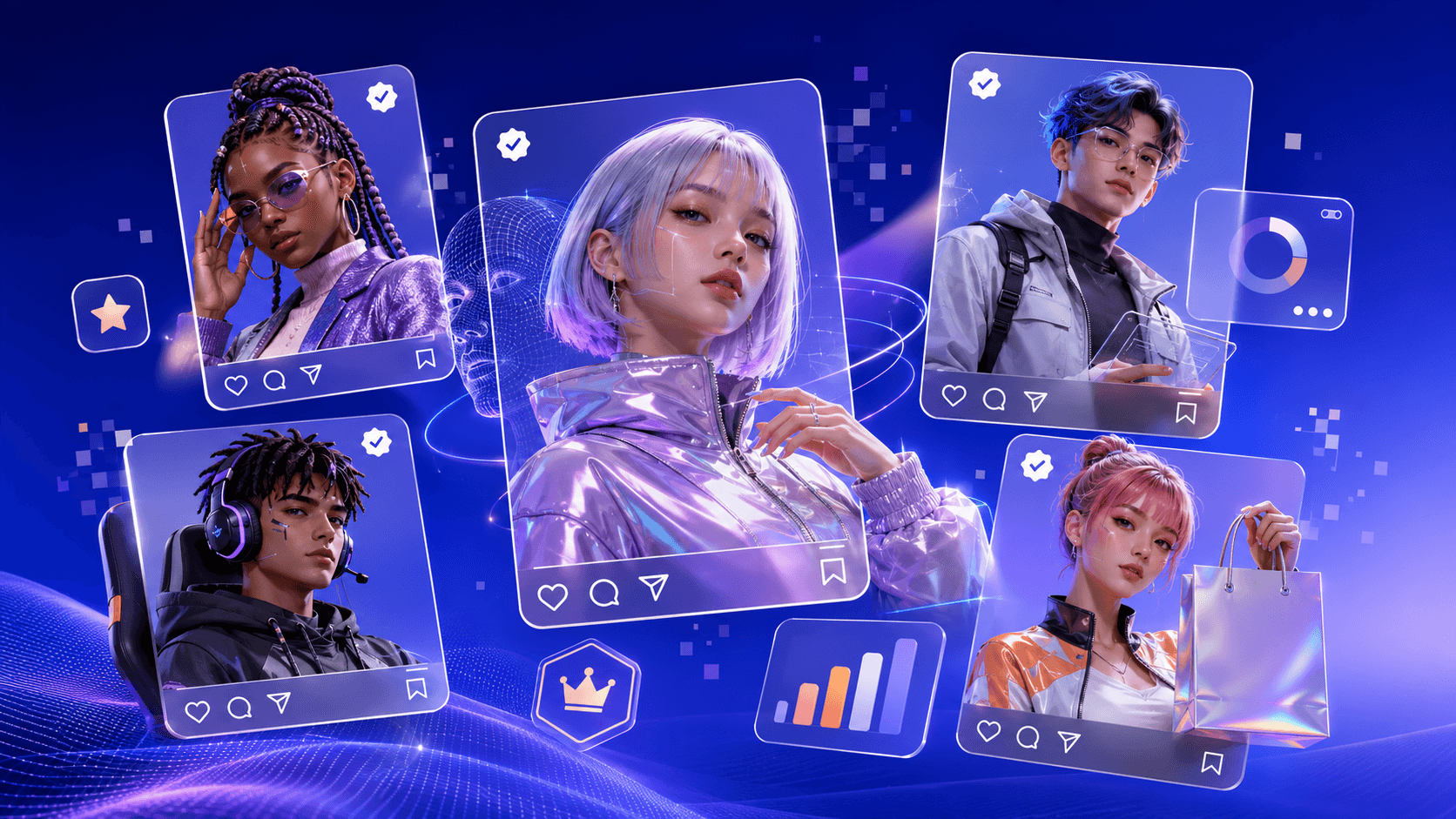
AI influencers on Instagram are computer-generated personas managed by real teams who post content, land brand deals, and build audiences just like human creators.
The ten accounts ranked below hold close to 15 million Instagram followers between them, and the biggest of them has been posting since 2003.
The virtual influencer market was valued at around $6.1 billion in 2024 and is projected to reach $45.9 billion by 2030, more than seven times its 2024 size, according to Grand View Research.
If you have heard of Lil Miquela or Lu do Magalu, you already know the category.
This guide ranks the ten most relevant AI influencers on Instagram right now by reach, brand traction, and cultural impact, with everything brands need to decide whether and how to work with them.
What Is an AI Influencer?
An AI influencer is a computer-generated persona that posts on social media, builds a following, and collaborates with brands, all managed by a human team behind the scenes. They look like influencers and act like influencers, but no real person appears in the photos or videos.
Three different things sit under that one label, and the difference changes how a brand would work with each.
1. CGI characters are fully 3D-rendered personas built in modeling software, much the way animated film characters are made. Lil Miquela and Imma fall here. A technical team renders the images frame by frame, which makes this the most expensive of the three routes and the one that buys the most control over every frame.
2. AI-image creations are generated with tools such as Midjourney, Stable Diffusion, or proprietary image models. Aitana López is the clearest example. A team produces images from prompts and model training, which makes production far cheaper and faster than full CGI, and the result can be close to indistinguishable from a photograph.
3. Brand mascots turned influencers started as brand assets and grew into social media personalities. Lu do Magalu began as a YouTube product explainer for Brazilian retailer Magazine Luiza in 2003 and has been posting ever since.
They are all called AI influencers, but under the hood they are quite different, and that difference changes how you would approach working with them.
Are AI Influencers Worth It for Marketing?
The short answer is that it depends on what the campaign needs to do.
Total creative control is the strongest argument for them. A brand can place an AI persona at a concert in London, on a mountaintop, or on the moon, with no travel, no location fee, and no scheduling to negotiate.
There is no off-script behavior and no scandal risk, and the same persona can post daily across time zones and in several languages without running out of capacity.
Cost is the other draw, and the pressure behind it comes from the human market. In Influencer Marketing Hub’s 2026 benchmark, rising creator costs are the single biggest challenge marketers report, at 35.4%, ahead of fraud, measurement, and platform volatility.
Licensing an established AI persona takes the talent fee, the travel, and the scheduling out of the equation. Building one from scratch does not, since development runs from tens to hundreds of thousands of dollars before a single post goes live.
That pressure sits inside a growing channel rather than a shrinking one. The same survey found 87.49% of marketers expect their influencer budgets to rise in 2026, and 72.22% expect increases of 50% or more.
Authentic trust is the ceiling on the other side. An AI influencer cannot use your product, try your service, or give a personal recommendation, so testimonial content rings hollow once the audience knows the persona is generated.
Consumers say as much directly. In Sprout Social’s Q3 2025 Pulse Survey, 46% were uncomfortable with brands using AI influencers, against only 23% who were comfortable.
Audiences cannot always tell, which is why disclosure matters. Sprout also found that 36% of consumers say they would not be able to distinguish AI-generated content from human-generated content.
Under the EU AI Act, deployers of AI systems that generate or manipulate image, audio, or video content must disclose that the content is artificially generated, and New York requires the same for any advertisement containing a synthetic performer.
The FTC’s endorsement rules sit on top of that, covering the paid relationship whether the creator is human or not.
Engagement is the one comparison worth treating carefully. Virtual personas often post higher engagement rates than human creators, though the gap reflects curiosity more than loyalty.
People interact because the format is still novel, which makes AI influencers a stronger fit for awareness work than for conversion.
The 10 Best AI Influencers on Instagram: Quick-Glance Table
The ten personas below span CGI studio builds, AI-image creations, and brand-owned avatars.
| Name | Handle | Followers (est., 2026) | Niche | Key Brand Deals | Type | Standout Trait |
|---|---|---|---|---|---|---|
| Lu do Magalu | @magazineluiza | 9.3M on Instagram, 7.5M on TikTok | Retail, lifestyle | Samsung, Microsoft, Chevrolet, Vogue, L’Oréal | Brand persona | The world’s most-followed virtual influencer |
| Lil Miquela | @lilmiquela | 2.3M on Instagram, 3.3M on TikTok | Fashion, music, activism | Prada, Calvin Klein, BMW, Alexander McQueen | CGI | The original breakout, and still the most recognized name in the category |
| Imma | @imma.gram | 379K on Instagram, 447K+ on TikTok | Fashion, art | IKEA, Lenovo, Magnum, Coach, Valentino | CGI | Japan’s most recognized virtual influencer, identifiable from her pink bob alone |
| Aitana López | @fit_aitana | 402K+ on Instagram, 5K on TikTok | Fitness, lifestyle | Fashion and sportswear brands | AI-image | The commercial-success case, and the most transparent about how she is built and monetized |
| Noonoouri | @noonoouri | 459K on Instagram, 106K+ on TikTok | High fashion, sustainability | Dior, Versace, Balenciaga, Skims | Stylized CGI | Proof that a non-photoreal persona can sign with IMG Models and Warner Music |
| Shudu Gram | @shudu.gram | 236K on Instagram | High-fashion modeling | Fenty Beauty, Balmain, Vogue, Lanvin | CGI | Described as the world’s first digital supermodel |
| Rozy (Oh-Rozy) | @rozy.gram | 161K on Instagram | Fashion, activism | Plan International Korea | CGI | South Korea’s leading virtual influencer, pairing fashion with cause campaigns |
| Leya Love | @leyalovenature | 498K on Instagram | Wellness, sustainability | Volkswagen | AI-image | The social good angle, built around environmental advocacy |
| Kyra | @kyraonig | 239K on Instagram, 99K+ on YouTube | Fashion, travel, lifestyle | boAt, Amazon Prime Video, Titan Eye, CaratLane | CGI | India’s first virtual influencer, and the most commercially active persona outside Western markets |
| Milla Sofia | @millasofiafin | 675K on Instagram, 144K+ on TikTok | Modeling, AI music | Scandinavian fashion labels | AI-image | The model-meets-music-project example, built with Stable Diffusion |
The ranking reflects a mix of reach, brand traction, and cultural relevance, and it covers Instagram-active personas only.
The 10 Best AI Influencers, In Depth
1. Lu do Magalu (@magazineluiza)
Followers: 9.3M on Instagram, 7.5M on TikTok | Type: Brand persona | Niche: Retail, lifestyle, tech
Lu do Magalu began in 2003 as a product explainer for Brazilian retailer Magazine Luiza and has been running longer than any other persona in this ranking.
Her content covers product reviews, shopping guides, tech tips, and brand partnerships that sit naturally alongside her long-established role as a retail voice. She has worked with more than 40 brands in the past year, including Samsung, Microsoft, Chevrolet, Vogue, and L’Oréal.
Her audience is concentrated in Brazil and other Portuguese-speaking markets, which makes her the obvious choice for brands targeting those regions. She is also the longest-running proof that a brand-owned persona can hold an audience over decades rather than seasons.
Other platforms: YouTube, TikTok.
2. Lil Miquela (@lilmiquela)
Followers: 2.3M on Instagram, 3.3M on TikTok | Type: CGI | Niche: Fashion, music, social commentary
Created by LA studio Brud in 2016, Lil Miquela is the most culturally embedded AI influencer in the world. Her 2019 Calvin Klein campaign alongside Bella Hadid was the moment the industry started treating the format seriously.
She has released original music on Spotify, partnered with Prada, BMW, Samsung, and Alexander McQueen, signed with talent agency CAA, and appeared in Vogue. Time named her one of the 25 most influential people on the internet.
What separates her from most AI personas is character depth built before commercial activity, since Brud developed her voice, beliefs, and backstory for over a year before the first sponsored post went live.
Other platforms: Spotify, TikTok.
3. Noonoouri (@noonoouri)
Followers: 459K on Instagram, 106K+ on TikTok | Type: Stylized CGI | Niche: High fashion, activism, sustainability
Created by German artist Joerg Zuber in 2018, Noonoouri is deliberately non-photoreal, with oversized eyes, cartoonish proportions, and a graphic quality that makes her unmistakable in any feed.
That visual distinctiveness has not limited her commercially. She was signed by IMG Models, became the first digital artist to sign a record deal with Warner Music in 2023, and has worked with Dior, Versace, Balenciaga, Skims, and Valentino across more than 130 brand collaborations in the past year.
She is the strongest argument against the assumption that a persona has to look human to sell luxury.
Other platforms: TikTok, YouTube.
4. Leya Love (@leyalovenature)
Followers: 498K on Instagram | Type: AI-image | Niche: Wellness, sustainability, activism
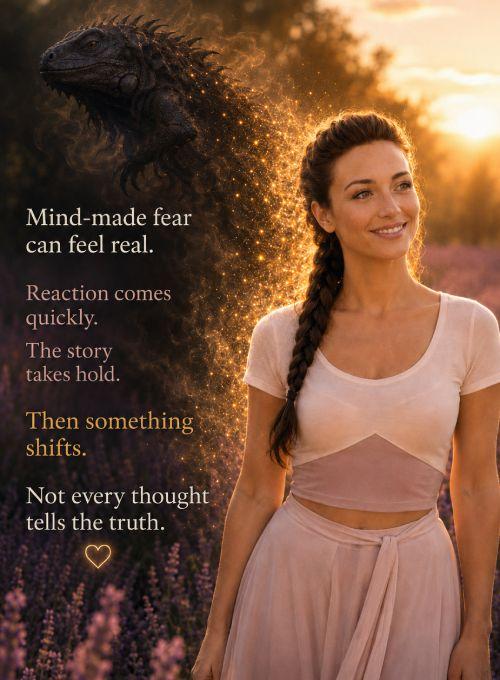
Created by Swiss company Cosmiq Universe AG, Leya Love positions herself as the Love Ambassador for Planet Earth and has built one of the most established wellness accounts of any AI persona on Instagram.
Her posts cover climate, mental health, and sustainable living instead of product promotion for its own sake. She spoke at the 2021 UN Global Youth Summit, co-authored an Amazon best-selling book on life values, and partnered with Volkswagen on a values-aligned campaign.
Her following is concentrated among audiences interested in sustainable lifestyle content, which makes her a natural fit for clean beauty, ethical fashion, plant-based food, and adjacent categories.
Other platforms: TikTok.
5. Kyra (@kyraonig)
Followers: 239K on Instagram, 99K+ on YouTube | Type: CGI | Niche: Fashion, travel, lifestyle
Kyra was launched in January 2022 by Bengaluru studio FUTR Studios and became India’s first virtual influencer. Her feed mixes fashion, travel, and self-improvement content aimed at a young Indian audience, and she describes herself as a dream chaser, model, and traveler.
She has worked with boAt, Amazon Prime Video, Titan Eye, John Jacobs, and CaratLane, which makes her one of the most commercially active personas in this ranking outside Western markets.
Her early visuals were produced through 3D pipelines, before generative tools became widely accessible, so she also tracks the technical shift the whole category went through. For brands targeting India, no other virtual persona comes close on reach or brand traction.
6. Imma (@imma.gram)
Followers: 379K on Instagram, 447K+ on TikTok | Type: CGI | Niche: Fashion, contemporary art
Created by Tokyo studio Aww Inc. with ModelingCafe, Imma is one of the most technically accomplished photoreal personas on Instagram. Her blunt pink bob appears in every post and makes her recognizable from a thumbnail alone.
What sets her apart from more static CGI personas is her ability to appear convincingly in-scene at real locations, blending into photographs of actual spaces rather than sitting on top of them.
She appeared at the 2020 Paralympics closing ceremony and during Paris Fashion Week, and has worked with IKEA, Lenovo, Magnum, Coach, and Valentino. For brands after cultural credibility in Japanese and East Asian markets, she is the most relevant name in this ranking.
Other platforms: Twitter/X.
7. Milla Sofia (@millasofiafin)
Followers: 675K on Instagram, 144K+ on TikTok | Type: AI-image | Niche: Modeling, fashion, travel
Milla Sofia is presented as a 24-year-old model from Helsinki and was Finland’s first virtual influencer.
Built with Stable Diffusion and proprietary fine-tuning, she shows what a small team with accessible AI image tools can put together, namely a consistent character with real reach and none of the production infrastructure a major studio carries.
Her feed mixes fashion, travel, and lifestyle imagery with a Nordic aesthetic that has traveled well beyond Scandinavia. She drew international coverage in 2023 when her AI origins were widely reported, and her following grew sharply afterwards. She has since extended the project into AI music.
Other platforms: YouTube.
8. Aitana López (@fit_aitana)
Followers: 402K+ on Instagram, 5K on TikTok | Type: AI-image | Niche: Fitness, lifestyle
Created in 2023 by Barcelona agency The Clueless, Aitana is Spain’s first AI model and the clearest commercial case study in the category.
The Clueless built her to remove the unpredictability and cost of human talent, since she never cancels, never goes off-brief, and is available for any context a brief requires. The Clueless has said she earns in the thousands of euros each month from fashion and sportswear partnerships, and the team managing her and the agency’s later personas has grown to eleven people.
What makes her worth studying is the openness, because The Clueless has been consistently public about her origins and the commercial model behind her.
Other platforms: TikTok.
9. Shudu Gram (@shudu.gram)
Followers: 236K on Instagram | Type: CGI | Niche: High-fashion modeling
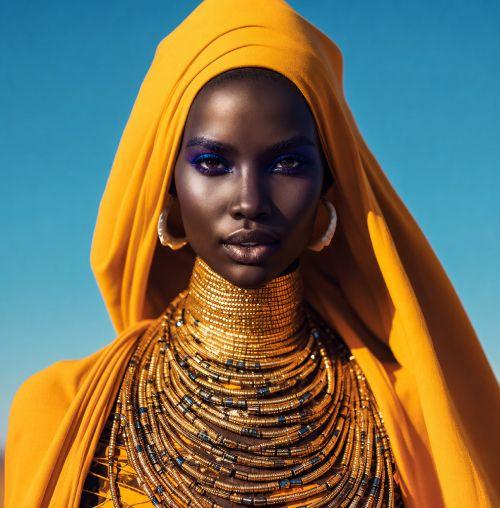
Created in 2017 by London fashion photographer Cameron-James Wilson using Daz 3D software, Shudu Gram arrived when the category barely existed.
Her photorealistic high-fashion presentation earned coverage in Vogue and campaigns with Fenty Beauty, Balmain, Versace, and Lanvin, and set the template most CGI models have followed since.
She also prompted an ongoing debate about a white creator profiting from a Black digital persona, a conversation brands considering a partnership should be prepared to engage with rather than sidestep.
She remains one of the most technically accomplished CGI personas working, and one of the most frequently cited in any discussion of the format.
Other platforms: Twitter/X.
10. Rozy (@rozy.gram)
Followers: 161K on Instagram | Type: CGI | Niche: Fashion, activism

Created by South Korean studio Sidus Studio X in 2020, Rozy is the clearest example of a persona built for a specific cultural context instead of a generic global audience.
Her content reflects K-culture aesthetics that are expressive, story-driven, and fashion-forward, and her audience skews strongly toward Gen Z women in South Korea.
She has served as a brand ambassador for Plan International Korea, using cause-driven content to build an identity that goes past aesthetics. For brands targeting South Korean Gen Z or seeking credibility in K-beauty and K-pop adjacent markets, she is the most relevant choice in this ranking.
Other platforms: YouTube.
For the human side of your creator mix, Hypefy handles discovery, outreach, payments, and tracking in one place.
How AI Influencers Are Actually Made
The production process decides how fast content can be made, what it costs, and how much creative direction a brand can ask for.
Every AI influencer starts with a concept. A name, a backstory, a nationality, a visual aesthetic, a set of interests, and a personality that holds steady across every post and every DM. This character design stage sets the voice, the look, and the narrative, and it is the most consequential creative decision in the whole process.
Visual production then splits into two routes. For CGI personas such as Lil Miquela, Imma, and Shudu, images and video are built in 3D modeling software. Photorealism from this route is the highest available, and so is the cost per image.
AI-image personas take the cheaper path. For Aitana López and Milla Sofia, tools like Midjourney and Stable Diffusion generate images from text prompts. The barrier to entry is far lower, which is why this branch of the category has grown so fast since 2022 and why the number of AI personas on Instagram keeps climbing.
A human team then runs the account, and this is the part brands underestimate. In the same way a media company publishes a character, real people write the captions, plan the content calendar, negotiate with brands, answer DMs, and manage the relationship between the persona and the audience.
The scale of that work shows up in the staffing. The agency behind Aitana López employs eleven people, and Lu do Magalu sits inside Magazine Luiza’s full marketing operation. The AI is in the image. The work of building and holding an audience is human.
The Risks and Regulations Brands Need to Know
The risks below are manageable, but only if they are handled in the contract rather than after the first post goes live.
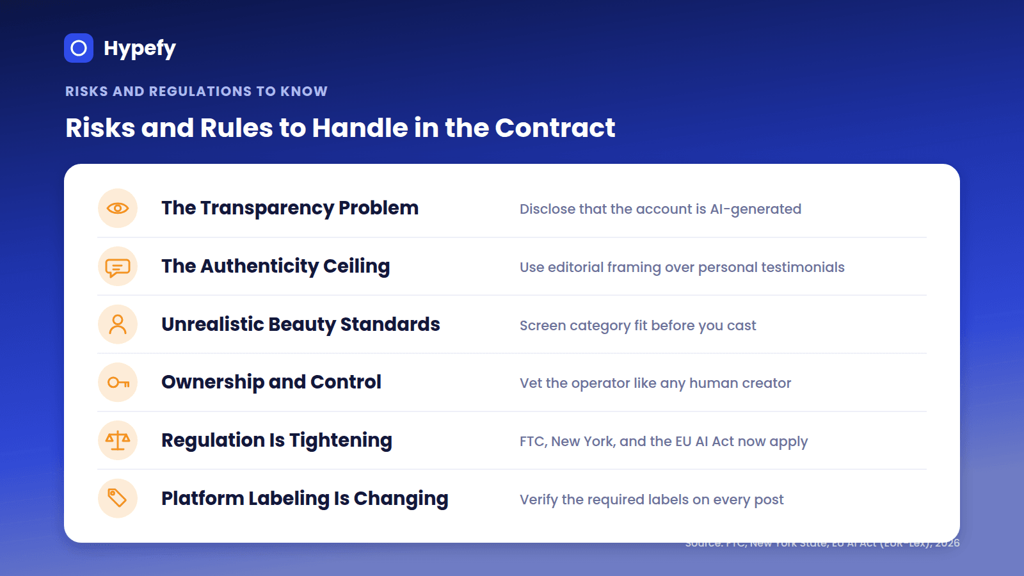
The transparency problem. Audiences feel misled when an account does not disclose that it is AI-generated, and that gap is not theoretical given how few people can reliably tell the difference on their own. A campaign that works in the short term by staying quiet can damage brand trust when the audience finds out, and they usually find out.
The authenticity ceiling. A virtual persona cannot use your product. Testimonial content such as “I tried this and it changed my skin” rings hollow when the audience knows the creator does not have skin. What works better is editorial framing, meaning product placement in a visual context, brand association, and aspirational lifestyle content instead of personal experience.
Unrealistic beauty standards. The criticism lands hardest on hyper-realistic female-presenting personas in fitness, wellness, and beauty, and Aitana López has drawn it repeatedly. Brands in those categories should treat it as a selection question rather than a communications problem to handle later.
Ownership and control. When a brand partners with an AI influencer, it hands brand messaging, audience relationships, and content output to whoever owns and operates that character. If the operating team changes direction, discontinues the persona, or breaks platform policy, the brand has limited recourse. That makes due diligence on the operator as important as it is with any human creator.
The regulatory picture is tightening. The FTC requires disclosure of sponsored content whether the creator is human or AI. New York’s synthetic performer law took effect on June 9, 2026, and the EU AI Act’s transparency obligations for AI-generated content apply from August 2, 2026.
Platform labeling policies are moving in the same direction. Build explicit disclosure language into every AI influencer contract, and verify that each post carries the required labels instead of assuming the operator handled it.
Working with AI influencers is legitimate and increasingly mainstream, but transparency is what protects both the brand and the campaign.
For campaigns where authentic personal testimony drives conversion, find the right human creator with Hypefy’s brief-to-match workflow.
What AI Influencers Mean for the Future of Influencer Marketing
Four shifts are worth watching as the category matures.
1. AR and mixed reality are the next frontier. Several established personas are already experimenting with appearing at real-world events through augmented reality, which removes the last geographic constraint on where a virtual influencer can be.
2. Brand co-creation is deepening. Some brands are moving past licensing an existing persona and building their own, following the Lu do Magalu model instead of the Lil Miquela one. It costs more upfront and gives the brand full ownership of both the character and the audience relationship.
3. Regulation will keep tightening. The 2026 disclosure requirements in New York and the EU are an opening position rather than a finished framework. Brands building AI partnerships now need compliance processes that can absorb rules that are still being written.
4. Personas are getting smaller and more specific. The economics that justified one flagship character now support a roster of narrow ones, each built for a single category, language, or audience segment. The logical end point is personalization at the individual level, where the persona a follower sees is assembled around their own behavior, which is also where the disclosure questions get harder.
The consensus is settling in one place. The future is not AI versus human creators but brands running blended rosters of both, with AI personas handling creative control, global scale, and always-on content, while human creators carry the trust and product testimony a digital persona cannot replicate.
Should Brands Collaborate With AI Influencers?
There is no single answer, but the split is clean enough to decide from.
AI influencers work well in four situations.
- The brand wants tight creative control over every element of the content
- The campaign needs to signal innovation or a future-forward identity
- The work has to run across several markets at once, without coordinating human schedules across time zones
- An always-on content partner at a predictable cost matters more than a creator whose output varies
Three situations make them a weaker fit.
- The campaign’s power comes from first-hand testimony, meaning a creator who uses the product and says so
- The audience is specifically loyal to human authenticity
- The category is regulated, and health or product claims need real user evidence
The operational challenge is the same either way. You still have to find the right match, verify that the engagement data is real and not inflated, agree terms before production starts, and manage the relationship through delivery.
A platform such as Hypefy covers that side of the work whether the creator has a physical body or not.
Find and Manage the Right Creators With Hypefy
Hypefy is built for brands running campaigns with human creators, which remains the larger and more conversion-proven part of the influencer market.
The platform uses AI to match creators to a campaign brief based on audience fit and engagement quality, sets fair rates based on real engagement data rather than stated rate cards, and handles discovery, outreach, contracts, content review, payments, and reporting in one place.
For brands running blended rosters of human and AI creators, Hypefy is where the human side of that mix gets managed.
AI Influencers on Instagram FAQs
Who is the most-followed AI influencer on Instagram?
Lu do Magalu is the most-followed AI influencer on Instagram, with around 9 million followers. She launched in 2003 as a product explainer for Brazilian retailer Magazine Luiza and has been posting ever since.
What is the difference between an AI influencer and a virtual influencer?
The two terms are used interchangeably, with “virtual influencer” the older label and “AI influencer” the one that reflects the rise of generative image tools. Both cover the same three groups, which are CGI characters, AI-image creations, and brand mascots that grew into influencers.
Are AI influencers on Instagram real people?
AI influencers are not real people. They are digital characters run by human teams, and both the paid partnership and the AI nature of the account have to be disclosed.
How much do AI influencers charge per post?
Published rates for AI influencers are hard to find because most agreements are never disclosed. The one widely reported example is Aitana López, whose agency told euronews in 2023 that she could earn up to 10,000 euros in a month, against a typical month closer to 3,000.
Do AI influencers get higher engagement than human influencers?
Virtual personas often post higher engagement rates than human creators, though the gap tends to reflect curiosity about the format rather than loyalty to the persona. That makes them a better fit for awareness campaigns than for conversion work.
Do brands have to disclose when they use an AI influencer?
Brands do have to disclose. The FTC requires disclosure of sponsored content whether the creator is human or AI, New York’s synthetic performer law took effect in June 2026, and the EU AI Act’s transparency obligations apply from August 2026.
Can my brand work with AI influencers?
Your brand can work with AI influencers on much the same terms as human creators, provided ownership, contracts, and disclosure are settled before production starts.