Influencer marketing reached $32.55 billion in 2025 and is projected to pass $40 billion in 2026, with brands now allocating a meaningful share of their digital marketing budgets to creator partnerships.
At that scale, picking the wrong tool is the difference between a program that pays back and one that doesn’t.
Most “best influencer marketing tools” lists online are written by people who haven’t actually run a campaign, padded with affiliate links, and recycle the same ten names without explaining what any of them really do differently.
This guide is built around what each tool does in practice, who it fits, and what it costs. Every platform below has been evaluated on the same criteria, with honest pros and cons for each.
The 10 Best Influencer Marketing Tools at a Glance
Tool | Best For | Platforms | Price | AI | Rating |
|---|---|---|---|---|---|
Hypefy | Best overall / full-lifecycle AI platform | Instagram, TikTok | No subscription, pay-per-campaign | Yes (brief + matching + pricing) | 4.8/5 |
GRIN | E-commerce / DTC brands with Shopify integration | Instagram, TikTok, YouTube, Pinterest, X | From ~$2,500/mo | Partial (discovery + recommendations) | 4.5/5 |
Upfluence | Mid-market teams wanting e-commerce attribution | Instagram, TikTok, YouTube, Twitch, X, Pinterest | From ~$2,000/mo | Partial (search + analytics) | 4.3/5 |
Aspire | Scaling ambassador programs | Instagram, TikTok, YouTube, Pinterest | Custom (typically $2K+/mo) | Partial (matching + recommendations) | 4.5/5 |
Modash | Discovery and audience vetting on a budget | Instagram, TikTok, YouTube | From $199/mo | Yes (AI search + audience analytics) | 4.6/5 |
CreatorIQ | Enterprise option for large global programs | Instagram, TikTok, YouTube, Facebook, Pinterest, Twitch, X | From $35K/year | Yes (discovery + brand safety + reporting) | 4.5/5 |
HypeAuditor | Fraud detection and audience quality audits | Instagram, TikTok, YouTube, X, Twitch | From $299/mo | Yes (authenticity scoring + analytics) | 4.4/5 |
Sprout Social | Teams managing social media + influencer in one place | TikTok, Instagram, YouTube, LinkedIn, Pinterest, X | From ~$249/mo | Partial (social listening + reply assist) | 4.4/5 |
Traackr | Data-led brands with complex multi-market programs | Instagram, TikTok, YouTube, Pinterest, X, Snapchat, LinkedIn, Facebook | Custom (enterprise) | Partial (discovery + ROI modeling) | 4.3/5 |
Influencity | Agencies managing multiple brand clients | Instagram, TikTok, YouTube | From $318/mo | Partial (search + audience analysis) | 4.4/5 |
Scroll down for the full breakdown of each tool, including pricing details, pros, and cons.
The 10 Best Influencer Marketing Tools in 2026: Full Breakdown
1. Hypefy
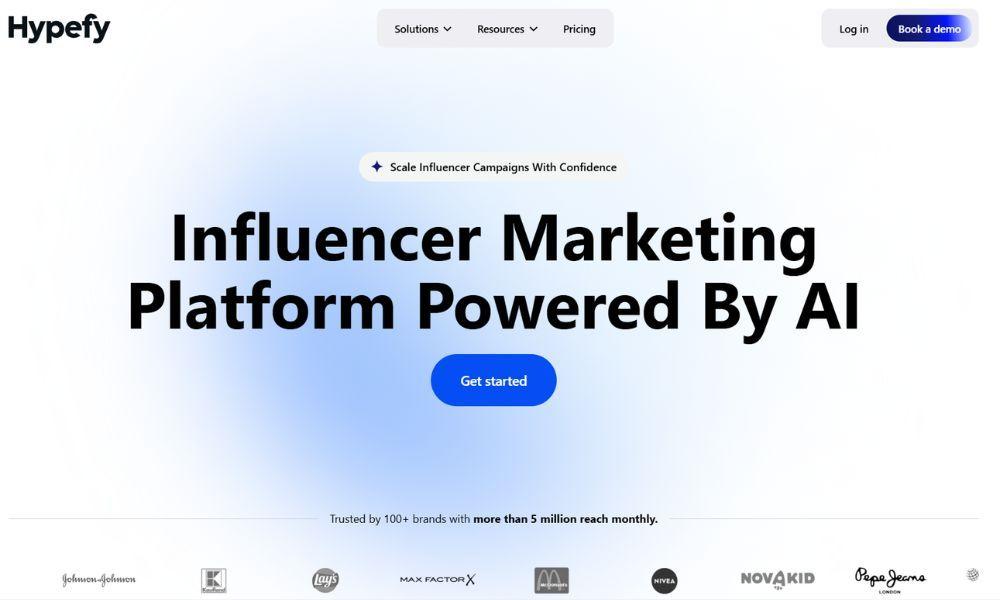
Hypefy is an AI-powered influencer marketing platform that runs the full campaign lifecycle from brief to creator payment, with built-in smart pricing, so you see fair market rates for every creator before you reach out.
Three things make it different from every other tool on this list:
An AI brief builder that turns a one-sentence campaign description into a full structured brief covering objectives, audience, content direction, and KPIs
Audience-first matching that scans 12 million creators across Instagram and TikTok and surfaces the ones whose followers fit your ideal customer profile
Smart pricing, where the AI analyzes content performance, engagement quality, regional rates, and market data to show you a fair price for each creator before any conversation starts
Every other tool on this list leaves pricing to you. You find the creator, then guess what they’re worth. Hypefy is the only one that tells you the fair rate before outreach starts.
That single feature means you negotiate from data. It removes the uncertainty that causes most brands to either overpay for the wrong creators or miss great ones entirely because the quoted rate felt too high without context.
Outreach, content approval, and reporting are handled within the platform alongside contracts and payments, so the entire campaign runs from one place.
Pricing: No monthly subscription. Hypefy takes a transparent percentage of the campaign budget only when you choose to launch. The AI-generated brief and creator list are free to review before you commit.
Pros:
Full campaign lifecycle handled in one place, from AI brief to payments
Smart pricing shows fair market rates before outreach
No monthly fee or annual lock-in
Audience-first matching focused on follower fit, not keyword overlap
Cons:
Covers Instagram and TikTok rather than every platform
Performance-based pricing is unfamiliar to teams used to fixed SaaS budgets
2. GRIN
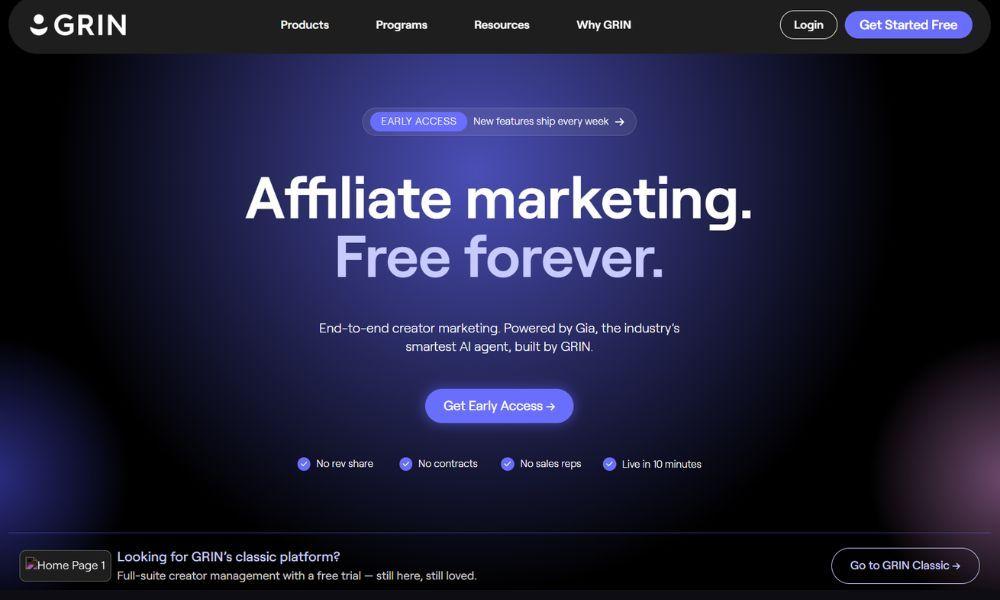
GRIN is a creator management platform built for direct-to-consumer e-commerce brands, with deep Shopify integration and tools for long-term ambassador relationships.
It treats creators as long-term brand partners with deep tooling for product gifting, affiliate links, discount codes, and revenue attribution.
Starting around $2,500 per month with annual commitments, it is a powerful fit for DTC teams but expensive and overkill for anyone not running eCommerce, and the opt-in creator pool limits discovery reach for brands looking outside their existing network.
Pricing: From around $2,500 per month, annual commitments required.
Pros:
Excellent Shopify and eCommerce integrations
Strong creator relationship management tools
Built for long-term influencer operations
Detailed affiliate and sales attribution tracking
Cons:
Expensive for small brands
Creator discovery is weaker than specialized discovery tools.
Overkill for brands running only occasional campaigns
3. Upfluence
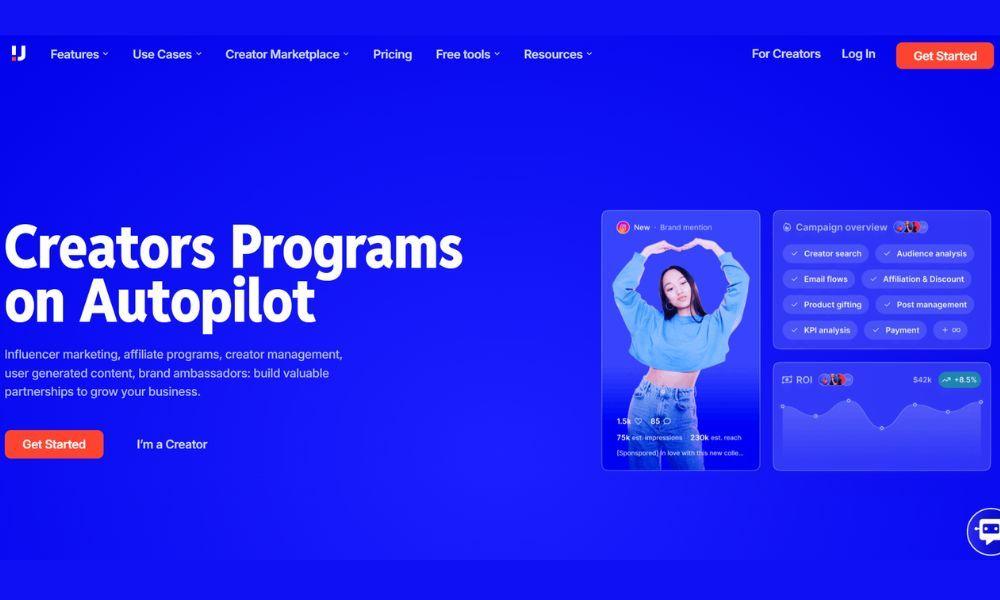
Upfluence is a mid-market influencer marketing platform that connects creator activity to eCommerce revenue through integrations with Shopify, WooCommerce, Stripe, and Amazon.
It covers discovery, outreach, campaign workflows, affiliate links, and analytics across Instagram, TikTok, YouTube, Twitch, X, and Pinterest.
Pricing starts around $2,000 per month with annual commitments, plus an optional payment add-on. The interface can feel dense, and some teams find the AI search less precise than newer tools.
Pricing: From around $2,000 per month, annual contracts.
Pros:
Strong e-commerce integrations and revenue attribution
Multi-platform coverage including affiliate workflows
Built-in sales tracking that ties creator activity to conversions
Cons:
Annual contracts and dense interface create friction for smaller teams
Discovery and matching are less sharp than AI-first competitors
4. Aspire
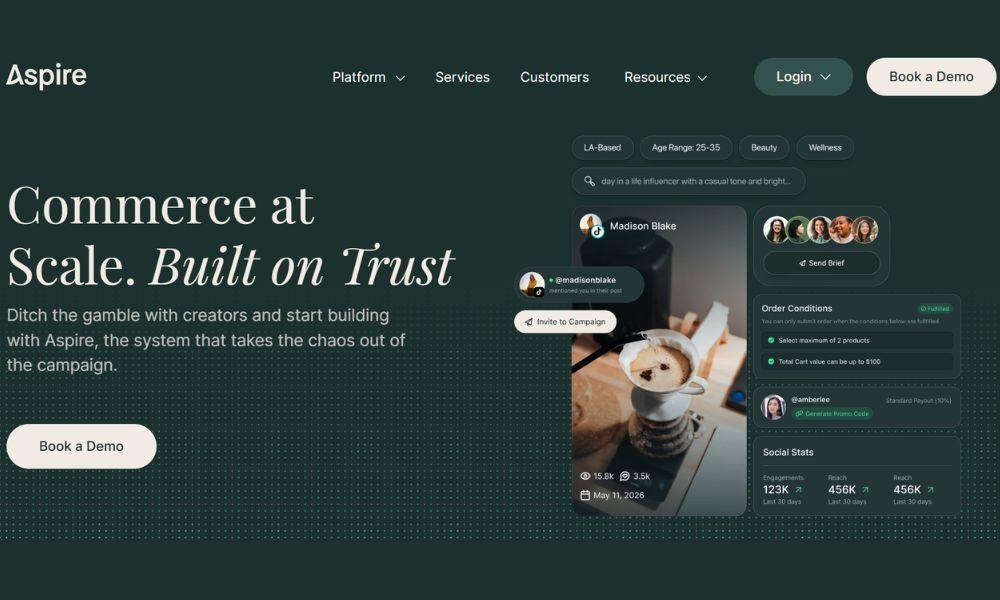
Aspire is an influencer marketing platform built for brands running structured, long-term ambassador programs at scale, with a large creator marketplace and recurring partnership workflows.
Where most platforms optimize for single campaigns, Aspire is built around the assumption that you’ll work with the same creators repeatedly, with tools for content rights, product seeding, and ongoing performance tracking.
The trade-off is that Aspire assumes a level of program maturity smaller brands may not have yet, and pricing is not transparent.
Hypefy also accepts creator sign-ups: influencers create a free profile, connect Instagram or TikTok, and receive proposals when a brand’s campaign matches their audience. Read how Hypefy works for influencers, from proposals to contracts and payouts.
Pricing: Custom, typically $2,000 per month and up.
Pros:
Strong creator marketplace and first-party data
Built around ambassador programs and long-term partnerships
Solid workflow tooling for structured campaigns
Cons:
Better fit for established programs than first-time campaigns
No transparent pricing
5. Modash
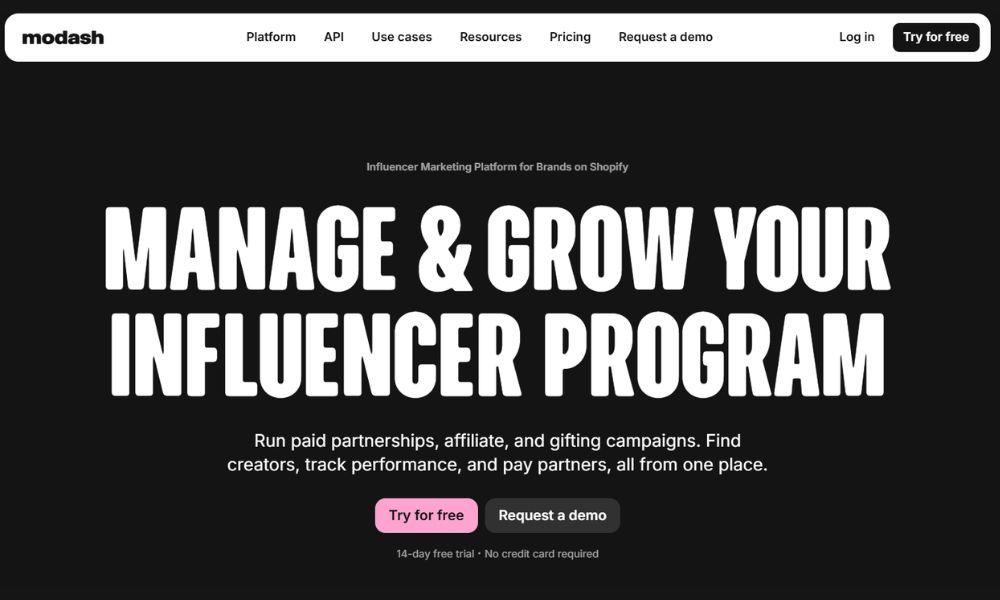
Modash is a creator discovery platform with a database of 350 million profiles across Instagram, TikTok, and YouTube, focused on audience analytics and fake-follower detection.
What makes it stand out at this price point is the open-network model. Every creator with more than 1,000 followers is indexed, not just those who opted in to the platform.
The trade-off is scope. Modash is a discovery tool with workflow features. It’s not a campaign management platform. Once you’ve found your creators, you’re back to email, spreadsheets, and the tools you use for contracts and payments.
Pricing: Essential plan from $199 per month (annual). Performance plan from $499 per month.
Pros:
Excellent database depth and audience analytics for the price
Strong fake follower and audience quality detection
Clean interface and fast learning curve
Cons:
Discovery-first, with limited campaign management depth
No deep eCommerce attribution
6. CreatorIQ
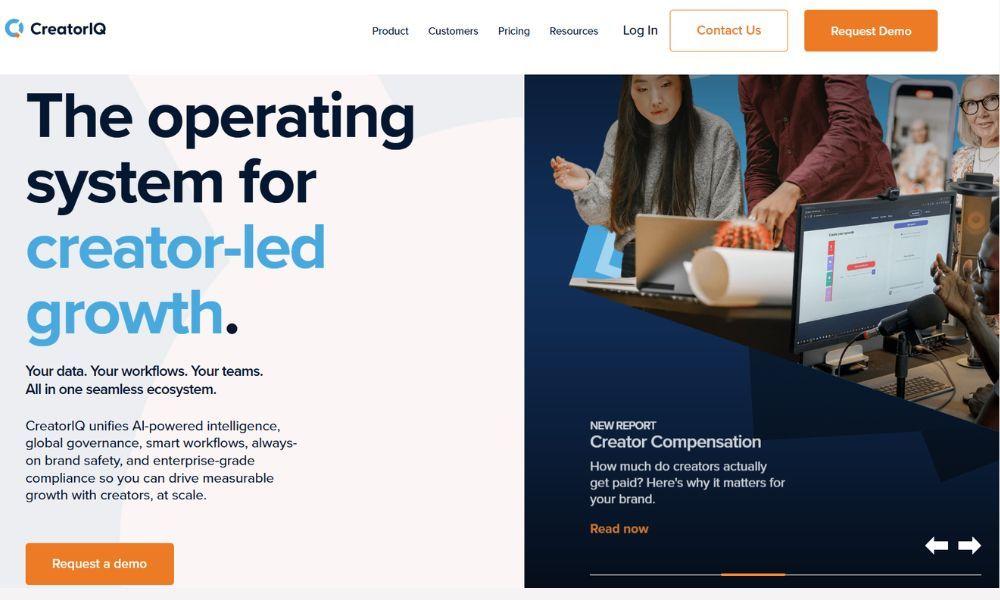
CreatorIQ is an enterprise influencer marketing platform powering global programs for brands like Disney and Estée Lauder, with API-powered discovery and finance-grade reporting.
The discovery is API-powered and real-time, the reporting is detailed enough to satisfy finance teams, and the rights management and approval workflows are built for complex governance.
The catch is that it starts at around $35,000 per year with optional add-ons like Creator Connect at $15,000 per year, and implementation typically takes six to eight weeks, which makes it difficult to justify for brands operating below Fortune 500 scale.
Pricing: From $35,000 per year, plus implementation.
Pros:
Best-in-class enterprise reporting and governance
Real-time API-powered discovery across all major platforms
Strong rights management and stakeholder approval workflows
Cons:
Very expensive for smaller businesses
Implementation can take weeks
Steeper learning curve than lighter tools
7. HypeAuditor
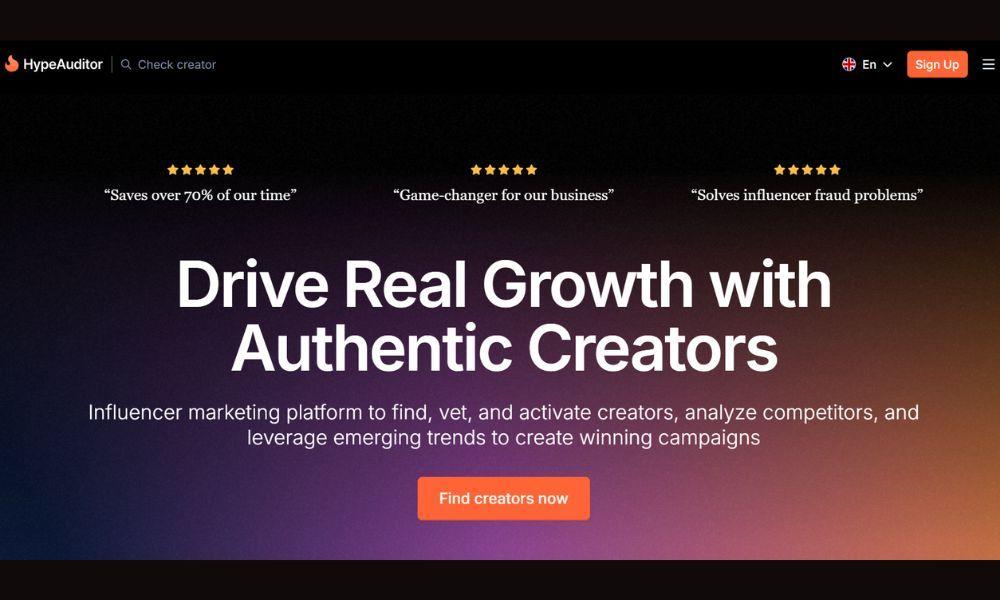
HypeAuditor is an influencer audit platform focused on audience quality and fraud detection.
Its Audience Quality Score evaluates authenticity using growth pattern analysis, follower behavior, and engagement signals, and has saved brands from expensive partnerships with creators whose follower counts were mostly bots.
The key distinction is that HypeAuditor is an audit tool, not a campaign management platform, so most teams use it alongside a campaign tool rather than as a replacement.
Pricing: From $299 per month, with a limited free tier.
Pros:
Industry-leading audience quality scoring and fraud detection
Detailed demographic and authenticity analysis on 200M+ profiles
Useful brand mention and competitor tracking
Cons:
Audit-first rather than campaign-first
Limited automation for outreach at scale
8. Sprout Social
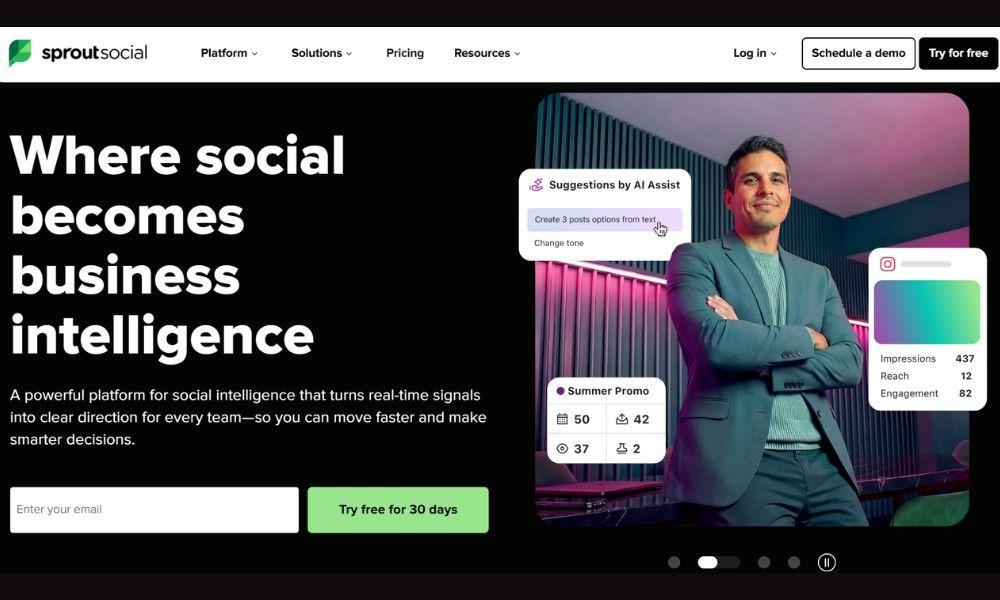
Sprout Social is an all-in-one social media management platform with influencer marketing as one module, covering TikTok, Instagram, YouTube, LinkedIn, Pinterest, and X.
The trade-off is that Sprout’s influencer features are good but not as deep as platforms built around influencer marketing from the start.
The module is priced separately and quote-only. Most teams choosing Sprout for influencer work already pay for the core plans starting at $199 per seat per month, so the influencer module becomes an extra line item on a subscription that’s already compounding by seat.
Pricing: Influencer marketing module pricing is custom and stacks on top of the core social management plans (from $199 per seat per month, annual billing).
Pros:
Combines social media management and influencer marketing in one platform
Strong cross-platform coverage, including LinkedIn
Useful AI assistance for replies and social workflows
Cons:
Influencer features are good rather than best-in-class
Cost adds up once you add the influencer module on top
9. Traackr
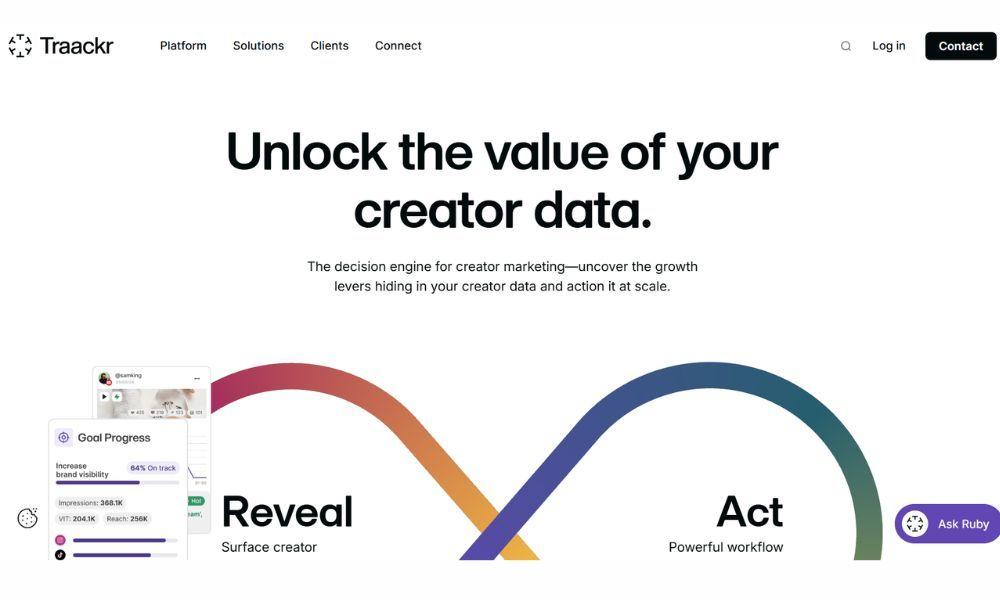
Traackr is an enterprise influencer marketing platform for data-led brands running complex multi-market programs, with deep analytics and broad platform coverage, including LinkedIn and Snapchat.
The cost is enterprise, the learning curve is steep, and Traackr is heavier on analysis than on outreach automation, so it fits global programs with rigorous data needs better than fast, transactional creator hiring.
Pricing: Custom, enterprise contracts only.
Pros:
Deep analytics, benchmarking, and ROI modeling
Broad platform coverage, including LinkedIn and Snapchat
Built for multi-market and multi-brand programs
Cons:
Steep learning curve and enterprise-only pricing
Less suited to fast, high-volume outreach
10. Influencity
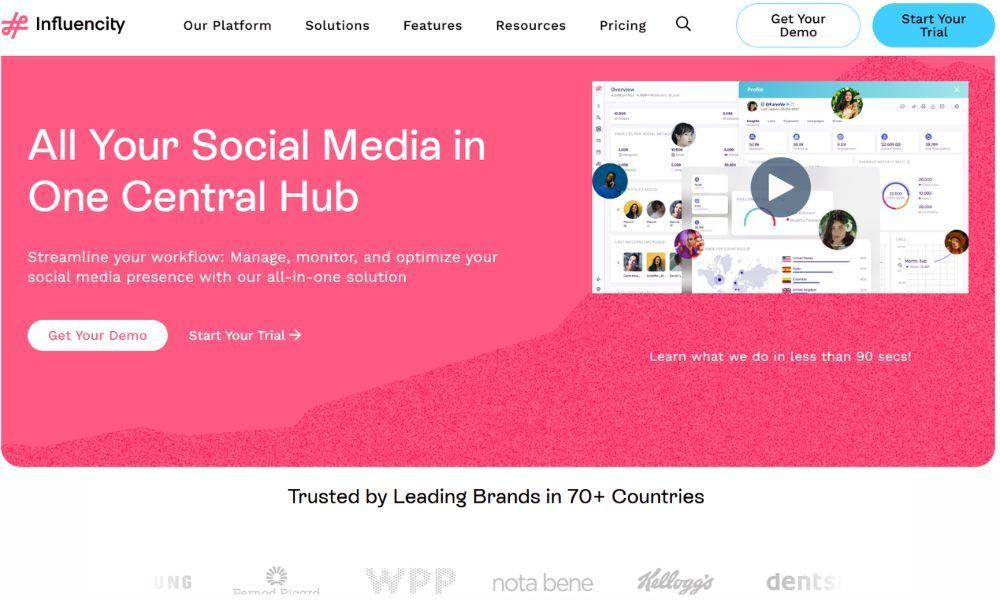
Influencity is an influencer marketing platform built for agencies managing campaigns across multiple brand clients, with multi-account workflows and consolidated reporting.
It supports client account separation, multi-brand reporting, and large-scale creator management without the enterprise price tag of CreatorIQ or Traackr, and customer support is consistently rated well.
Platform coverage is focused on Instagram, TikTok, and YouTube, which works for most consumer-brand agencies but feels narrow for clients needing broader reach.
Pricing: Professional plans from around $318 per month.
Pros:
Built for multi-client agency workflows
Reliable database and structured campaign management
Strong customer support and onboarding
Cons:
Narrower platform coverage than enterprise alternatives
Less suited to brands managing campaigns directly
What Separates a Good Influencer Marketing Tool from a Mediocre One
Now that you’ve seen the options, it helps to step back and look at the criteria that separate a strong platform from a mediocre one. Most marketing teams pick tools based on demos and feature lists, then discover the real gaps two campaigns in.
These six points determine whether a platform pays for itself.
1. Full lifecycle vs. discovery only. A tool that helps you find creators is doing the easy part. Outreach, briefing, contracts, content review, payments, and reporting are where the time goes. Discovery-only tools leave you with around 80% of the work to do somewhere else, usually in spreadsheets and email threads.
2. AI quality. Most platforms claim AI. Few have it where it counts. Keyword search dressed up as AI is not the same as a model that analyzes a creator’s actual content, audience composition, and engagement quality to decide whether they fit your ideal customer. Ask for specifics about how the AI works before trusting the label.
3. Pricing transparency. Most platforms hide pricing to force a sales call before you can even compare options. For mid-market brands, that is a red flag. It signals that pricing is negotiable, inconsistent, and usually higher than what shows up in third-party reviews. Public pricing means the vendor stands behind their number.
4. Influencer tier coverage. Some tools are built around mega-influencers and barely surface micro and nano creators, where most performance campaigns happen now. If your strategy relies on smaller creators, carefully review the database size and tier filters.
5. Platform coverage. Instagram-only tools are a dead end in 2026. TikTok now dominates short-form video and drives a large share of younger consumers’ discovery and purchase intent. Any platform that does not cover it properly is missing where the audience actually is. For B2B brands, the same applies to LinkedIn, which most mainstream tools still treat as an afterthought.
6. Campaign management depth. Contracts, content approval, payments, and reporting should live inside one tool. Stitching three platforms together is how brands end up paying for software they barely use and missing deadlines they didn’t see coming.
These six points are the lens we used to evaluate every tool above. With them in mind, the next section walks through specific scenarios and which platform fits each one.
How to Choose the Right Tool for Your Situation
The right platform depends on what you are actually trying to do. Here are four common scenarios and the direct recommendation for each.
Scenario 1: I’m running my first influencer campaign and want one platform that handles everything.
Use Hypefy. It’s the only full-lifecycle option without a monthly subscription, which means the financial risk of starting a program is close to zero. The AI brief builder also removes most of the strategic guesswork that breaks first campaigns, since you’re not trying to write a brief from scratch on top of learning the rest of the workflow.
Upfluence is the strongest alternative if you want a more traditional SaaS subscription model from around $2,000 per month.
Scenario 2: I’m an eCommerce or DTC brand already on Shopify and care most about revenue attribution.
Look at GRIN or Upfluence. Both have strong Shopify integrations and proven revenue tracking.
GRIN is the better choice if you are running a structured creator and ambassador program.
Upfluence is better if you want broader platform coverage and affiliate flexibility.
Either way, expect to commit around $2,000 to $2,500 per month with annual contracts.
Scenario 3: I’m a B2B or SaaS company and need LinkedIn-first influencer discovery.
This category is underserved. Traackr is the best mainstream option that takes LinkedIn seriously, but it is enterprise-priced and analytics-heavy.
Specialist tools like Favikon have stronger LinkedIn coverage but narrower campaign management.
Most B2B teams end up combining a discovery tool for LinkedIn with a separate workflow tool for execution.
Scenario 4: I’m an agency managing influencer programs for multiple brand clients simultaneously.
Influencity is built for this and priced for it. The multi-client workflows, separate brand accounts, and consolidated reporting are designed around agency operations.
If you are operating at enterprise scale across many markets, CreatorIQ becomes a credible option, but the cost and implementation timeline are significant.
Hypefy also works for agencies running consumer brand campaigns. Because the platform handles campaign execution, agencies can deliver client work without staffing up an internal influencer team, which is especially useful for project-based engagements.

Why Hypefy Is the Standout Choice for Most Brands in 2026
The comparison above shows something most “best tools” lists hide.
The majority of platforms in this category are either discovery-only, enterprise-only, or eCommerce-only.
GRIN, Upfluence, and Aspire are built for DTC brands with substantial budgets. CreatorIQ and Traackr target Fortune 500 programs. Modash and HypeAuditor are excellent at one part of the workflow, but leave the rest to you. Sprout Social is a social tool with influencer features attached.
The gap in the market is a full-lifecycle platform with genuine AI built into the brief, the matching, and the pricing, at a price point that mid-market brands can use without enterprise contracts. That is what Hypefy is.
The smart pricing point is the most differentiated piece. None of the other nine tools on this list shows you fair market rates for each creator before you reach out. That single feature solves the biggest frustration brands have with influencer marketing, which is not knowing whether they are overpaying.
Add a no-subscription model that means you only pay when you launch, and the financial risk of starting an influencer program drops to nearly zero.
For most brands evaluating this category in 2026, the question is not whether AI matters. It is whether AI is doing the parts that save you time and money. Hypefy is the platform that puts AI in the three places it matters most.
Best Influencer Marketing Tools FAQs
What is the best influencer marketing tool in 2026?
For most brands, the best option is a full-lifecycle platform with AI built into discovery, briefing, and pricing. Hypefy is the standout for mid-market brands and agencies because it handles the entire campaign in one place without a monthly subscription. GRIN and Upfluence are stronger for established Shopify-based DTC brands, and CreatorIQ is the better option for enterprise programs.
What is the difference between an influencer marketing tool and an influencer marketing agency?
A tool gives you the software to run the work yourself. An agency runs the work for you in exchange for a fee, typically 10% to 30% of the campaign budget. AI-powered platforms like Hypefy sit between the two, automating most of the operational work while keeping you in control of decisions.
Which influencer marketing tools are best for small businesses?
Modash is a good value for discovery if you are willing to run outreach yourself. Hypefy is better if you want the whole campaign handled, since there is no monthly cost and the AI does the heavy lifting. Avoid enterprise-priced tools like CreatorIQ until you have a proven program at scale.
What is the best influencer marketing tool for UGC campaigns?
Aspire and GRIN are strong for structured UGC and ambassador programs with content rights management. Hypefy works well for UGC campaigns where you want AI-driven creator matching and fair pricing without the operational overhead of an ambassador program.
What is the best B2B influencer marketing tool?
This category remains underserved. Traackr is the strongest mainstream option for LinkedIn-first programs. Specialist tools like Favikon have deeper LinkedIn coverage but narrower campaign management. Most B2B teams combine a discovery tool with a separate execution workflow.
How much do influencer marketing tools cost?
Pricing splits into three tiers. Discovery-focused tools run roughly $100 to $600 per month. Mid-market platforms with full campaign management typically cost $1,000 to $2,500 per month, usually with annual contracts. Enterprise tools start around $35,000 per year and can exceed $100,000 with add-ons. Hypefy is the outlier with no subscription, charging a transparent percentage only when you launch a campaign.
Do influencer marketing tools help with fake follower detection?
Yes, most modern platforms include some form of audience authenticity scoring. HypeAuditor leads the category for fraud detection depth. Modash has solid fake follower analysis. Hypefy includes bot detection and vetting as part of its matching process.
What features should I look for in an influencer marketing platform?
The essentials are a full-lifecycle workflow (not just discovery), strong AI for matching and ideally pricing, transparent costs, fraud detection, support for the platforms your audience actually uses, and analytics that connect to revenue when relevant. Annual contracts are worth scrutinizing carefully if your program is still finding its footing.
Can I use influencer marketing tools for TikTok campaigns?
Yes. TikTok coverage is now standard for any serious platform. Hypefy, Modash, GRIN, Upfluence, and HypeAuditor all support TikTok discovery and tracking. The differences come in TikTok Shop integration and short-form content analytics, which vary by tool.
What is the best free influencer marketing tool?
There is no truly free full-featured platform. Hypefy is the closest, since the AI-generated campaign plan and creator list are free to review and you only pay when you choose to launch. Some tools offer limited free tiers for discovery, but real campaign management requires a paid plan.
Is it better to use a platform or an agency for influencer marketing?
Platforms cost less and give you more control. Agencies cost more but handle the work end-to-end with dedicated expertise. AI platforms like Hypefy increasingly automate the operational side of influencer marketing while keeping decisions with your team. If you have the time to manage a tool, the platform route is almost always more cost-effective.
How do influencer marketing tools track ROI?
Most platforms track reach, impressions, engagement, and link clicks by default. Revenue attribution requires either personalized discount codes, tracked affiliate links, or direct integration with your e-commerce stack. Tools like GRIN and Upfluence are built around this. Hypefy supports conversion tracking through codes and links, which works for most consumer campaigns.