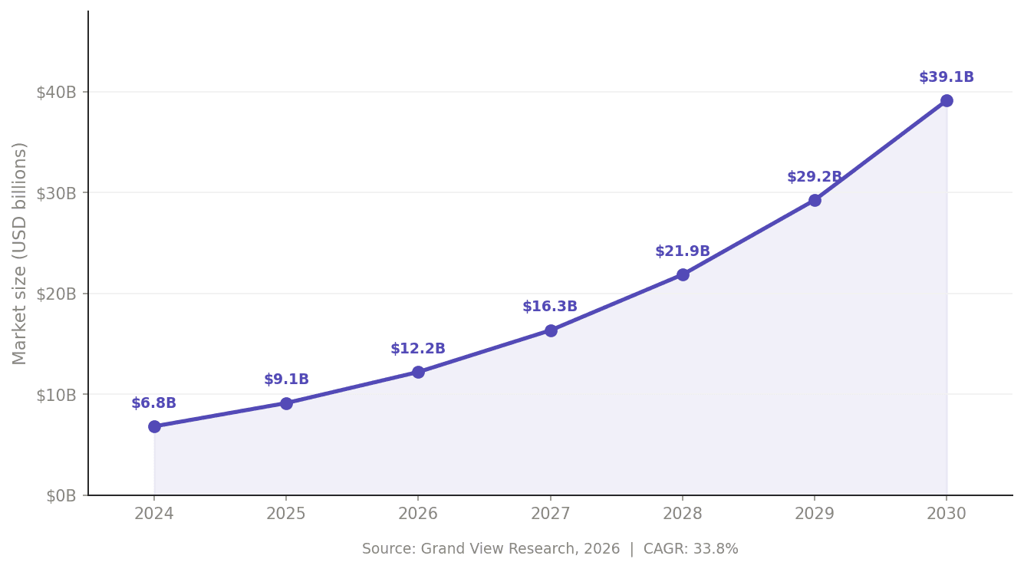
Fashion and beauty together represent one of the largest categories in influencer marketing, and fashion alone was worth $6.82 billion in 2024, with projections placing it at $39.72 billion by 2030, growing at a CAGR of 33.8%.
This is not a side experiment alongside retail marketing. It is the dominant acquisition channel for most consumer fashion brands, and brands treating it as anything less are already losing share to those that figured this out three years ago.
To learn why fashion influencer marketing plays by a different set of rules, which strategies are driving results in 2026, and how leading brands find and activate the right creators, keep reading this guide.
The State of Fashion Influencer Marketing in 2026
Fashion influencer marketing has crossed a threshold. The channel is no longer seen as a traditional retail marketing experiment run by the social team.
It is a structural acquisition channel with its own budget line, attribution infrastructure, and executive sponsorship at most major fashion brands.
Fashion Is One of the Largest and Fastest-Growing Categories
The global influencer marketing market is estimated at $40.51 billion in 2026, up from $31.07 billion in 2025, with fashion and lifestyle among the largest end-user categories.
Fashion alone hit $6.82 billion in market size in 2024. The category is one of the largest parts of the influencer economy and continues to grow faster than the market as a whole.
Fashion brands that have not built a structured influencer program are not holding steady. They are losing ground to competitors who have.
See where your brand fits in the market with the influencer budget calculator
Shoppable Formats Turned Content Into Measurable Revenue
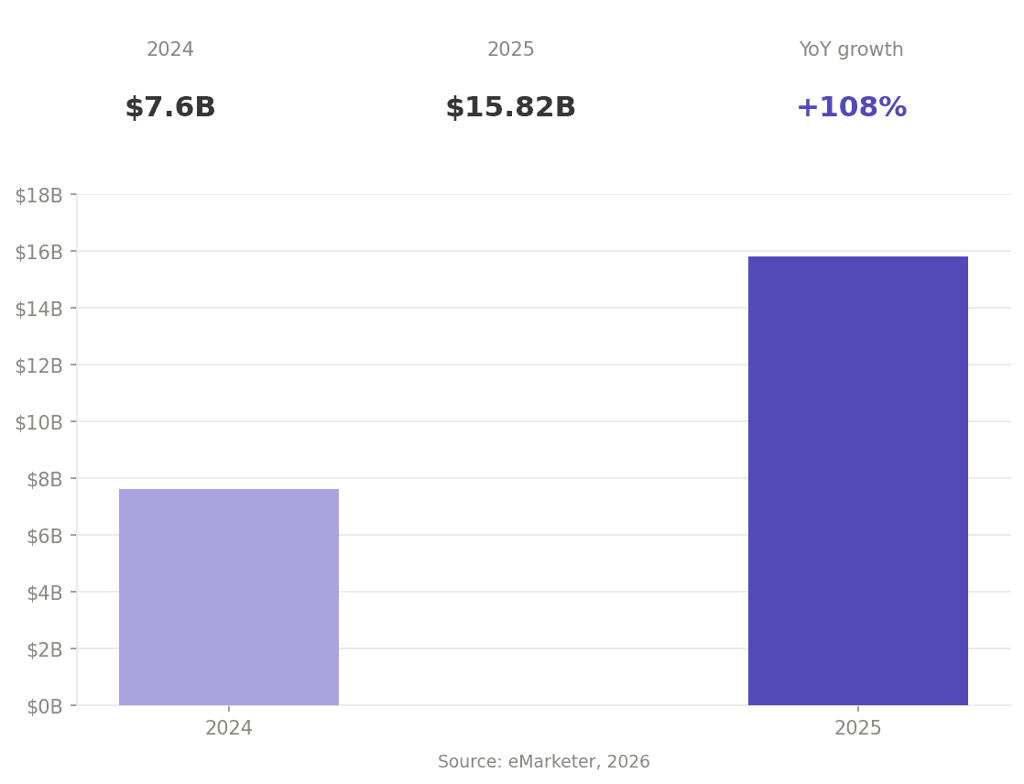
TikTok Shop’s US sales grew 108% in 2025 to $15.82 billion, and it now accounts for 18.2% of all US social commerce.
For fashion specifically, try-on content, styling hauls, and size-inclusive fit videos directly influence purchase decisions because the format shows the product on a real body, a context that a brand’s own photography cannot replicate.
The results speak for themselves. PUMA’s TikTok Shop affiliate campaign generated a 737% GMV increase in a single week, with 60% of revenue coming directly from affiliate creator partnerships. The shoppable format did not just add a revenue attribution layer. It changed which kinds of content convert.
Trust Shifted From Brand Pages to Creator Feeds
69% of users trust brands promoted by influencers more than those promoted by traditional advertising. For fashion specifically, where fit, styling, and real-body context drive the purchase decision, the trust gap between a brand’s lookbook and a creator’s try-on is even wider.
Fashion buyers do not trust a brand’s studio photography the way they trust a creator wearing the same piece in their actual wardrobe, in their actual size, and in their lighting.
Fashion Influencer Marketing Trends Shaping 2026
The fashion influencer playbook moves faster than any other category. The five trends below are the ones with the most impact on how fashion brands will run campaigns 12 months from now.
Nano and Micro Creators Are Eating Macro Budgets
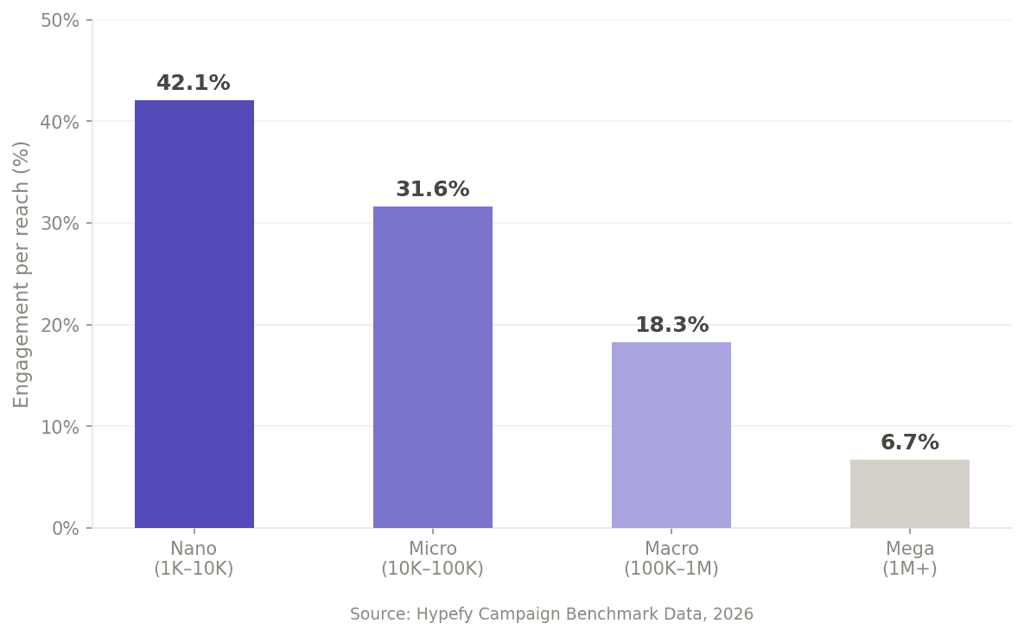
TikTok nano-influencers achieve average engagement rates of 10.3%, the highest of any tier on the platform, while micro-influencers come in at 8.7%, according to Influencer Marketing Hub.
Macro creators sit well below both. Fashion brands that used to spend $30,000 on one macro creator are splitting that budget across 15 to 25 nano and micro creators and seeing better engagement, better conversion, and more reusable content assets.
The budget math has changed. The question is whether the briefing and management infrastructure has kept up.
Model your cost per thousand impressions across tiers with the CPM calculator
TikTok-First Content Is Replacing Instagram-First Content
Instagram is still the most-used platform for influencer marketing overall, but TikTok is where fashion trends actually start. A sound-on, vertical, trend-aware video produced natively for TikTok and cross-posted to Instagram outperforms the reverse in almost every case.
Fashion brands that produce Instagram-first content and adapt it for TikTok are working against the grain of how each platform’s algorithm rewards content. The platform order matters more than most fashion marketers acknowledge.
UGC Creators Grew 93% Year Over Year
The number of UGC creators grew 93% year over year, as fashion brands increasingly hire creators for their content-production skills rather than their audience size alone.
The resulting assets run on the brand’s paid social channels, on product pages, and in email campaigns, compounding value beyond the original posting window.
For fashion brands with high content volume requirements, a UGC-first creator strategy can replace a significant portion of traditional product shoot spend.
AI Disclosure Is Becoming Mandatory
Fashion brands running AI-style lookbooks, AI-generated try-on content, or AI-edited campaign imagery need disclosure-tracking systems in place now, because the mandates are already in force.
AI-content labels are already mandatory and auto-detected on TikTok, Instagram, and Meta, and Meta requires advertisers to disclose AI-created or AI-edited media in regulated ad categories. For CEE brands specifically, the EU AI Act’s Article 50 labeling requirement begins enforcement in August 2026 for any AI-generated content shown to EU audiences.
Manual compliance at the volume of a fashion campaign is not viable. The brands building tracking systems now are not doing extra work. They are avoiding the compliance scramble that is coming.
Body and Aesthetic Diversity Is Now a Performance Criterion
Audiences increasingly punish fashion campaigns that show only one body type, one skin tone, or one aesthetic register.
Fashion brands that vet creator rosters explicitly for size range, ethnicity, age, and styling diversity outperform brands that default to a uniform look across their creator pool.
The top-performing fashion brands on TikTok Shop structure campaigns by sending the same SKU to creators in multiple sizes, capturing demand across the entire size curve rather than concentrating content at one end.
This is as much a revenue argument as a value one.
Fashion Influencer Marketing Strategies That Work
Influencer marketing in fashion is not one strategy. It is five distinct strategies, each tied to a different goal and a different point in the fashion calendar.
Knowing which one fits which moment is the difference between campaigns that produce content and campaigns that produce results.
Seasonal Campaigns (SS, FW, Holiday, Back-to-School)
Fashion runs on a calendar, but most other categories do not.
Spring/summer, fall/winter, holiday, back-to-school, and resort collections anchor the year, and seasonal campaigns coordinate creator content with collection availability, typically two to four weeks before retail launch, to build anticipation.
The brief structure stays consistent across seasons. The creator rotation refreshes each cycle to avoid audience fatigue and keep the creative feeling current.
Product Launch Campaigns (Capsules, Collabs, Hero Pieces)
Capsule drops and brand collabs benefit from concentrated creator activation: 10 to 30 creators posting within a 72-hour window to drive a single moment of attention.
This is the strategy that turns one product into the piece everyone is talking about. Tight coordination matters more than tier mix here. The goal is momentum, and momentum requires simultaneity.
Shoppable Campaigns (Direct Revenue-Attributed)
Fashion brands with strong DTC infrastructure run shoppable campaigns built around TikTok Shop, Instagram Shopping tags, and YouTube affiliate links.
The creator is hired specifically to drive measurable revenue, not awareness.
Compensation usually includes a base fee plus a performance commission, which aligns creator incentives with brand outcomes in a way that pure-paid campaigns do not.
Attribution is built into the format rather than retrofitted via UTMs.
Find creators producing content that outperforms with Hypefy’s discovery tool
Ambassador and Long-Term Partnership Campaigns
Recurring partnerships with a defined group of creators, typically 5 to 15, who represent the brand across multiple campaigns and seasons.
Ambassador programs cost more upfront but produce compounding audience familiarity, better content quality because the creator knows the brand’s product range and voice, and stronger negotiation leverage as the relationship matures.
The fashion brands building ambassador programs now are building the channel infrastructure that will compound for the next five years.
UGC and Content-Only Campaigns
The brand hires creators for their content production skills rather than their audience reach. The resulting content runs on the brand’s owned channels: paid social, product pages, email, and on-site.
Fashion brands use this strategy to run a constant content engine without rotating through separate production cycles for every shoot.
Usage rights typically extend for 6 to 12 months, and the per-asset cost is significantly lower than that of traditional production at comparable visual quality.
Best Practices for Fashion Influencer Marketing
Knowing the strategies is different from executing them well.
The best practices below come from running fashion campaigns across multiple CEE markets for retailers, distributors, and established consumer fashion brands.
Negotiate Usage Rights Upfront, Every Time
Fashion brands repurpose creator content more than any other category, into paid social, product pages, email banners, lookbooks, and on-site assets.
Without negotiated usage rights, you pay the creator once for the post and again when you want to use the content elsewhere.
The upcharge for usage rights at the contract stage typically adds 30 to 50% to the base rate for repurposing across owned channels, with paid-ad and whitelisting permissions costing more on top.
Addressing it upfront is significantly cheaper than renegotiating under time pressure after the campaign closes.
Lock usage rights before the brief goes out, define the scope, platforms, geographies, and duration explicitly, and it becomes a routine line item rather than a recurring dispute.
Match Creators to Your Brand Aesthetic
Fashion is uniquely aesthetic-driven. A creator with the right audience demographics but the visually off-brand produces content that reads as off-brand and underperforms regardless of the brief.
Vet creators on their feed color palette, styling sensibility, shooting environment, and content tone before you get to audience or engagement numbers. That filter comes first.
Brief on the Message
Fashion creators know how to style. Telling a creator exactly what to wear, how to shoot it, and what caption to write produces ad-shaped content that performs like an ad.
Brief on the brand message, the campaign hook, the required disclosure, and the deliverable format.
Then let the creator style and shoot it the way their audience expects. The content will be better and the engagement will show it.
Coordinate Posting for Capsules and Drops
For capsule launches and hero product drops, posting cadence matters more than total reach. Five creators posting within 24 hours produce more platform momentum than 20 creators posting across two weeks.
Algorithms reward concentrated signals. Build a content calendar with specific posting windows for each creator and make on-time posting a contract requirement, not a request.
Build Content Packages
Do not brief one Reel. Brief a content package: feed post, Reel, Story sequence, raw photo files for repurposing.
Bundling multiple deliverables into one contract gives the brand far more content for its on-site, email, and paid social channels, at a per-unit discount of 10 to 25% compared to commissioning each asset separately.
In fashion, that volume is the point: one drop has to show up in the feed, in Stories, on the product page, and in the launch email, often in the same window, and a single package covers all of it from one shoot.
Track Size and Fit Context as Required Brief Elements
Audiences trust creators who explicitly mention what size they are wearing and how it fits. Build “size worn” and “true to size / runs small / runs large” into the brief as required content elements, not optional additions.
Fashion brands that do this consistently see lower return rates from creator-driven traffic because the audience arrives with accurate fit expectations.
Lock Multi-Market Rights From the Start
Fashion brands operating across multiple markets need creator content cleared for use in every relevant market at the contract stage.
Multi-market rights cost more upfront but prevent the content shortage that hits brands in markets with thinner local creator pools and where organic reach does not cover the gap.
How to Find the Right Fashion Influencer for Your Brand
Finding the right fashion creator is harder than finding the right beauty or tech creator because fashion lives on visual fit in a way that beauty and tech do not.
Audience match and engagement quality are necessary but not sufficient.
The four steps below are the discovery framework that works specifically for fashion.
Define Your Aesthetic Before You Define Your Audience
Most fashion brands start with audience discovery. That is the wrong starting point.
Pull 10 reference posts that capture how your brand should look and feel in creator content. Use those as the visual anchor for your shortlist.
Then layer in audience demographics, geography, and engagement filters on top.
Without the aesthetic anchor, every shortlist will include creators who reach the right people but produce content that looks wrong next to the brand.
Filter by Engagement Rate Against Fashion Benchmarks
Fashion creators tend to have inflated follower counts due to giveaway and follow-for-follow loops.
The engagement benchmarks to filter against are TikTok nano above 10%, TikTok micro above 5%, Instagram nano above 1.5%, and Instagram micro above 1%, with macro sitting below those thresholds on both platforms.
Anything consistently below those numbers signals an audience-quality issue worth understanding before you commit to a budget.
Check any creator’s real engagement rate with the Instagram engagement rate calculator
Verify Audience Geography Matches Your Distribution
A fashion creator with 80,000 followers primarily based in a market you do not sell in will not move product, regardless of how well their aesthetic fits.
For multi-market fashion brands, audience country breakdowns matter more than total reach.
Check geography before contracting, not after the campaign launches, and the numbers do not reflect your actual market.
Vet for Body Diversity, Styling Range, and Prior Brand Fit
Fashion vetting goes beyond engagement quality. Scroll through the creator’s last 30 posts.
Do they show themselves in only one body context or in varied, real-world settings? Do they style across multiple aesthetics or only one? Have they worked with direct competitors recently?
Each of these signals predicts campaign fit more reliably than follower count or engagement rate alone.
Successful Fashion Influencer Campaigns Worth Studying
The fastest way to understand what works in fashion influencer marketing is to study real campaigns.
Each example below follows the same structure: what happened, why it worked, and what you can apply to your next campaign.
#MyCalvins: Made Every Customer a Creator
Why it worked: Calvin Klein’s #MyCalvins campaign generated over 1 million fan interactions across an audience of more than 50 million within the first 24 hours, starting from an initial group of more than 100 global creators. The hashtag has since grown past 800,000 posts as everyday customers joined in, not just the seeded creators. The mechanism was simple: the same brief for celebrity creators and nano creators alike. ‘Wear the product, use the tag.’ Low participation barrier, infinite creative variation.”
What you can learn: Hashtag campaigns only work when the creative format is simple enough to execute without a production budget. The long tail of UGC from smaller participants is where the campaign builds SEO value, social proof, and purchase intent long after the celebrity posts stop performing.
Jaffa Crvenka: Turned One Launch Into a Multi-Market System
Why it worked: Jaffa used Hypefy to identify 16 creators whose audiences matched a precise demographic profile across major Croatian cities for a new product launch. The campaign generated 1.8M reach and 2.6M impressions from 41 pieces of content, with the best-performing single post accounting for nearly 30% of total reach. Every KPI was exceeded. That first campaign served as the briefing for 12 more campaigns across 4 markets, reaching 8.7M people through 150 creators.
What you can learn: One documented campaign is not a result. It is a dataset. The creator mix, demographic targeting, and content format that drove 30% of the reach from a single post become inputs for the next campaign. Brands that document campaign one properly are already building campaign two.
NIVEA: 129 Campaigns, Four Markets, One Platform
Why it worked: NIVEA ran 129 influencer campaigns across Croatia, Serbia, Slovenia, and Bosnia and Herzegovina over three years on Hypefy, reaching 43.2 million people and generating 1.7 million engagements across 59 million impressions. The campaigns were not treated as a single regional block.
Some launched across all four markets simultaneously, others stayed local. Product categories ranged from body care and sun care to men’s grooming, derma, and licensed co-brands including a Disney Princess x Labello activation and a NIVEA Men x Real Madrid campaign. 56 of the 129 campaigns delivered an engagement rate per reach above 4%. 19 cleared 7%.
The Konzum retail activation in Croatia hit 13.09%, the highest of the entire run, on 308k reach with 40k engagements. A retail campaign clearing 13% engagement rate signals one thing: the creator match found audiences who trusted the recommendation.
What you can learn: Scale does not require multiplying teams and vendors. NIVEA ran four markets, dozens of product lines, and three years of campaign activity through one platform with one workflow and one reporting view. The brands that treat influencer marketing as a system rather than a series of individual briefs are the ones that can run at this volume without the overhead multiplying alongside it.
Argeta: 14 Markets, 18 Months, One Workflow
Why it worked: Argeta, a Slovenian food brand and category leader across the Balkans, needed to test 14 European markets without committing to a separate local setup in each. Over 18 months, the brand ran 21 campaigns across 14 markets, reaching 4.6 million people with 254k engagements and 160+ pieces of content from 90+ creators.
The most efficient campaign, the Nr. 1 in Europe positioning rollout in Slovakia, reached 1.37 million people at a 7.63% engagement rate per reach in a market where the brand had no prior presence.
The Austria Extra Pikant campaign hit 8.18%, the highest of the entire run. A synchronized Fish Friday launch across Croatia, Slovenia, Serbia, North Macedonia, and Kosovo went live across five markets on the same day from a single brief, reaching 1.36 million people combined.
What you can learn: Market entry does not have to mean committing a full local budget to each country before you know whether the audience responds. Running lean, AI-matched campaigns in new markets first, then scaling what works, is a faster and cheaper way to learn than a hero campaign that either breaks through or disappears. When testing is cheap, you can afford to test more markets. Argeta tested fourteen.
Burgerme: Five Products, Five Months, No Subscription
Why it worked: German food delivery brand burgerme ran five influencer campaigns in five months across Germany, reaching 1.4 million people through 19 creators and 48 pieces of content. Most brands with a multi-product menu pick one hero product and save the entire budget for it.
Burgerme gave each product its own campaign: the Veggie Burger, the Countryside Aktionsburger, the Cheesy Chicken Bundle, a Lunch Deal campaign, and a Big Angus review activation. The Cheesy Chicken Bundle, the brand’s flagship launch, hit a 3.00% engagement rate per reach, right at the German food category median.
The Veggie Burger, the hardest brief of the five because it needed to find meat-free audiences within a burger brand’s creator pool, delivered 2.37% with creators whose audiences had already shown interest in plant-based content. No creator appeared in more than one campaign. Each brief pulled a fresh, custom-matched set.
What you can learn: The argument for running more campaigns rather than fewer is operational. When the workflow does not multiply with the number of briefs, there is nothing stopping a brand from running one every time something new goes to market. Burgerme ran five briefs in five months. The limiting factor was never the platform. It was having something new to launch.
The Hypefy Way for Fashion Brands
Fashion influencer marketing for fashion brands fails operationally before it fails creatively. The briefs are fine. The creators are available.
The budget exists. What breaks is the system underneath: discovery that misses the best-fitting creators, contracts that do not properly lock usage rights, content review that happens over email threads, and reporting that arrives three weeks after the campaign ended.
Hypefy handles the operational layer: AI-led discovery that matches creators by aesthetic fit and audience quality across Instagram and TikTok, not just those who joined a marketplace.
Multi-market coordination from one dashboard with built-in translation for CEE-wide rollouts.
One workflow from discovery through outreach, contracts, content review, payments, and reporting.
Hypefy runs on a campaign-based fee with no monthly subscription, and is used by retailers and established consumer brands across CEE.
Fashion Influencer Marketing FAQs
Partnerships between fashion brands and creators to promote products, collections, or brand identity across Instagram, TikTok, and YouTube. Ranges from one-off gifting to multi-year ambassador programs.
Nano and micro creators typically run $100 to $2,000 per post, which puts a 15 to 25 creator campaign in the low five figures, while macro creators command $5,000 to $20,000 or more each. Ambassador programs cost more upfront but less per campaign over time.
Instagram for brand aesthetics and audiences 25 and older. TikTok for trend generation and Gen Z reach. YouTube for haul content and styling tutorials that build purchase intent. Most effective campaigns use at least two.
Define the aesthetic before the audience. Pull reference posts, layer in geography and engagement filters, then scroll the last 30 posts for brand fit and competitor activity before shortlisting. Platforms like Hypefy speed this up by filtering creators on aesthetic fit, audience geography, and engagement quality in one place.
On conversion-focused campaigns, yes. Higher engagement correlates with higher trust, which drives conversion in fashion categories where fit and styling credibility matter. Mega creators are the right choice for awareness, not direct purchase behavior.
On three layers: platform metrics (reach, engagement), business metrics (revenue via TikTok Shop, Instagram Shopping, or UTMs), and brand metrics (search lift, repeat purchase, sentiment). Creator-level UTMs and discount codes provide per-creator attribution.
Capsule drops run 72 hours to two weeks. Seasonal campaigns run two to four weeks before retail availability. Ambassador programs run on monthly or quarterly checkpoints. UGC campaigns run as long as usage rights allow.