The strongest HypeAuditor alternatives are Hypefy, Influencer Hero, Modash, Influencity, Upfluence, GRIN, Traackr, CreatorIQ, Heepsy, and Collabstr.
The right pick depends on whether you want cheaper creator vetting at a similar depth or a platform that runs campaigns as well as analyzing them.
This guide covers what HypeAuditor costs, a side-by-side comparison of all ten HypeAuditor competitors, and which one fits which kind of team.
Why Brands Look for HypeAuditor Alternatives
HypeAuditor is strong at telling you whether a creator is worth working with. Most teams that start comparing alternatives are not disputing the quality of the data; they have hit the price, the usage limits, or the point where they need a campaign executed as well as measured.
What HypeAuditor Costs
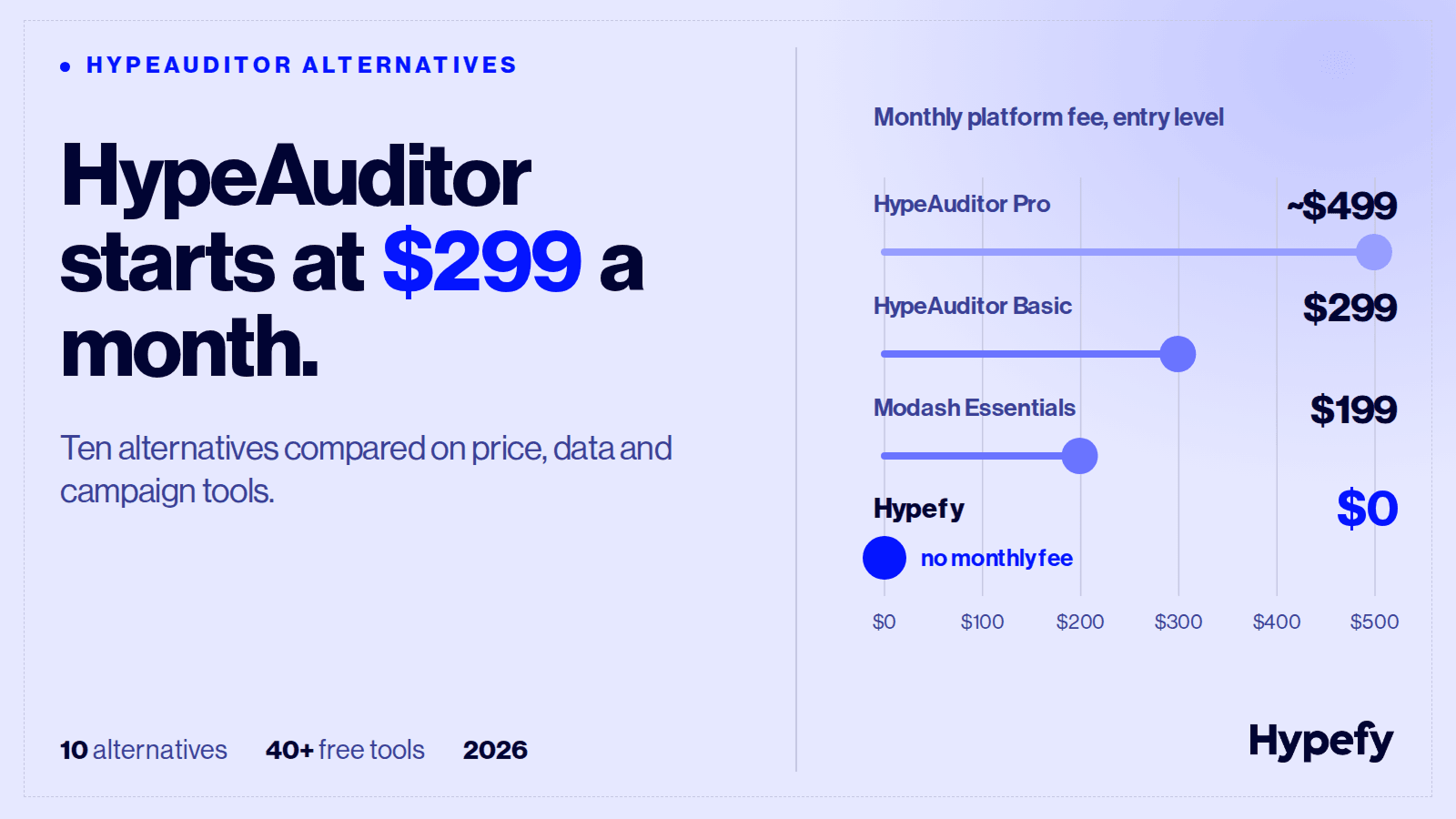
The Basic plan starts at $299 per month billed annually, according to HypeAuditor pricing. The Pro tier is reported at around $499 per month, also on annual billing, and Enterprise is quote-only. Software directories list other figures, including $399 per user per month, so HypeAuditor’s own published number is the one to work from. Pricing checked in September 2026.
All plans include the same core modules: discovery, analytics, CRM, and campaign management.
The tiers differ by usage limits rather than by features.
The Basic plan comes with limited access to discovery filters; AI Search, the Audience Quality Score filter, and advanced audience parameters are available only on higher tiers. Recruitment tools are not included at the Basic level.
Do not budget from the entry price alone; map out the filters, seats, and usage your program needs before taking a number from the pricing page.
Analytics First, Campaigns Second
HypeAuditor is built around vetting and measurement. The platform provides detailed vetting data: audience quality scores, engagement authenticity, geographic breakdown, and fake-follower detection across Instagram, TikTok, YouTube, and Twitter/X.
Campaign management, outreach, and payments sit alongside that core rather than being the main event, so what the platform does less well is what happens after you have chosen a creator.
Teams that move from HypeAuditor to a broader platform typically do so when they are running outreach through email, managing briefs in a separate document, processing payments outside the platform, and tracking results in a spreadsheet, and want all of that in one place.
Stitching those tools together costs both money and time, even when HypeAuditor's own pricing is within budget, which is the most common reason teams start comparing.
Free Tools, but a Gated Trial
HypeAuditor pairs a limited free tier with more than 40 free tools for one-off creator checks, such as engagement rate calculators, money calculators, and audience credibility reports for single profiles.
These are useful for occasional spot checks but don't replace a full platform evaluation.
There is no self-serve full trial. A team that wants to put the platform through a real evaluation has to ask for access, and that request goes through sales.
That suits enterprise teams with procurement processes that expect a demo anyway. It suits less well a small team or an agency that wants to test the platform hands-on before deciding to buy.
Model your campaign spend before committing to any platform with the marketing budget calculator.
HypeAuditor Alternatives at a Glance
Here is how the ten alternatives compare across the factors that usually decide the choice.
Platform | Best for | Platform coverage | Standout strength | Pricing model | Free tier or trial |
|---|---|---|---|---|---|
Hypefy | End-to-end campaigns, no subscription | Instagram, TikTok | Audience quality built into matching; full workflow | Campaign-based, no monthly fee | Free single-creator tools; no sales call required to start |
Influencer Hero | eCommerce brands and agencies, discovery through payout | Instagram, TikTok, YouTube | 450M+ creators, AI outreach, automated gifting and affiliate payouts | From $649/month | Free Chrome extension; demo available |
Modash | Large database, affordable monthly access | Instagram, TikTok, YouTube | 380M+ profiles, no opt-in required | From $199/month | 14-day free trial |
Influencity | Audience overlap analysis, multi-market | Instagram, TikTok, YouTube | Audience geography and overlap tools | From $168/month | 7-day free trial |
Upfluence | eCommerce brands with existing customer data | Multi-platform | Live Capture from customer lists | Custom pricing (on request) | No public trial |
GRIN | Shopify DTC brands, creator lifecycle | Multi-platform | Revenue attribution to individual creators | Has a free plan, with paid plans starting at $200/month | Free plan |
Traackr | Enterprise brands needing governance | Multi-platform | Compliance scoring, benchmark reporting | Custom enterprise | No public trial |
CreatorIQ | Large agencies and enterprise brands | Multi-platform | Creator graph, CRM, measurement suite | Custom enterprise | No public trial |
Heepsy | Entry-level discovery and vetting | Instagram, TikTok, YouTube | Follower quality metric, low entry price | From $69/month | 14-day free trial |
Collabstr | Open marketplace, transparent pricing | Instagram, TikTok, YouTube, UGC | Creator-set prices, escrow payments | Free to $333/month; 10% fee (5% on Premium) | Free to browse |
Pricing reflects publicly available information at the time of publication and should be checked against each vendor's site.
The 10 Best HypeAuditor Alternatives in Depth
1. Hypefy
Good for: Brands running regular campaigns who want matching and execution without a monthly subscription.
Limitations: Instagram and TikTok only. Does not replace a dedicated analytics tool for teams that need deep audience auditing across multiple platforms.
Hypefy is an AI-powered influencer marketing platform that runs the full campaign workflow on Instagram and TikTok, from creator matching through to payment.
Where HypeAuditor surfaces vetting data so a team can decide who to work with, Hypefy assesses audience quality as part of the matching process itself; engagement scoring, geographic audience breakdown, and authenticity signals are visible at the shortlist stage, before outreach.
After the match, outreach, briefing, content approval, contracts, and payments all run in the same workflow. Pricing sits inside the campaign budget with no subscription between campaigns.
HypeAuditor goes deeper as a standalone analytics product and covers more platforms. Hypefy is the stronger option for teams that want creator quality assessed and the campaign executed in one place on Instagram or TikTok.
2. Influencer Hero
Good for: eCommerce brands, direct-to-consumer (DTC) teams, and agencies that want creator vetting and campaign execution in one platform.
Limitation: Plans start at $649 a month with a three-month minimum, and there's no free trial, so a full evaluation starts with a demo.
Influencer Hero is an all-in-one influencer marketing tool for eCommerce brands, DTC teams, and agencies, covering Instagram, TikTok, and YouTube.
Where HypeAuditor is built to answer whether a creator is worth working with, Influencer Hero covers that vetting step and then carries the campaign through outreach, gifting, affiliate tracking, and payouts. Your team doesn't need a second platform to act on what the data shows.
Its database covers 450M+ creators across Instagram, TikTok, and YouTube, searchable with 20+ filters. A free Chrome extension shows fake follower percentage, growth trends, audience demographics, and earned media value (EMV) on any profile.
Outreach runs through AI-personalized email sequences, which Influencer Hero reports average a 43% reply rate. From there, automations handle product shipments, discount codes, affiliate links, and contracts.
Sales, clicks, and EMV are tracked per creator, payouts are built in, and the platform connects to 45+ tools, including Shopify, Amazon, Magento, and Klaviyo.
Pricing is published, with the Standard plan at $649 a month on a three-month commitment, or $454 a month billed annually.
HypeAuditor goes deepest on audience authenticity, while Influencer Hero is built for the work that follows, where a vetted shortlist becomes tracked, paid creator partnerships.
3. Modash
Good for: Teams that want a large, affordable discovery database with month-to-month flexibility and no long-term contract.
Limitation: No marketplace, so every creator relationship starts with outbound work, and the entry tier caps at 100 tracked creators and 300 profile views a month.
Modash is a creator discovery and analytics platform across Instagram, TikTok, and YouTube, including creators who have never opted in to any platform, and gives teams access from $199 a month billed annually, or $299 billed monthly.
Its audience quality data includes fake follower scores, geographic breakdown, engagement rate by post type, and audience demographics. It also covers campaign management, gifting, and inbox-based outreach on every plan, with creator payments and affiliate payouts on the Performance tier.
It doesn't match HypeAuditor for single-profile analytical depth, but it covers a much larger pool at a lower entry cost and requires no annual commitment.
4. Influencity
Good for: Brands expanding into new markets where understanding audience overlap across a creator roster matters.
Limitation: Credit-based usage model can run out mid-campaign. Learning curve on the interface.
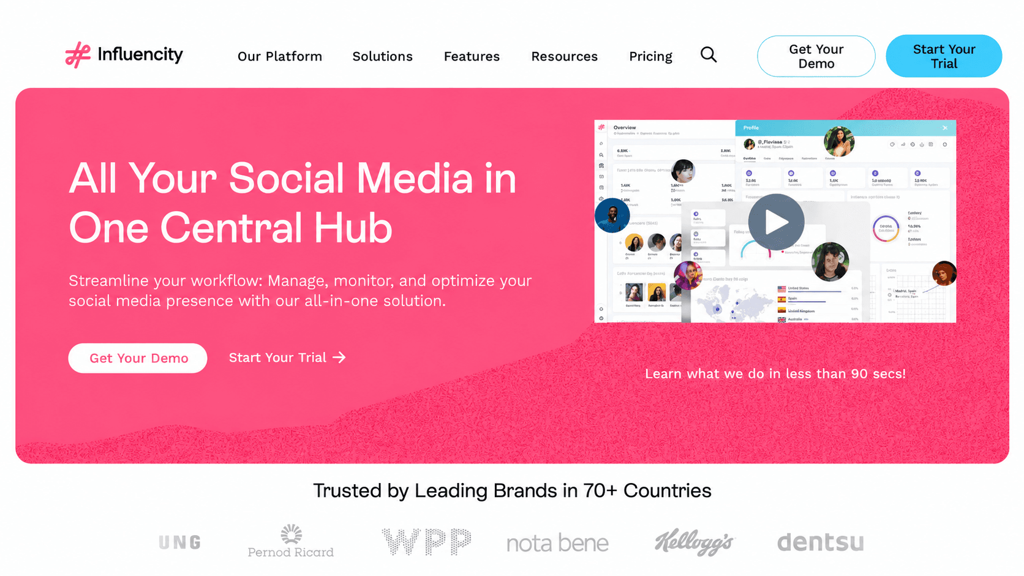
Influencity covers Instagram, TikTok, and YouTube and is strongest on audience overlap detection, identifying which creators share audiences with each other, which matters for multi-market expansion and for avoiding over-saturation in a campaign roster.
Its audience quality data includes authenticity scores, geographic breakdown, engagement rate analysis, and fake-follower flags.
The vetting covers the essentials for shortlisting, though HypeAuditor goes deeper on single-profile audience auditing.
The credit-based model means teams can hit limits mid-campaign.
5. Upfluence
Good for: eCommerce brands that want to find creators inside their own customer list and attribute sales back to individual creators.
Limitation: 12-month contract with opaque full pricing. Not suited to teams wanting to test before committing.
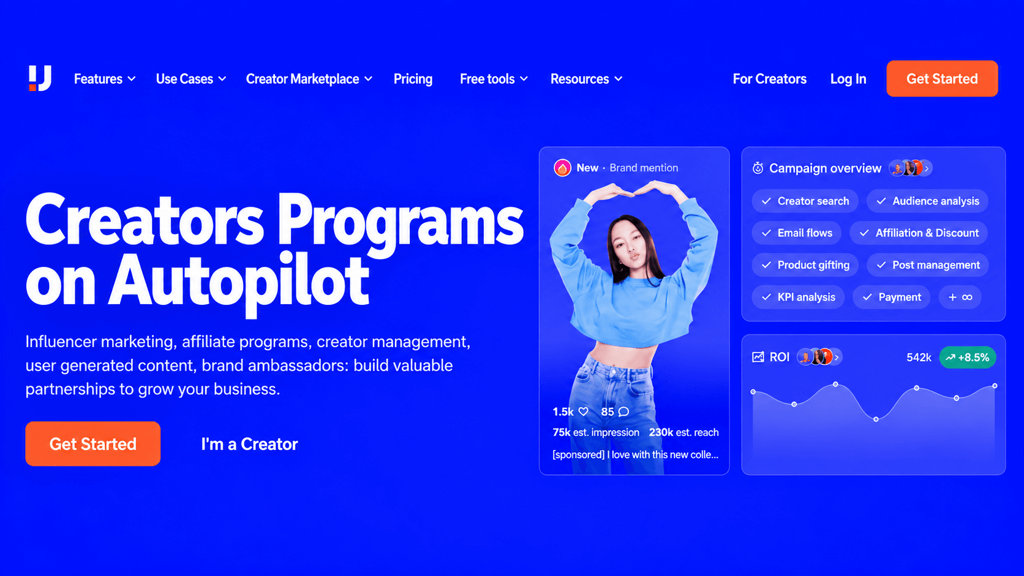
Upfluence's differentiator is Live Capture, a feature that identifies creators already in the brand's existing customer base from Shopify, WooCommerce, or Klaviyo data.
This produces a starting point for campaigns built on people who already know and use the product.
Its vetting capabilities cover audience demographics, engagement quality, and brand affinity data.
The platform is stronger on campaign execution and revenue attribution than on standalone audience auditing.
6. GRIN
Good for: Shopify DTC brands running influencer programs at scale where revenue attribution to individual creators matters.
Limitation: Discovery is lighter than in dedicated search tools, and costs rise with credit usage once a team goes past its plan's monthly allowance.
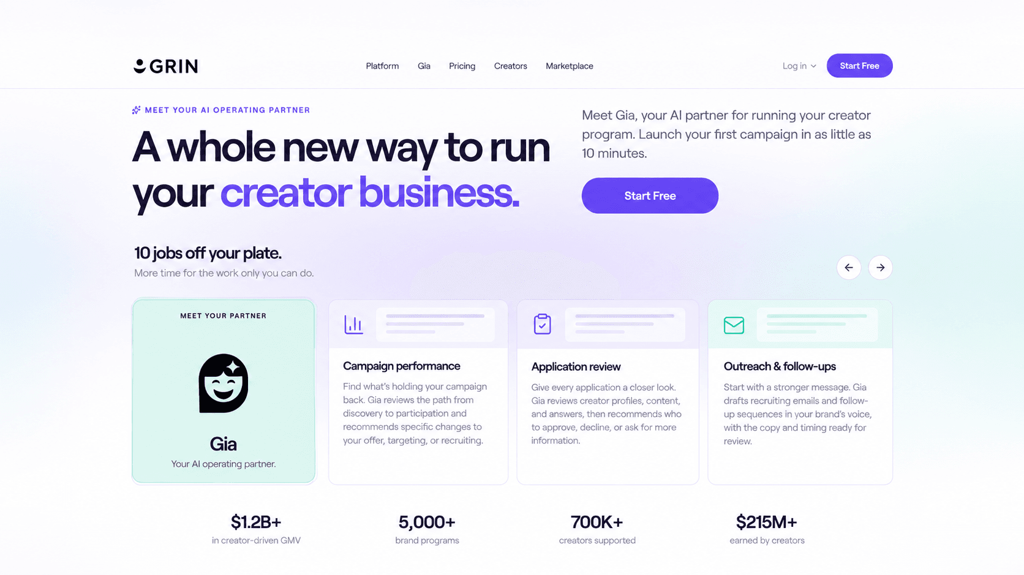
GRIN covers the full creator lifecycle for Shopify and DTC brands: discovery, gifting, content management, payments with 1099 processing, and revenue reporting tied to Shopify order data.
It has the most complete attribution picture of any platform on this list for brands selling through Shopify.
Vetting is lighter than in dedicated discovery tools, since GRIN is an execution platform first and audience analytics sit behind the campaign workflow.
7. Traackr
Good for: Enterprise brands with compliance, governance, and multi-team coordination requirements for influencer programs at scale.
Limitation: Enterprise-only pricing and complexity make it inaccessible for smaller teams and mid-market brands.
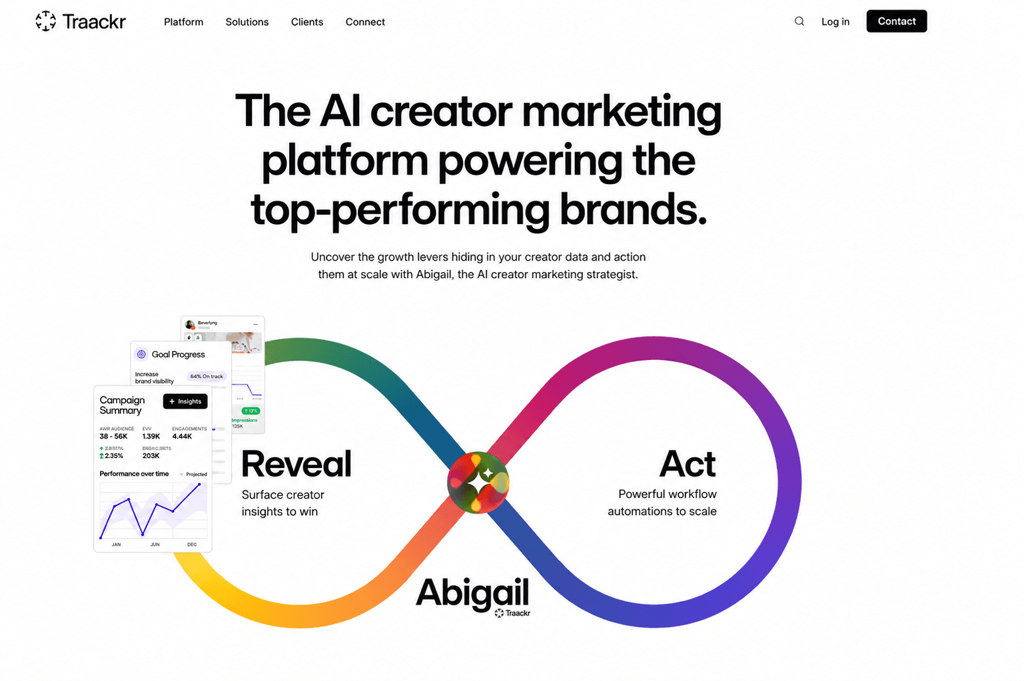
Traackr is built for enterprise brands with governance requirements: compliance scoring, benchmark reporting against industry standards, and multi-team workflow management with role-based permissions.
It covers a wide range of platforms and has deep reporting capabilities for brands that need to demonstrate ROI internally.
Its vetting includes audience quality, engagement authenticity, and brand safety scoring. Pricing is enterprise and custom only, which puts it out of reach for small and mid-market teams.
8. CreatorIQ
Good for: Large agencies and enterprise brands running multi-market, multi-team influencer programs who need a comprehensive CRM and measurement suite.
Limitation: Enterprise pricing and complexity. Requires a dedicated team to use effectively.
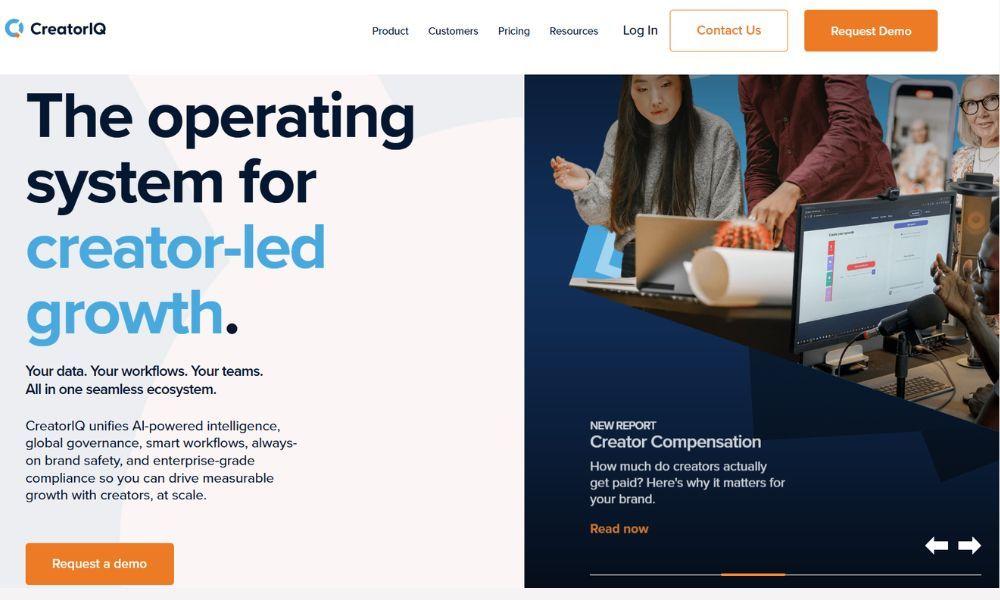
CreatorIQ is used by large agencies and enterprise brands for creator discovery, CRM, measurement, and campaign analytics at scale.
Its creator graph, a proprietary database of creator relationships and audience connections, is the strongest feature for brands running complex multi-creator programs across many markets.
CreatorIQ’s vetting includes audience quality and authenticity scoring.
Pricing is custom enterprise and typically suits brands with large dedicated influencer marketing teams.
Teams without dedicated influencer marketing infrastructure will find it over-engineered for their needs.
9. Heepsy
Good for: Small teams and solo marketers who need basic discovery and audience vetting at a low monthly cost with no annual commitment.
Limitation: Much smaller database than alternatives. Discovery and vetting only, no campaign execution tools.
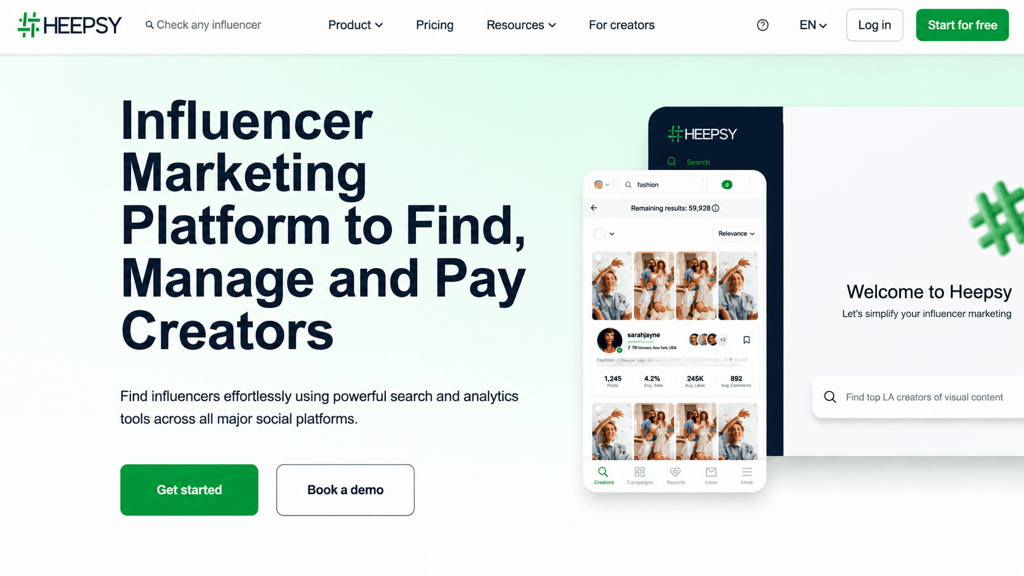
Heepsy is the most accessible entry point on this list at $69/month, covering creator profiles across Instagram, TikTok, and YouTube. Its Followers Quality metric flags suspected fake followers before outreach, and its geographic and niche filters are straightforward to use.
The database is significantly smaller than Modash or Influencity, which matters for niche or regional briefs. It covers discovery, vetting, and email outreach, with creator payments from the Plus tier, but no contracts.
10. Collabstr
Good for: Brands that want to find and book creators at transparent prices without negotiation or subscription, particularly for UGC.
Limitation: No audience quality data or fake follower detection. Discovery is limited to creators who have opted in to the marketplace.
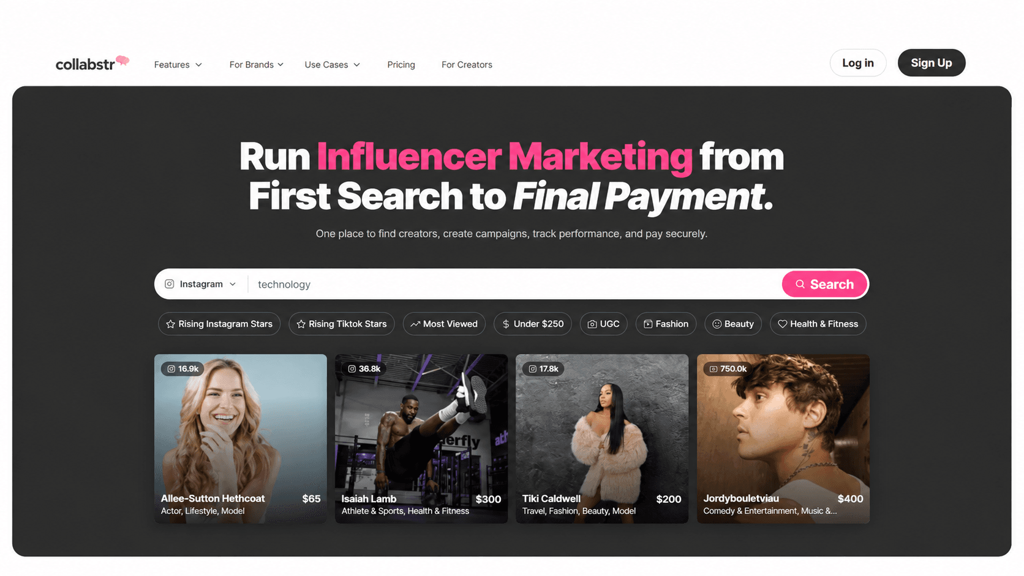
Collabstr is an open creator marketplace where creators set their own prices, brands browse and book, and payments are held in escrow.
There is no cold outreach and no negotiation; the price listed is the price paid.
Its vetting is limited to what is visible on a creator's public profile; there are no audience quality scores or fake follower detection built into the platform. It handles booking rather than analytics.
Which HypeAuditor Alternative Fits Your Team
You want the same vetting depth for less. Modash gives a large database at a low monthly price with a self-serve trial. Heepsy gives basic vetting at the lowest absolute price.
You need the campaign run start to finish. Hypefy covers creator matching and the full campaign workflow in one place. Influencer Hero does the same on a monthly subscription across Instagram, TikTok, and YouTube, and GRIN covers it for Shopify brands.
You are an eCommerce brand that needs sales attribution. GRIN or Upfluence both tie creator activity back to Shopify order data in a way HypeAuditor does not.
You are an enterprise brand with governance and compliance requirements. Traackr and CreatorIQ are both built for multi-team, multi-market programs with role-based controls.
You only need occasional one-off creator checks. HypeAuditor's own free tools cover basic checks at no cost. Heepsy's entry plan at $69/month covers more systematic vetting without a major commitment.
You have the smallest possible budget. Collabstr's free browse tier lets you see creator pricing before committing anything. Heepsy at $69/month is the lowest-priced tier for a tool that vets audience quality.
Where Hypefy Fits
Hypefy is not the right answer for everyone leaving HypeAuditor, but it fits one situation well: teams that want creator quality assessed and the campaign run in the same place, on Instagram and TikTok.
Where HypeAuditor helps you decide who to work with, Hypefy also runs the work. It starts with AI-driven matching on Instagram and TikTok, with audience quality built into the match rather than sitting in a separate report, so engagement scores, geographic audience breakdown, and authenticity signals are on the shortlist from the start.
The same engagement and audience-quality checks are also available as free tools, for vetting a single creator before you open a campaign.
After the match, the same platform handles outreach, contracts, content approvals, payments, and reporting, so nothing spills into a separate document or spreadsheet.
There are no fees until a campaign launches, which is the clearest structural difference from an annual plan with usage limits. The pricing page sets out how that works.
Factor | Hypefy | HypeAuditor |
|---|---|---|
Platform coverage | Instagram, TikTok | Instagram, TikTok, YouTube, Twitter/X, and others |
What happens after choosing a creator | Outreach, contracts, approvals, payments, reporting on the same platform | Team uses separate tools for each step |
Pricing structure | Campaign-based, no monthly subscription | From $299/month billed annually, usage limits apply |
Built for | Brands and agencies running regular campaigns | Brands and agencies that need deep standalone analytics |
How creator quality is assessed | Built into matching, visible at the shortlist stage | Audience quality reports per creator, plus quality filters in discovery on higher tiers |
Two limits worth stating plainly. HypeAuditor covers more platforms than Hypefy does, and it is a deeper standalone analytics product.
If you have been paying for that analytics depth on purpose, this is the place to be honest with yourself.
A team that needs audience auditing and earned media value reporting as a capability in its own right, or that works with creators outside Instagram and TikTok, is better served by HypeAuditor or one of the options above.
See how Hypefy's Discovery and Matching Works
HypeAuditor Alternatives FAQs
1. What are the best HypeAuditor alternatives?
The strongest alternatives are Hypefy for end-to-end campaign execution with audience quality built in, Influencer Hero for vetting and campaign execution in one subscription platform, Modash for affordable discovery at scale, Heepsy for budget entry-level vetting, and Collabstr for transparent marketplace pricing.
2. How much does HypeAuditor cost?
The Basic plan starts at $299 per month billed annually. The Pro tier is reported at around $499 per month on annual billing, and Enterprise is quote-only.
All plans include the same modules, with higher tiers lifting usage limits and adding advanced filters such as AI Search and the Audience Quality Score filter.
3. Does HypeAuditor have a free plan?
HypeAuditor offers a limited free tier with more than 40 free tools for one-off creator checks. Full trials are by request only and are granted case by case rather than available self-serve.
Teams that want to run a proper evaluation before committing typically need to go through a sales conversation first.
4. Why do brands switch from HypeAuditor?
Teams switch for three reasons: usage-based pricing climbs faster than expected once a program scales, running campaigns needs a separate toolset on top of HypeAuditor's analytics, and the gated trial makes it harder to evaluate before committing.
Teams that need campaigns executed as well as analysed are the most likely to switch.
5. Which alternative is best for detecting fake followers?
Modash and Influencity both offer audience quality scoring with fake follower detection at lower price points than HypeAuditor.
For a single-profile free check, HypeAuditor's own free tools and Influencer Hero's free Chrome extension both show fake follower percentage.
For the most systematic vetting built into a discovery workflow, Modash covers the largest pool at the lowest recurring cost.
6. What is the best HypeAuditor alternative for a small team?
Heepsy is the strongest pick at $69 a month, giving basic discovery and vetting, and Modash is the next step up at $199 a month with a 14-day free trial and a larger database.
Hypefy suits a small team that wants to run campaigns without a monthly subscription and without a separate vetting-only tool.
7. How does HypeAuditor compare to Upfluence?
HypeAuditor is a deeper standalone analytics tool.
Upfluence is stronger on campaign execution and eCommerce attribution, particularly for Shopify brands.
Upfluence's Live Capture feature, finding creators inside a brand's existing customer list, has no equivalent in HypeAuditor.
HypeAuditor's audience quality scoring is more detailed. Both are annual commitments, but HypeAuditor publishes an entry price and Upfluence does not, so only one of the two can be budgeted for without a sales call.
8. Is HypeAuditor worth it in 2026?
For teams that primarily need to vet creators before working with them and want the most detailed audience quality data available, yes.
For teams that also need to run outreach, manage campaigns, and track results in one place, HypeAuditor is likely one tool in a stack, and the campaign workflow typically sits in separate tools alongside it.
How much sense the pricing makes depends on how many creators you analyze per month and whether you hit the Basic plan's usage limits before needing to step up to a higher tier.