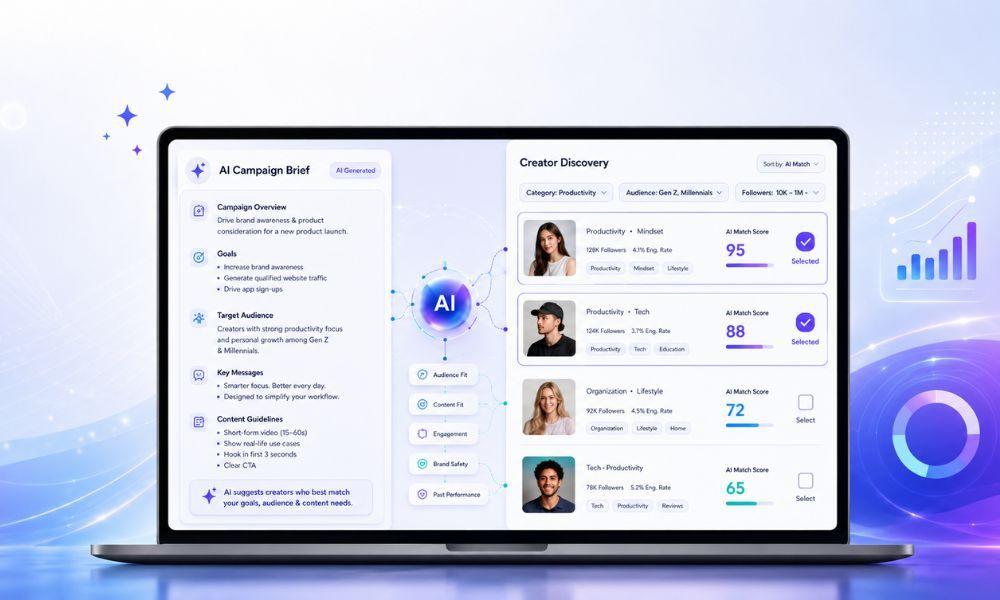
The best AI tools for influencer campaign briefs and creator selection automate two of the most time-consuming parts of a campaign: writing the brief and choosing the right creators.
The strongest options in 2026 are Hypefy, Modash, Upfluence, and CreatorIQ. Which one fits depends on how much of the campaign you want the tool to handle and whether you need execution or just data.
Quick Picks: The Best AI Tools at a Glance
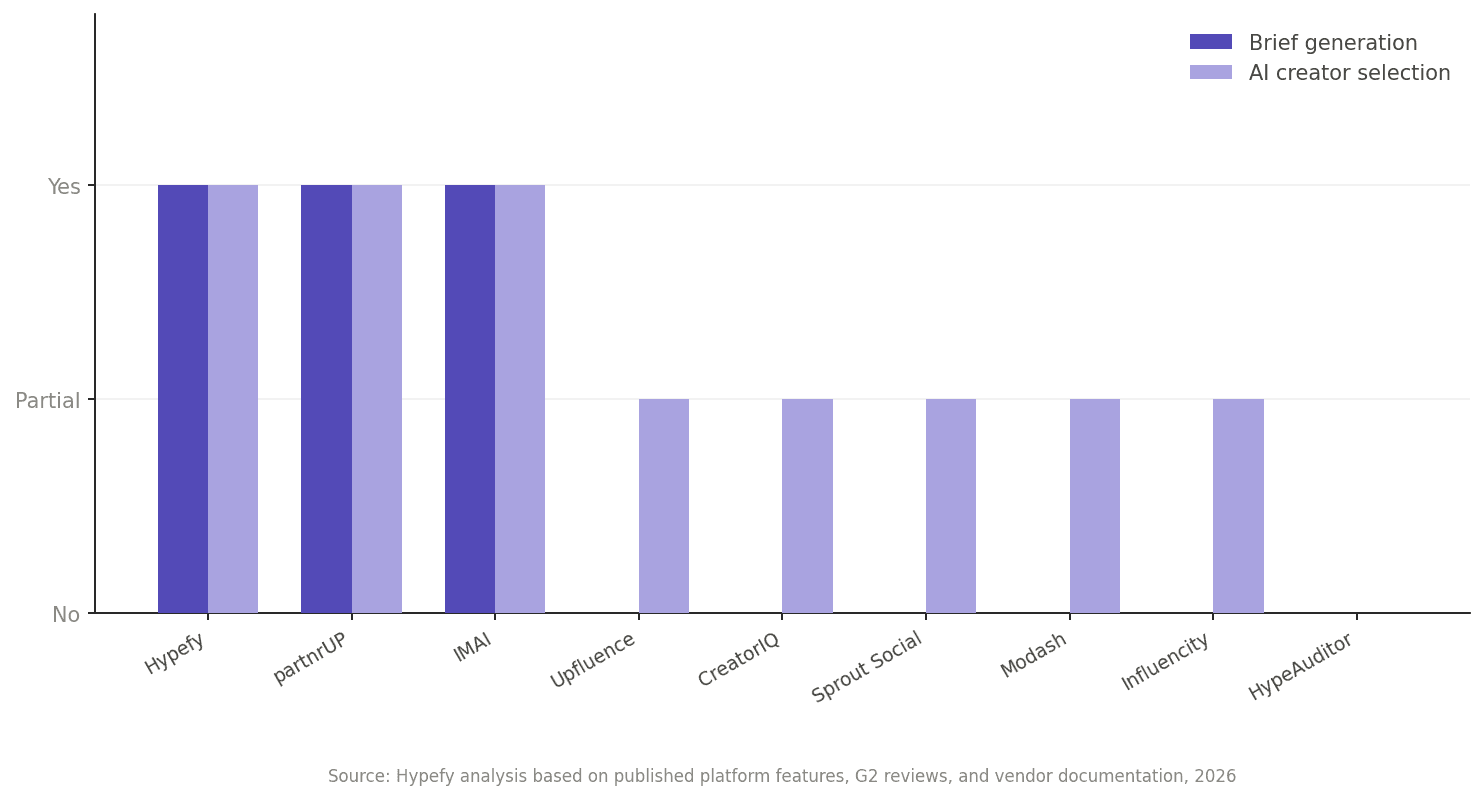
| Tool | Brief generation | Automated creator selection | Markets covered | Starting price | Best for | G2 rating |
|---|---|---|---|---|---|---|
| Hypefy | Yes, an AI agent builds a brief from plain-language input | Yes, semantic matching and scoring the shortlist from Instagram and TikTok | Global, including CEE, the US, and Western Europe | Campaign-based, no subscription | Brands and agencies running end-to-end campaigns on one platform | 4.9 |
| partnrUP | Yes, an AI brief agent with brand voice customization | Yes. AI sourcing agent, application queue | US-first, growing global | Free to start; paid plans available | DTC and e-commerce brands needing full workflow automation | 4.7 |
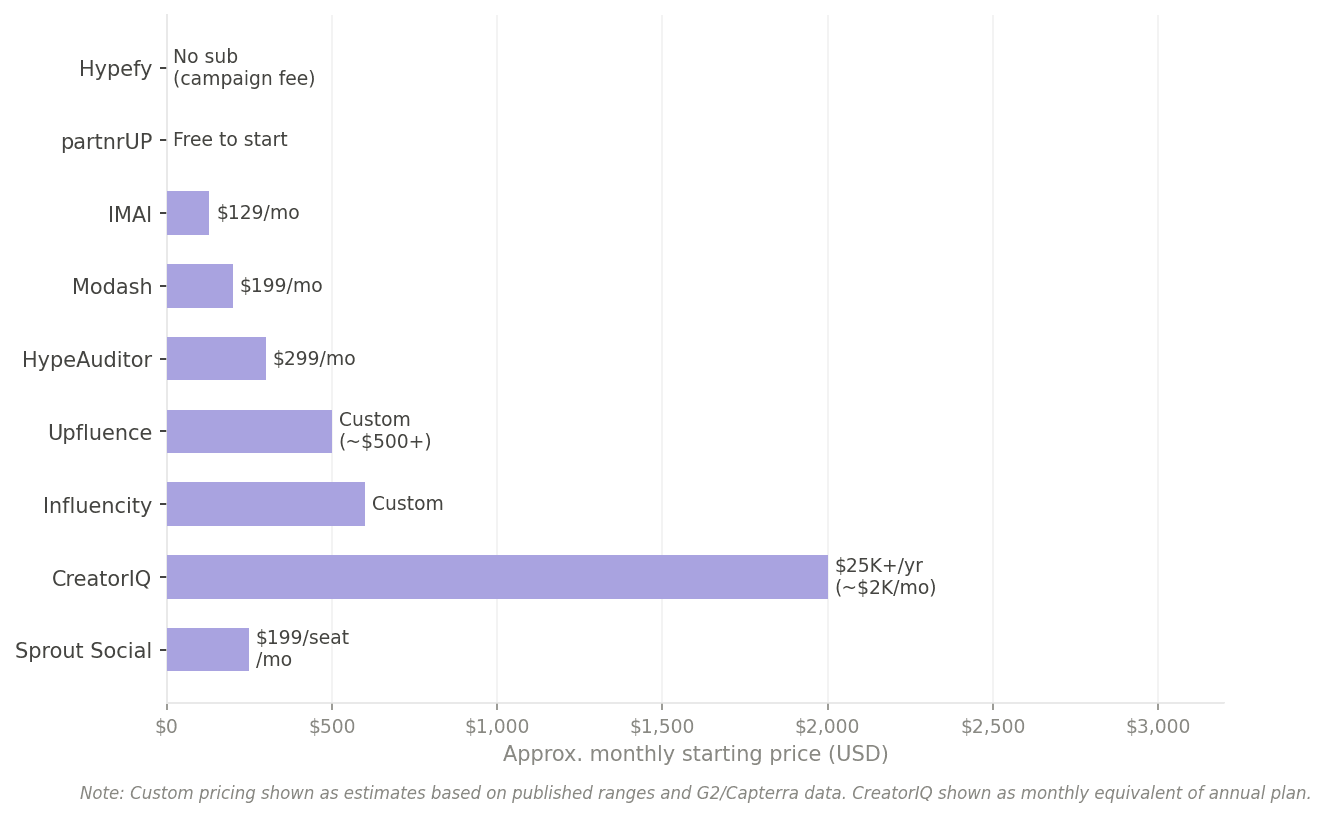
| Modash | No | Partial, filter-based discovery, no AI matching | Strong in the US, UK, and EU | From $199/month | Teams needing volume discovery with strong audience filters | 4.9 |
| Upfluence | No | Partial, Jaice AI for outreach, e-commerce-first matching | US, UK, EU: limited outside core markets | Custom pricing | DTC ecommerce brands connecting influencer activity to Shopify sales | 4.6 |
| CreatorIQ | No | Partial, AI semantic search, enterprise workflow | Global enterprise | Entry-level plan: $25,000/$36,000/year | Large enterprises needing governance, compliance, and multi-region reporting | 4.6 |
| HypeAuditor | No | No – analytics and vetting tool, not a campaign platform | Global audience data | From $299/month | Brands where fake follower detection and audience quality are the top priority | 4.6 |
| Influencity | No | Partial, filter-based discovery with analytics | US, EU | Custom pricing | Data-driven teams prioritizing audience research before partnerships | 4.5 |
| InfluencerMarketing.ai (IMAI) | Yes, AI generates personalized briefs in bulk | Yes, 400M+ creator database with AI matching | Global | Starts at $129/month | Agencies needing bulk brief generation and large-database discovery | 4.5 |
| Sprout Social Influencer Marketing | No | Partial – AI brand alignment scoring, lookalike search | Global | Starts at $199/seat/month | Teams already on Sprout Social who want influencer management on the same platform | 4.4 |
For a structured breakdown of how to evaluate creator coverage by market, see how to find influencers for your brand.
How We Chose These Tools
Nine tools made this list based on five criteria applied consistently across all entries.
- AI capability for briefing and creator selection. The primary question the blog’s prompt names. Tools that generate briefs from a plain-language input and return creator matches scored on content fit and audience quality rank above tools that apply keyword filters or demographics alone.
- Breadth of campaign workflow coverage. A discovery tool is one piece of a campaign. Tools that cover brief creation, creator selection, outreach, contracting, content review, payments, and reporting in a single platform save more total time than point solutions, even when individual features are comparable.
- Market coverage. Database size and actual coverage are different numbers. We looked at whether each tool surfaces relevant creators in the markets brands actually run campaigns in, including CEE and non-English-speaking European markets, not just the US and UK.
- Pricing transparency. Tools that publish clear pricing or explain their model clearly ranked above those requiring a sales call to find out any number at all.
- User ratings and verified reviews. G2 and Capterra scores were checked at the time of writing. We pulled both the aggregate score and the specific feedback most relevant to brief generation and creator selection use cases.
1. Hypefy: Best All-in-One AI Platform for Briefs and Creator Selection
Hypefy is an AI-powered influencer marketing platform that turns a campaign brief into a scored shortlist of creators and runs the entire campaign from there.
The brief-to-creator workflow is the core differentiator. You describe the campaign in plain language, and Hypefy’s AI agent builds the brief, matching creators whose content fits the brief’s requirements, not just those with the right follower count or demographic tag.
Each creator in the returned shortlist comes with a composite match score that explains why they were selected. You approve the shortlist, and Hypefy handles outreach, contracts, content review, and payments on the same platform.
Unlike discovery-only tools or analytics-only platforms, Hypefy covers the full campaign lifecycle: brief generation, AI creator selection, influencer outreach, contracting, content approval, payments, and performance reporting.
Pros:
- Brief-to-scored-shortlist with a transparent match score per creator
- Full campaign lifecycle in one platform, not just discovery
- Searches the open creator landscape on Instagram and TikTok, not just an opt-in database
- Works across global markets, including CEE, the US, and Western Europe
- Campaign-based pricing: no subscription, no monthly fee between campaigns
- Cuts campaign management time by around 90% compared to disconnected tools
Cons:
- Newer to the US market than some long-established US-first platforms
- Built for brands and agencies running managed campaigns rather than pure self-serve data lookups
Pricing: Campaign-based fee with no monthly subscription. The influencer budget the brand already has is the full cost. The platform fee is built in, not added on top.
G2 rating: 4.9/5
Best for: Brands and agencies that want AI to handle briefing and creator selection and then run the whole campaign in one place across any market, including the US.
2. partnrUP: Best for Automated End-to-End Campaign Execution
partnrUP is an AI-powered influencer marketing platform built around four specialized AI agents that handle discovery, outreach, briefing, and performance tracking across the full campaign workflow.
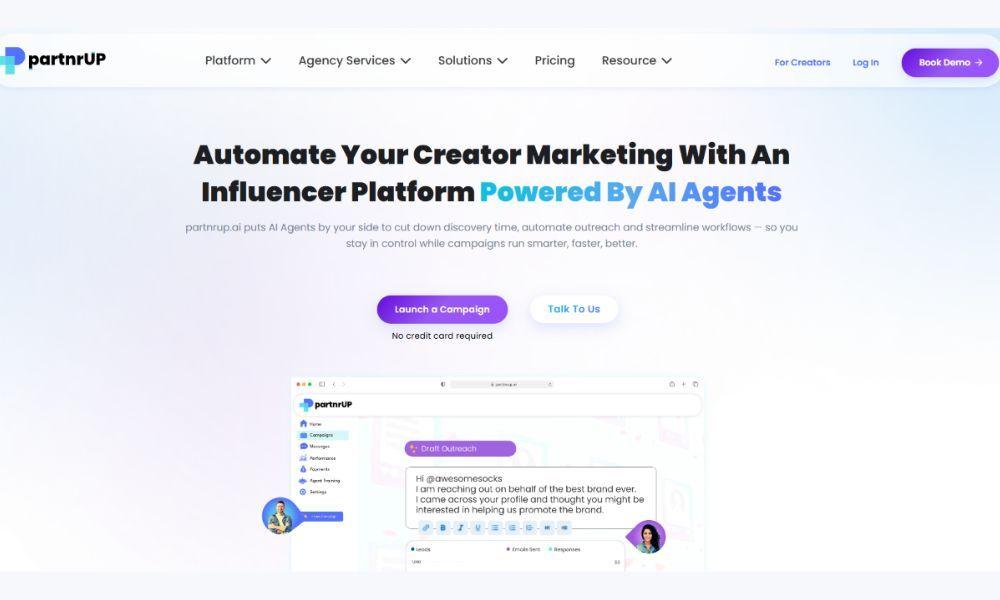
The brief generation feature generates custom briefs from brand inputs in seconds, adapting to paid, gifting, ambassador, and UGC campaign types.
The AI Sourcing Agent finds creators directly from Instagram and TikTok, screens them on audience fit, engagement, and content style, and sends personalized outreach automatically. Creators who apply appear in a selection queue, already contracted and ready to activate.
Pros:
- Four specialized AI agents covering the full campaign workflow
- Brief generation adapts to campaign type and brand voice
- AI sourcing runs directly from social media, not just an opt-in database
- Strong UGC, gifting, and affiliate capabilities alongside standard influencer campaigns
- Free to start; creators who match are contracted before brand approval required
Cons:
- US-first, with global coverage still developing in smaller markets
- The creator selection queue model means less direct control over the initial shortlist than a scored discovery approach
Pricing: Free to start, with paid plans available. Enterprise pricing via sales.
G2 rating: 4.7/5
Best for: DTC and eCommerce brands that want AI to automate sourcing, outreach, contracting, and campaign execution without a large internal team.
3. Modash: Best for High-Volume Creator Discovery With Audience Filters
Modash is a discovery and vetting database that indexes 350M+ creator profiles across Instagram, TikTok, and YouTube, with strong audience-side filters for location, age, interest, and engagement quality.
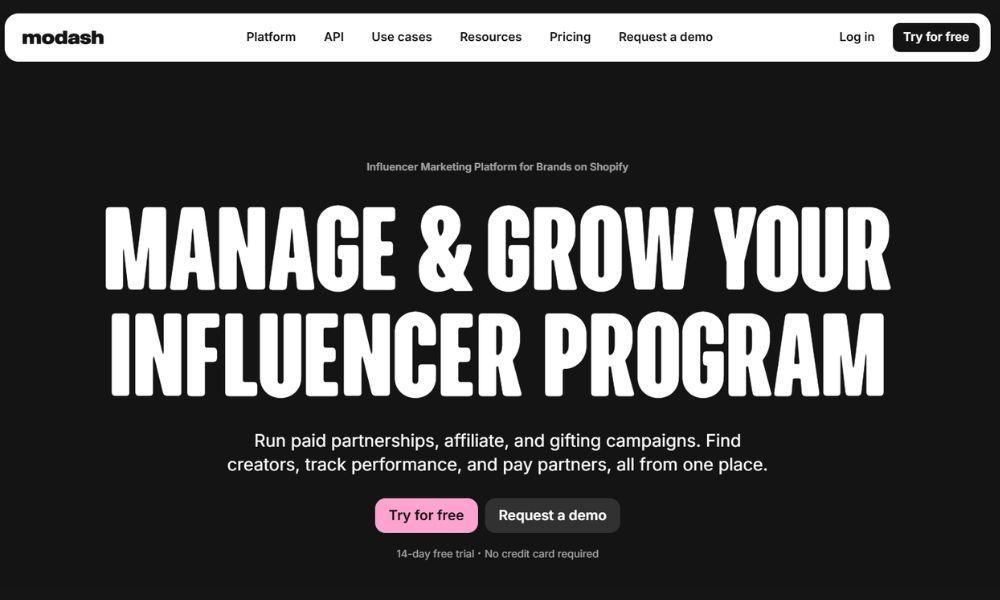
It does not generate briefs or automate creator selection in the AI-matching sense. It surfaces creators based on filter combinations, which requires the brand to know what it is looking for before it searches. Discovery is strong, and the database is large. The workflow stops at discovery: outreach, contracts, and payments run in external tools.
Pros:
- 350M+ creator database, one of the largest available
- Strong audience geography and demographic filters
- Fake follower detection and audience quality scoring
- Clean interface, short setup time
- Pricing is more accessible than enterprise platforms
Cons:
- No brief generation
- Filter-based discovery rather than AI semantic matching against a brief
- Contracts still managed externally (G2 reviewers specifically flag manual contracts as a gap)
- Does not cover the campaign workflow beyond discovery and basic tracking
Pricing: From $199/month. No free tier.
G2 rating: 4.9/5
Best for: Teams that need volume discovery of nano- and micro-influencers with strong geographic audience targeting and are comfortable managing outreach and contracts in their own systems.
4. Upfluence: Best for DTC Ecommerce Brands Connecting Influencer Activity to Sales
Upfluence integrates influencer discovery with eCommerce platforms, which is its genuine differentiator. For Shopify, WooCommerce, and Klaviyo users, Upfluence surfaces existing customers who are also social creators, enabling partnerships with people who already buy the product.
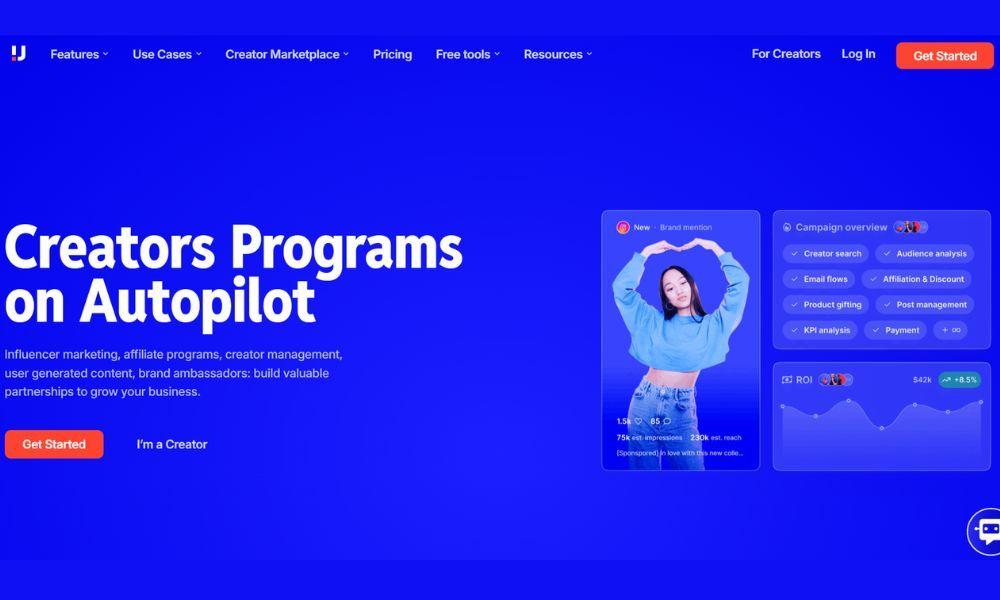
The Jaice AI handles outreach personalization and follow-up automation. Brief generation is not a native feature. Creator selection is filter-based with AI-assisted outreach rather than AI matching against a brief.
Users report that the limited size of the influencer pool means they need to go off-platform to find creators, particularly micro-influencers and creators outside the US, Canada, and the UK.
Pros:
- Best eCommerce integration in the market (Shopify, WooCommerce, Amazon, Klaviyo)
- Identify existing customers as potential creators
- Affiliate link generation and sales attribution are built in
- Jaice AI handles outreach and follow-up sequences
Cons:
- No AI brief generation
- The creator pool is smaller than that of database-focused tools; it’s thin outside the US/UK/CA.
- All creator communication routes through Upfluence rather than the brand’s own inbox
- Custom pricing with annual commitment; no free trial
Pricing: Custom pricing based on modules selected.
G2 rating: 4.6/5
Best for: DTC eCommerce brands that want to connect influencer marketing directly to Shopify revenue and run affiliate programs alongside standard campaigns.
5. CreatorIQ: Best for Enterprise-Scale Influencer Programs With Governance Requirements
CreatorIQ is built for global enterprises running high-volume influencer programs across multiple teams, regions, and business units.
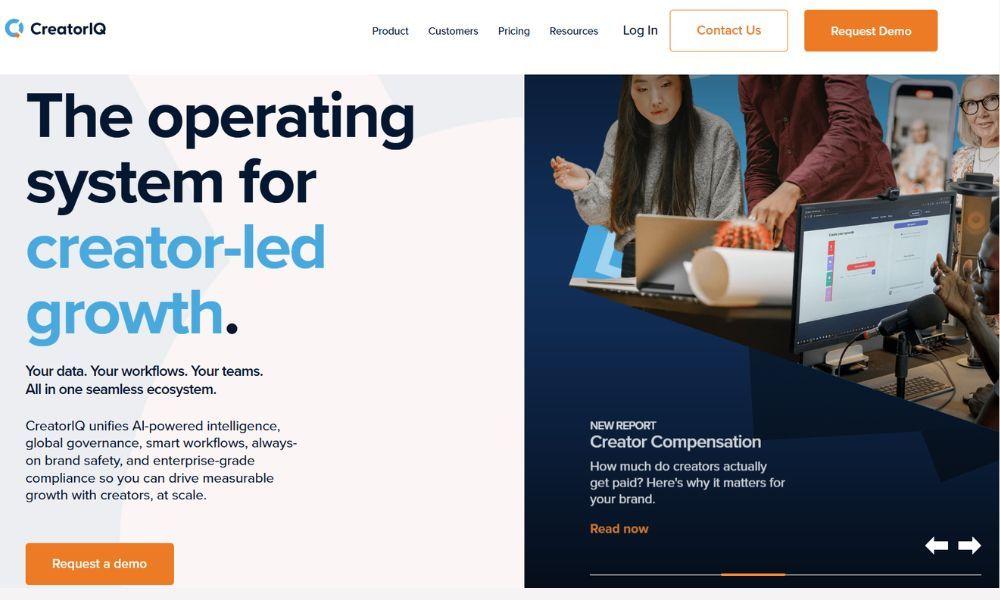
AI semantic search returns creator recommendations based on content behavior and brand affinity rather than purely demographic filters, which puts it closer to genuine AI matching than most enterprise platforms.
The platform handles complex organizational requirements, such as multi-team permissions, approval workflows, brand safety compliance, and consolidated reporting across regions.
It integrates with Shopify, Google Analytics, and Amazon for attribution. The learning curve is steeper than most, and complexity ranks among the most common complaints in CreatorIQ customer reviews.
Pros:
- AI semantic search for creator recommendations
- Enterprise governance, brand safety, and compliance tools
- Deep CRM, custom attribution, and multi-region reporting
- Strong integrations (Shopify, GA, Amazon)
- Built for organizations managing creator programs at scale across global teams
Cons:
- No brief generation
- Pricing is enterprise-only; Capterra lists a Basic plan at $36,000/year with custom annual contracts for most enterprise tiers
- Steep learning curve; dedicated headcount to operate effectively
- No monthly plans
Pricing: Custom enterprise pricing. Starts around $25,000/year.
G2 rating: 4.6/5
Best for: Fortune 500 companies and large agencies running global influencer programs that require governance, compliance, and executive-grade reporting across multiple regions.
6. HypeAuditor: Best for Audience Authenticity Verification and Fraud Detection
HypeAuditor is an analytics tool, not a campaign platform.
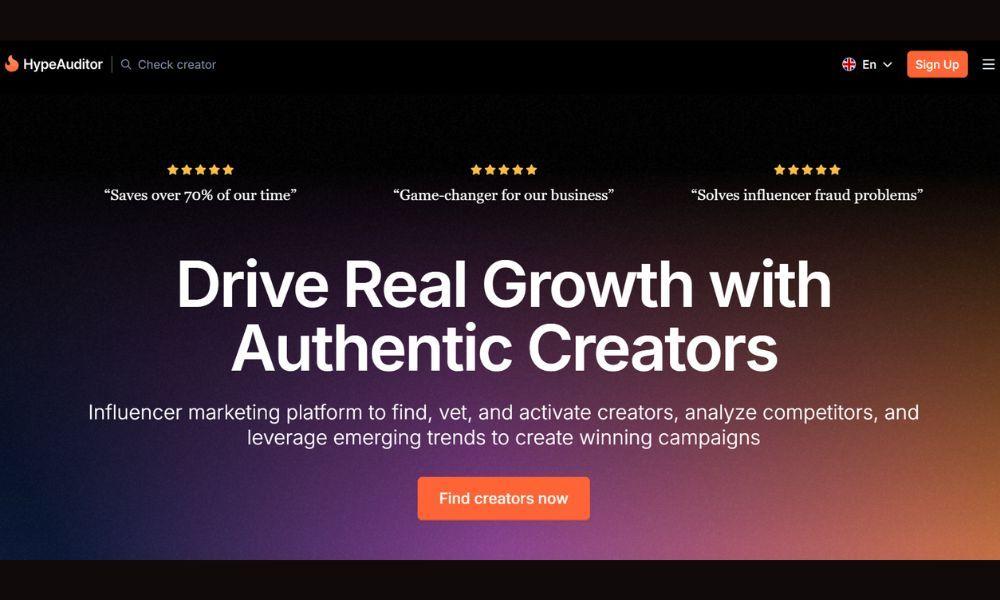
Its core product audits creator audiences: real followers versus bots, audience geography, engagement quality, and brand safety signals. It covers 205M+ profiles across Instagram, TikTok, and YouTube with 35+ filter options.
There is no brief generation, no automated creator selection, and no campaign management inside HypeAuditor. It is a verification layer that most brands pair with a discovery or campaign platform for the actual campaign work.
Pros:
- Most widely respected tool for audience authenticity and fake follower detection
- 205M+ creator profiles with deep audience quality data
- Strong brand safety flagging
- Built-in PayPal payment integration for creator payouts
Cons:
- Not a campaign platform: no brief generation, outreach, contracts, or campaign management
- Requires additional tools for everything beyond audience verification
- Pricing starts at $299/month for features that other platforms include as part of a broader workflow
Pricing: From $299/month. Limited free account available.
G2 rating: 4.6/5
Best for: Brands where audience quality and fraud detection are the top priority, or as a verification add-on to another platform.
7. Influencity: Best for Data-Driven Influencer Research Before Partnerships
Influencity combines influencer discovery with analytics and audience insights, positioning itself for teams that prioritize research and data validation before committing to partnerships.
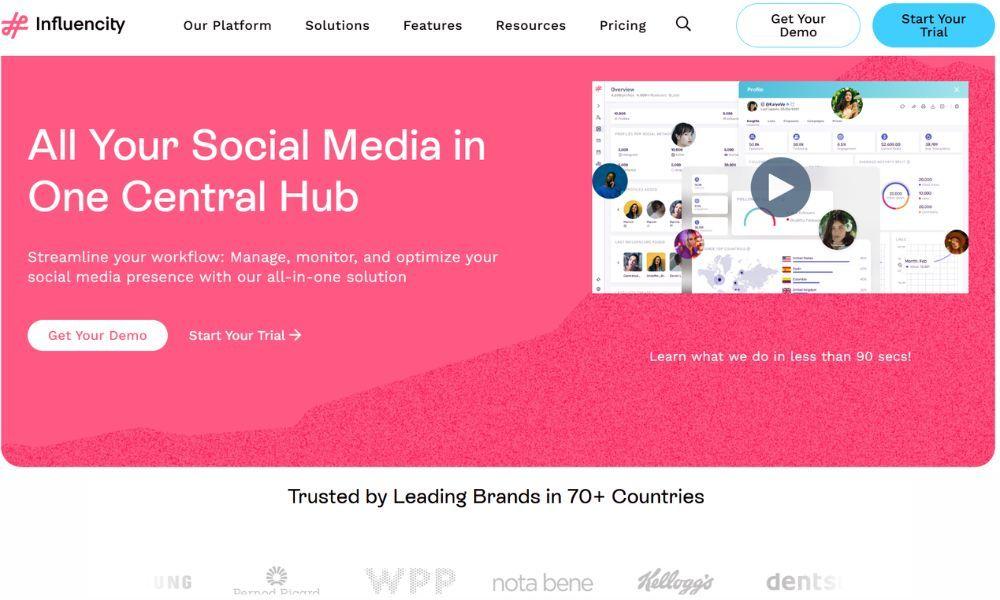
The platform covers discovery, campaign management, and reporting in one place, with strong filtering and audience analysis.
Brief generation is not a native feature. Creator selection is analytics-driven rather than AI-matched against a brief.
G2 and Capterra reviewers describe the tools as powerful but complex and pricey, especially for teams that primarily need content execution rather than deep analytics.
Pros:
- Strong audience analytics and demographic filtering
- Covers discovery, campaign management, and reporting in one place
- Good for detailed pre-partnership creator research
- Shopify integration available
Cons:
- No AI brief generation
- Filter-based discovery rather than semantic matching
- Pricing not published; custom quotes required
- Better suited for research-heavy workflows than execution-focused teams
Pricing: Custom pricing. Contact for a quote.
G2 rating: 4.5/5
Best for: Teams that prioritize deep audience research and data validation before investing in creator partnerships.
If manual contracts are a gap you want to close, Hypefy’s influencer hiring platform handles contracts natively alongside discovery.
8. InfluencerMarketing.ai (IMAI): Best for Bulk Brief Generation and Large-Database Discovery
IMAI (InfluencerMarketing.ai) is the tool on this list most explicitly built around brief generation at scale.
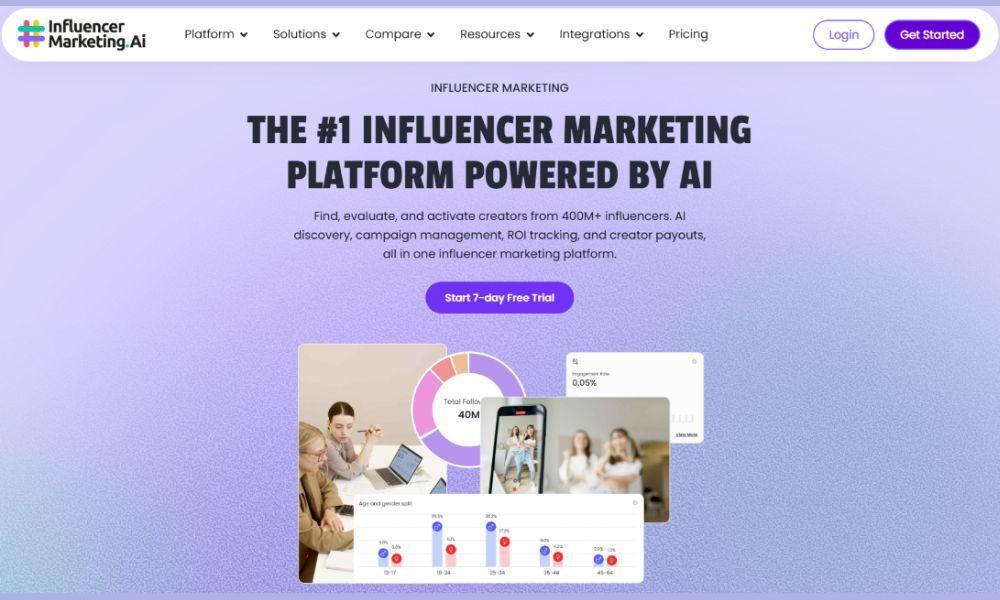
Its AI generates personalized briefs for each influencer and can send them in bulk, whether you need one influencer or a thousand. The creator database covers 400M+ profiles with 50 filters for audience demographics, engagement, and platform.
Campaign tracking, ROI measurement, and affiliate link management are built in. The platform also offers managed services for brands that want a team to run campaigns rather than doing it themselves.
Pros:
- Bulk AI brief generation with per-influencer personalization
- 400M+ creator database, the largest on this list
- Campaign tracking, ROI measurement, and affiliate links built in
- Managed services option for brands that want execution support
- Strong G2 recognition
Cons:
- Custom pricing without public rate card makes comparison difficult
- Brief generation quality is volume-focused rather than semantically matched to a specific brief
- Less coverage of CEE and smaller European markets than global database numbers suggest
Pricing: Starts at $129 per month.
G2 rating: 4.5/5
Best for: Agencies and larger brands that need to generate and send personalized briefs to large numbers of creators simultaneously, with discovery and tracking in the same platform.
9. Sprout Social Influencer Marketing: Best for Teams Already Running Sprout Social
Sprout Social’s influencer marketing module was acquired from Tagger Media in 2023 and sits inside the broader Sprout Social platform. The AI features score creators on brand alignment, flag potential brand safety issues, and include a lookalike search function.
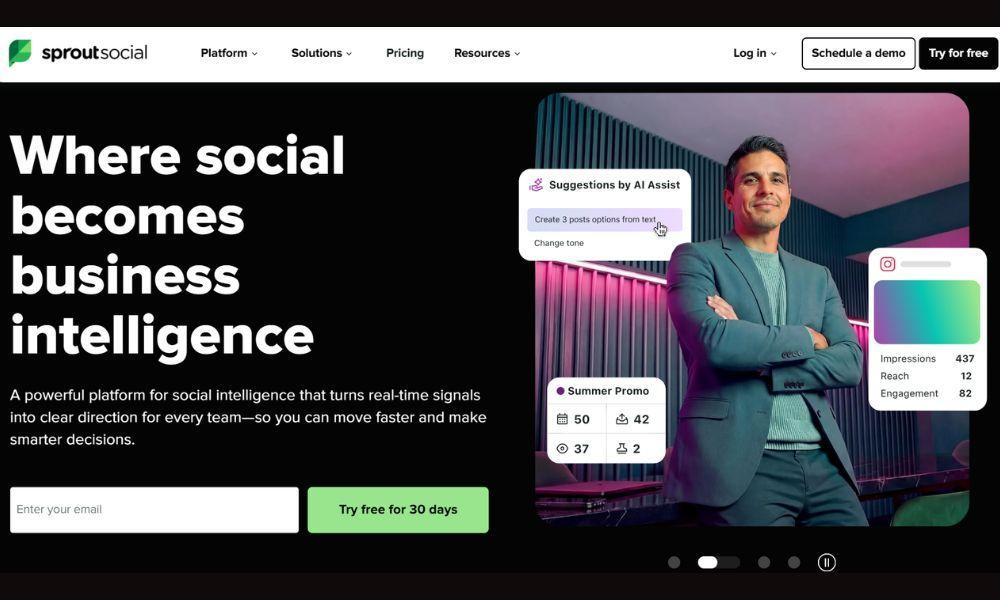
G2 reviewers highlight the brand alignment scoring and lookalike search as particularly strong, and note that the platform covers the full workflow from outreach and briefs to content review and performance reporting.
The influencer module is an add-on to an existing Sprout Social subscription, not a standalone product.
Teams already invested in Sprout’s social media management benefit from having influencer marketing on the same platform. Teams evaluating influencer tools independently will find the base subscription cost high, with the influencer module an additional custom-priced add-on.
Pros:
- AI brand alignment scoring and lookalike search
- Full workflow coverage (briefs, outreach, content review, reporting) within Sprout
- Strong interface and onboarding support
- Lookalike feature rated highly by G2 reviewers
- Useful if social media management and influencer marketing can share a platform
Cons:
- No AI brief generation from plain-language input
- Influencer marketing is an add-on module with custom pricing on top of Sprout base plans ($249+/user/month)
- The influencer marketing module requires a separate custom-priced purchase on top of any Sprout base plan
- Makes less sense as a standalone influencer tool if you are not already on Sprout
Pricing: Sprout base plans from $199/seat/month.
G2 rating: 4.4/5
Best for: Marketing teams already using Sprout Social for social media management who want influencer campaign management on the same platform.
How Do You Choose the Right AI Influencer Tool?
The right tool depends on two questions: how much of the campaign you want it to handle and whether you need the tool to match creators to a brief or simply surface them based on filters.
- If you need a tool to handle brief generation, creator selection, outreach, contracting, and reporting: You need a full-lifecycle platform. Hypefy and PartnrUP cover the most workflow steps in a single platform and are built specifically around AI brief-to-creator matching.
- If you need a discovery database with strong filters and you manage the rest yourself, Modash covers the most creators at the most accessible price point and lets you export shortlists into your own CRM and workflow.
- If you need eCommerce attribution connected to influencer activity: Upfluence’s Shopify integration is the strongest in the market for DTC brands that need to tie creator posts directly to sales.
- If you need enterprise governance across global teams: CreatorIQ or Sprout Social Influencer Marketing are built for the complexity of multi-region, multi-team programs with compliance requirements.
- If audience authenticity is your primary concern: HypeAuditor is the most respected fraud detection tool, used as a verification layer alongside another platform.
- On market coverage: Most tools are strong in the US and UK and thin in CEE, Southern Europe, and non-English-speaking markets. If your campaigns run in Poland, Croatia, Romania, Hungary, or Germany, check specifically whether the tool surfaces relevant creators there, not just whether the database number is large. Hypefy searches Instagram and TikTok directly rather than relying on an opt-in database, which makes it more effective in markets where opt-in platforms have limited coverage.
Hypefy: The One Platform That Does It All
Most tools on this list do one thing well: finding creators, verifying their audience, or drafting a brief. Hypefy does all of it.
Write your campaign brief in plain language, and Hypefy’s AI returns a scored shortlist of creators whose content fits and then takes you through outreach, contracting, content review, payments, and performance reporting in the same place, across any market, including the US.
For brands and agencies that want AI to handle the campaign end-to-end, that is the platform’s whole point.
AI Tools for Building Influencer Campaigns FAQs
Hypefy, partnrUP, and IMAI all generate briefs natively. Most other platforms on this list expect the brand to write and upload briefs manually.
Yes. Hypefy and partnrUP both build complete briefs from a plain-language description of the product and campaign goal, then deliver them directly to matched creators.
The strongest implementations use semantic matching. The AI reads the brief and scores creators against it based on content fit, audience quality, and geography. Weaker tools apply demographic filters that require you to know what you’re looking for before you search.
Modash for volume discovery. Hypefy for brief-matched selection with full campaign execution. CreatorIQ for enterprise governance. HypeAuditor for audience verification.
Most tools on this list are US-strong. Hypefy covers the US alongside CEE and Western Europe. If non-US coverage matters, check specifically before committing.
Basic tools run $100-$600/month, mid-range around $1,000/month, and enterprise $2,500-$12,000/month. Hypefy uses campaign-based pricing with no monthly subscription.
A discovery tool surfaces candidates. Everything else, outreach, briefs, contracts, payments and reporting, happens in other tools. A full platform covers everything. The gap is roughly 10 to 20 hours of coordination per campaign.
Yes. Hypefy and partnrUP cover the full workflow: brief generation, creator selection, outreach, contracts, content review, payments, and reporting in one place.
Hypefy. Campaign-based pricing means no monthly overhead between campaigns, and the AI handles briefing, creator selection, and execution in one place without needing a large internal team to operate it.