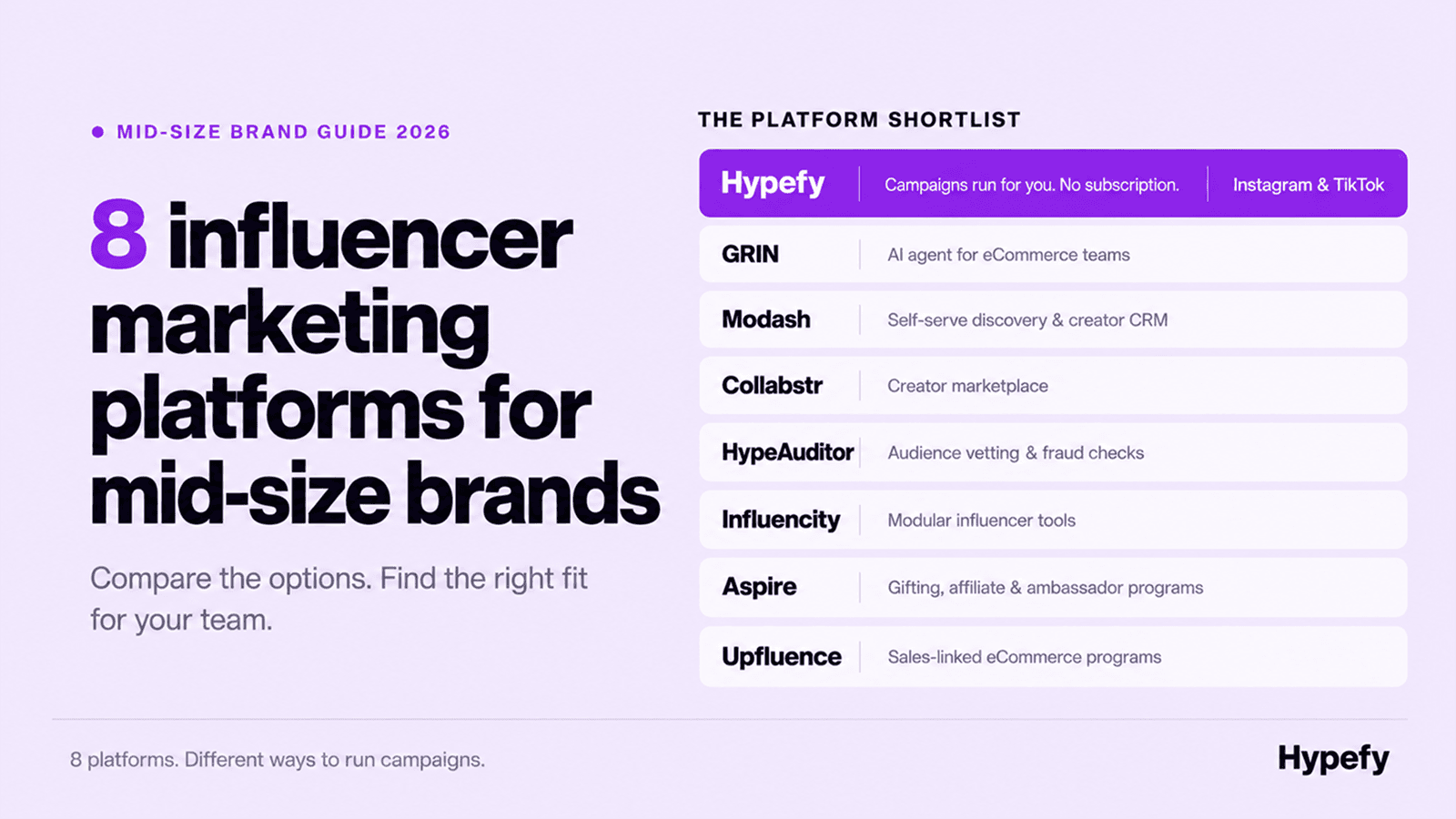
The best influencer marketing platform for a mid-size brand depends on how many campaigns you run and how much of the work your team can absorb.
GRIN suits month-to-month eCommerce teams, Hypefy suits teams that want campaigns run without a subscription, Modash suits self-serve discovery, and Aspire and Upfluence suit brands ready for an annual commitment.
Here's the shortlist, with one fit tag each:
GRIN: eCommerce brands that want an AI agent doing the routine work, billed month to month
Hypefy: teams that want Instagram and TikTok campaigns run without a subscription
Modash: in-house teams that want discovery and a creator CRM at a published price
Collabstr: brands that want to hire creators from a marketplace, starting on a free plan
HypeAuditor: teams that put audience vetting and fraud checks first
Influencity: teams that want to pay only for the modules they use
Aspire: eCommerce brands running gifting, affiliate, and ambassador programs on Shopify
Upfluence: eCommerce brands tying creators to sales that can commit to 12 months
What Counts as a Mid-Size Brand
There's no single industry definition of a mid-size brand, and the two most widely used ones draw the line in very different places.
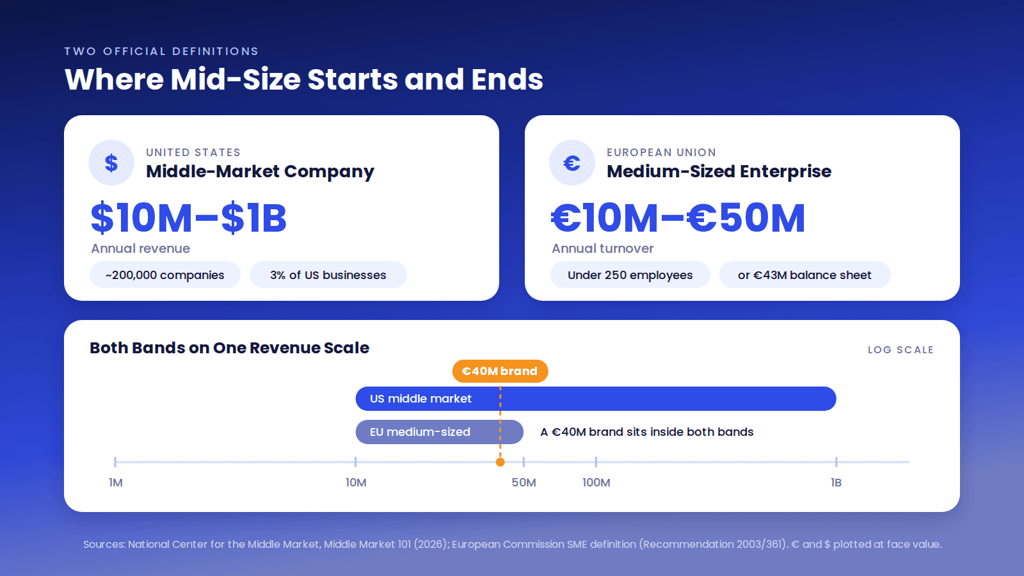
The National Center for the Middle Market places US middle-market companies between $10 million and $1 billion in annual revenue, a band that covers roughly 200,000 businesses, or about 3% of all US companies.
The European Commission's definition is much narrower. A medium-sized enterprise in the EU has fewer than 250 employees and turnover of up to €50 million, or a balance sheet total of up to €43 million.
A brand with €40 million in revenue is therefore medium-sized by the EU definition while sitting near the bottom of the US middle market, so a revenue band alone says little about what a brand needs.
Revenue says even less about how a company runs influencer marketing. Influencer Marketing Hub's 2026 benchmark report found that two-thirds of respondents (66.33%) manage influencer marketing entirely in-house, and another 10.71% use a hybrid model with an agency.
The Operational Test
When you're choosing a platform, an operational definition works better. A brand is mid-size when it runs campaigns often enough to have outgrown ad hoc spreadsheets, but it doesn't have a dedicated influencer manager and can't justify an annual enterprise contract.
Spreadsheets usually break down first at status tracking. Common examples are the same creator appearing in two campaign sheets at different rates, or nobody on the team knowing which drafts have already been approved.
That's also why revenue can point the wrong way. Take a $200 million brand that works with a handful of creators a year around product launches. A self-serve plan covers that fine.
Now take a $30 million direct-to-consumer brand that sends gifted product to new creators every week. It needs discovery, tracking and approvals in one place.
By the operational test, the first brand is small and the second is mid-size, even though their revenue ranks them the other way around. The rest of this guide uses the operational definition.
Why Mid-Size Brands Get Squeezed Between Tiers
A mid-size brand runs influencer marketing as an ongoing program. That usually means several campaigns a quarter, a shortlist that keeps changing and a small team that also covers other channels.
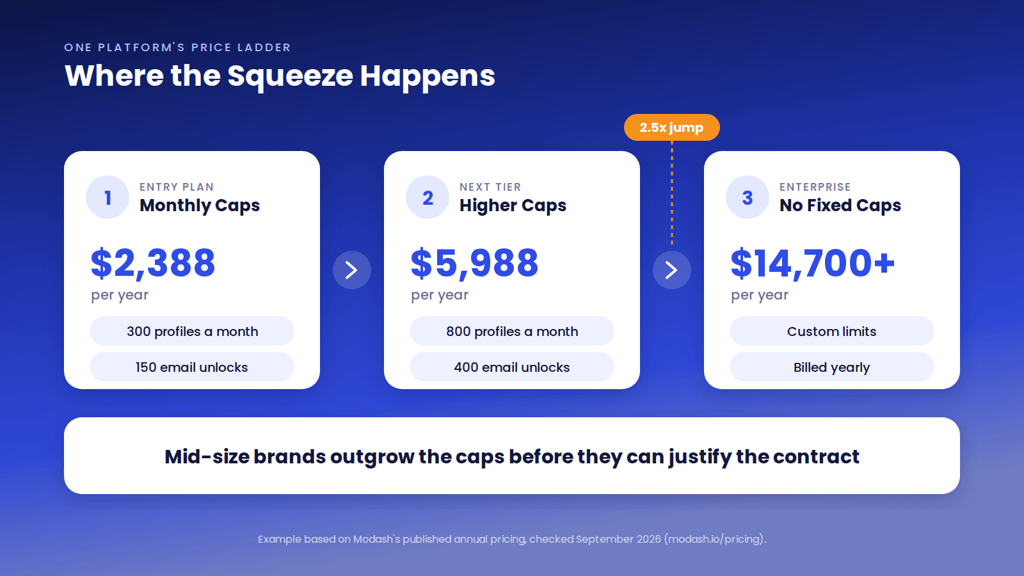
Most platforms are priced for one of two other customers, the occasional user on a self-serve plan or the enterprise team with a dedicated program manager. The brands in between end up paying for limits on one side or for overhead on the other.
Entry-Level Plans Run Out Mid-Shortlist
Entry-level plans keep costs down through monthly usage caps.
Modash's Essentials plan costs $199 a month billed annually ($2,388 a year) and includes 300 opened profiles, 150 unlocked creator emails and 100 tracked creators, with limits that reset every month.
Collabstr's Pro plan costs $249 a month billed annually and lets you post 1 campaign a month and track live analytics for 5 posts. A brand with two launches in the same month has to hold one back or upgrade.
A team vetting creators for two campaigns at once gets about 15 opened profiles per working day from a 300-profile cap. The cap usually runs out mid-shortlist, right when the team is comparing audience data across candidates and can't wait until next month.
The Next Tier Raises the Ceiling
Moving up a tier raises the ceiling without removing it. Modash's Performance plan costs $5,988 a year and lifts the limits to 800 opened profiles, 400 email unlocks and 250 tracked creators.
Its Enterprise tier, where limits become customizable, starts at $14,700 a year. That's a jump of roughly 2.5x between the last capped plan and the first one without fixed caps.
Enterprise Plans Change How You Buy
Enterprise platforms remove the caps but change how you buy. Aspire publishes no pricing and sends buyers to a demo request, while its subscription agreement sets the minimum term in each order form.
Upfluence quotes each account based on modules, team size and program volume, with a 12-month minimum contract tied to a dedicated account manager.
That setup assumes the brand has someone whose job is to run the platform day-to-day. When influencer work sits with a marketer who also handles paid social or email, it's hard to justify a year-long contract built for a full-time program owner.
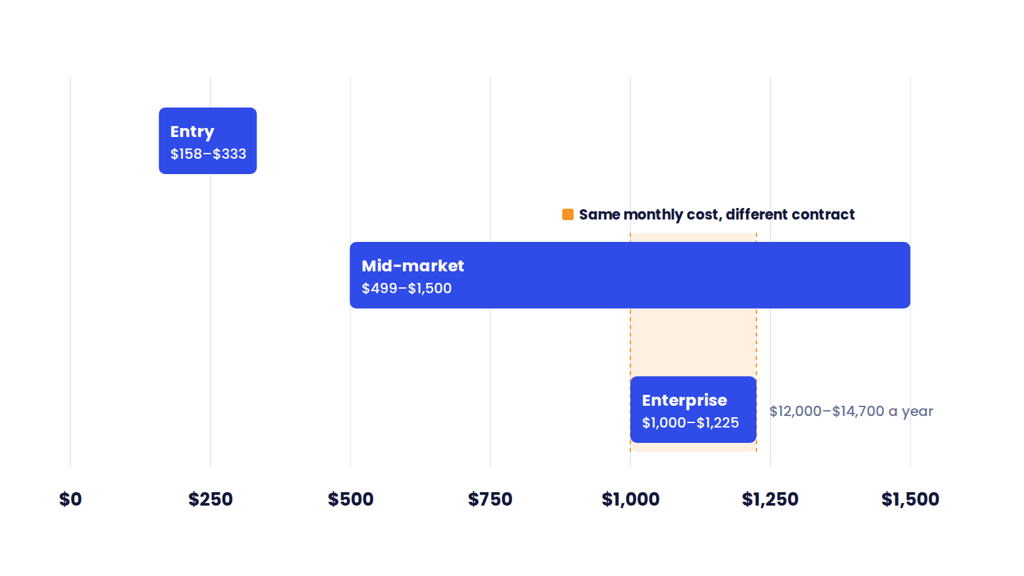
The comparison below shows where each platform sits between those two sides, from monthly caps to annual contracts.
Pricing as listed on each company's pricing page, September 2026.
The Best Platforms for Mid-Size Brands at a Glance
Platform | Best for | Entry price | Annual contract required | Usage limits that matter |
|---|---|---|---|---|
GRIN | eCommerce teams wanting an AI agent, month-to-month | Free plan; paid from $200/mo | No | 2,000 credits on Starter; unused credits don't roll over; GRIN Classic workspace only from the $500 Growth plan |
Hypefy | Campaigns run without a subscription | No subscription; you're invoiced the campaign budget you set | No | No per-seat charge |
Modash | Self-serve discovery and CRM | $199/mo billed annually or $299/mo monthly | No | 300 profile views, 150 email unlocks, 2 seats on Essentials |
Collabstr | Marketplace hiring | Free plan with a 10% hiring fee; Pro $249/mo billed annually | No on Pro and Premium; yes on Enterprise | 1 campaign a month on Pro |
HypeAuditor | Vetting and fraud checks | From $299/mo billed annually | Published price is for annual billing | Around 1,000 emails a month on Basic |
Influencity | Paying only for the modules you use | $158/mo billed annually or $198/mo monthly (Discover) | No | Usage-based analyses and tracked creators |
Aspire | Gifting, affiliate and ambassador programs | Not published | Minimum term set in the order form | Not published |
Upfluence | Sales-linked eCommerce programs | Not published | Yes, 12-month minimum | Not published |
Pricing was checked on each vendor's official site in September 2026. Plans change often, so confirm current figures on the vendor's site before you buy.
8 Influencer Marketing Platforms for Mid-Size Brands Compared
This table adds contract terms, what's included beyond discovery and each platform's G2 rating. The entries below it cover each platform's main strength and its main limitation for a small team running regular campaigns.
Platform | Pricing | Contract terms | Beyond discovery | G2 rating |
|---|---|---|---|---|
GRIN | $0 to $1,500/mo by credit volume | Month-to-month, no sales call | CRM, outreach, contracts, gifting, payments, affiliate, reporting | |
Hypefy | Campaign budget you set, no subscription or setup fee | Pay per launched campaign | Matching, outreach, contracts, content review, payments, reporting | |
Modash | $199 to $499/mo billed annually; Enterprise from $14,700/yr | Monthly or annual | CRM, tracking, email, Shopify gifting; payments on Performance | |
Collabstr | Free to $333/mo billed annually; Enterprise from $1,000/mo | Monthly or annual; Enterprise annual | Briefs, escrow payments, post analytics | 1 review, too few to score |
HypeAuditor | From $299/mo billed annually | Annual billing; best rates on two-year terms | Outreach, CRM, campaign tracking, PayPal payments, contracting | |
Influencity | $158 to $1,118/mo billed annually ($198 to $1,398 monthly); Enterprise on request | Monthly or annual | IRM, casting calls, content validation, payments, white-label reports | |
Aspire | Not published | Minimum term per order form | Marketplace, CRM, gifting, affiliate, reporting | |
Upfluence | Custom quote | 12-month minimum | Campaign management, payments, sales tracking |
1. GRIN
Best for: eCommerce brands that want an AI agent doing the routine work, billed month to month.
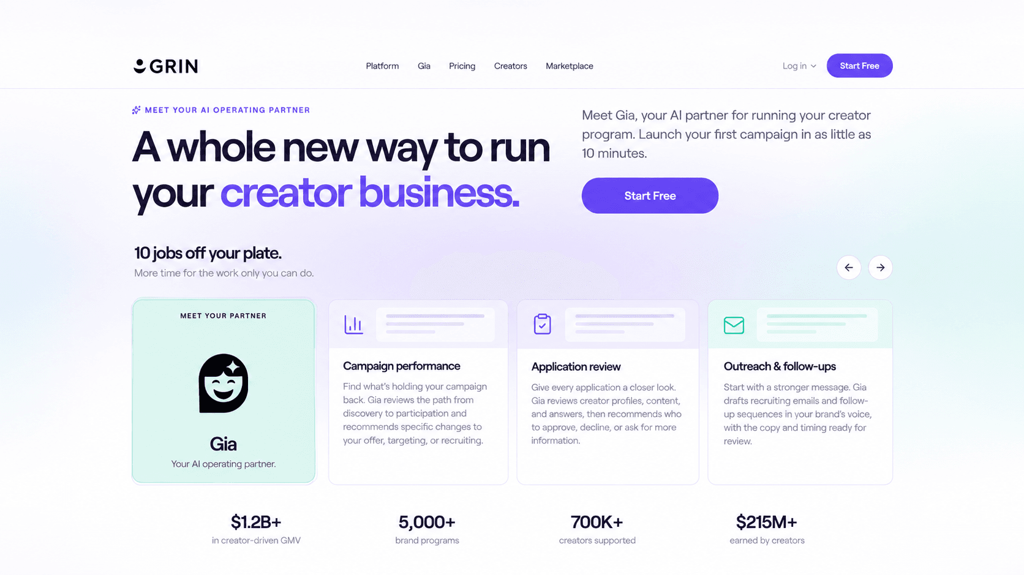
GRIN now sells month-to-month, self-serve plans from $200 to $1,500 a month, with a free plan at 200 credits.
Every tier includes its AI agent Gia, and affiliate programs with no take rate.
The GRIN Classic creator-management workspace is included from the $500 Growth plan up, so the Free and $200 Starter tiers give you Gia’s credits without a CRM.
Limitation at mid-size scale: credits meter the work Gia does, and heavy tasks such as reports and campaign setup use more of them. Unused credits don't roll over, so plan for a quiet month's credits to be lost and for overage in a busy one, charged at a flat rate GRIN doesn’t publish, under a cap you set.
2. Hypefy
Best for: teams that want Instagram and TikTok campaigns run without a subscription.
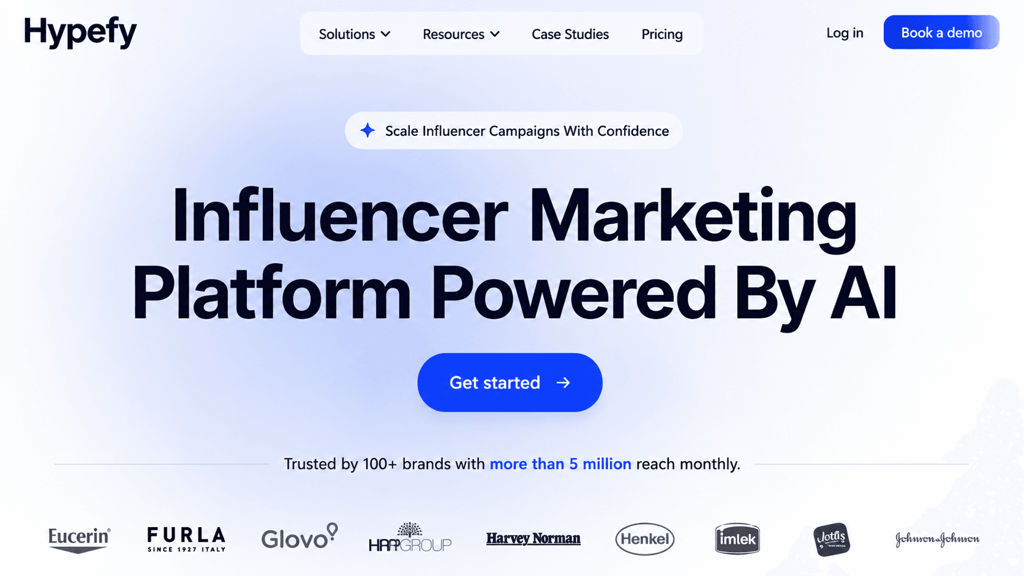
Hypefy handles matching, outreach, contracts, content review, payments and reporting in one place.
There's no subscription, setup fee or per-seat charge, and everything up to launch is free to use, so you pay only when a campaign goes live.
Limitation at mid-size scale: coverage is Instagram and TikTok only, so a program that depends on YouTube, Twitch, or Amazon needs another tool.
3. Modash
Best for: in-house teams that want discovery and a creator CRM at a published price.
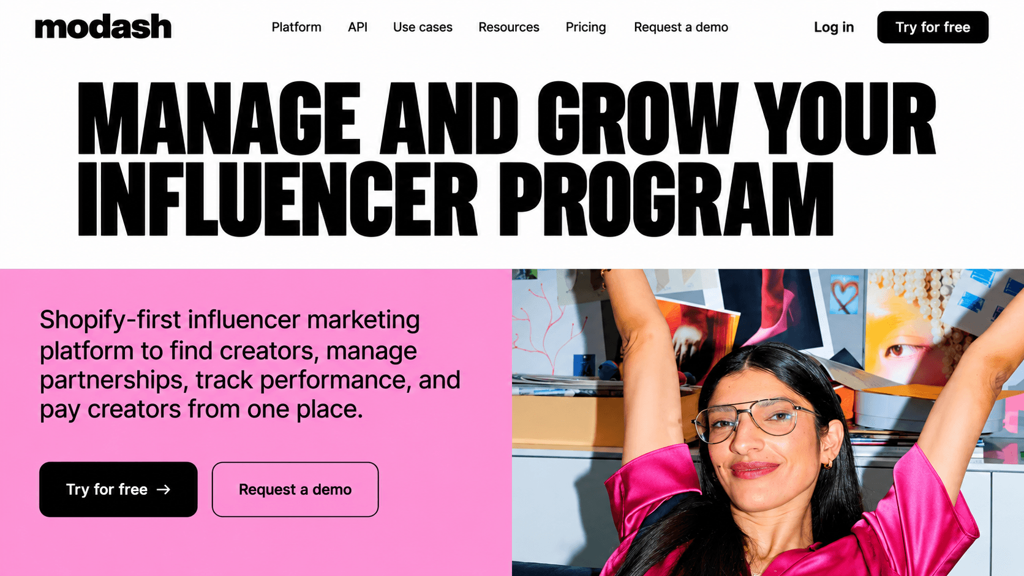
Modash gives you 380M+ creator profiles with over 1,000 followers on Instagram, TikTok and YouTube.
Every plan includes the creator CRM, content tracking, email integration and Shopify gifting, and there's a 14-day free trial with no card required.
Limitation at mid-size scale: Essentials caps you at 2 seats and 150 email unlocks a month. Creator payments sit on the $499 Performance tier, and the pricing page doesn't list creator contracts on any tier, so budget for a separate contract step.
4. Collabstr
Best for: brands that want to hire creators from a marketplace, starting on a free plan.
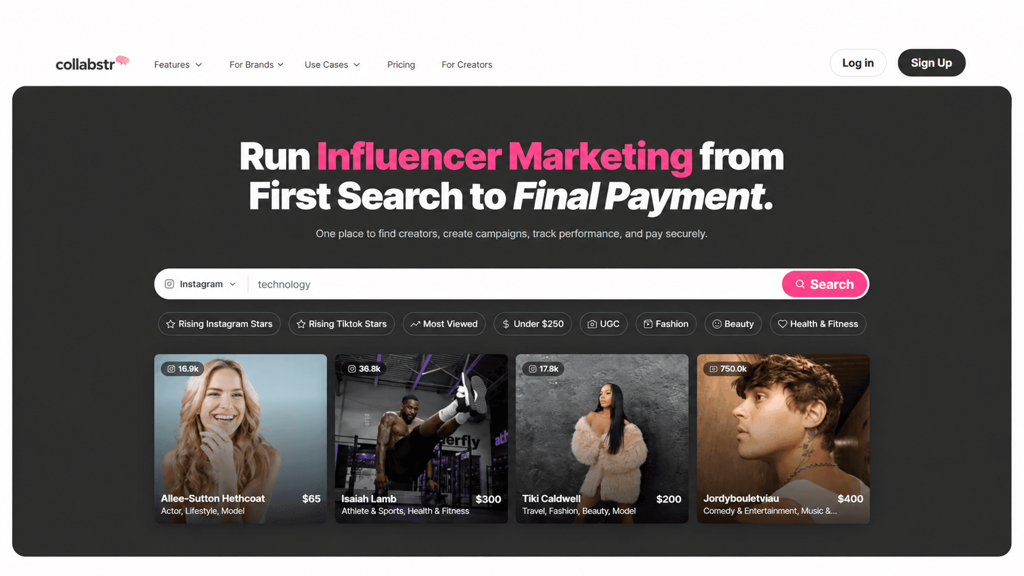
Collabstr lists 1.2m+ creators across Instagram, TikTok, UGC, YouTube, X, Twitch and Amazon.
Payment is held in escrow until you approve the content, which protects a small team that can't chase late deliverables.
Limitation at mid-size scale: the Pro plan allows 1 campaign a month, and the Free and Pro plans carry a 10% hiring fee on creator payments (5% on Premium). Team seats with role-based permissions are listed on the Enterprise plan, which starts at $1,000 a month on an annual contract.
5. HypeAuditor
Best for: teams that put audience vetting and fraud checks first.
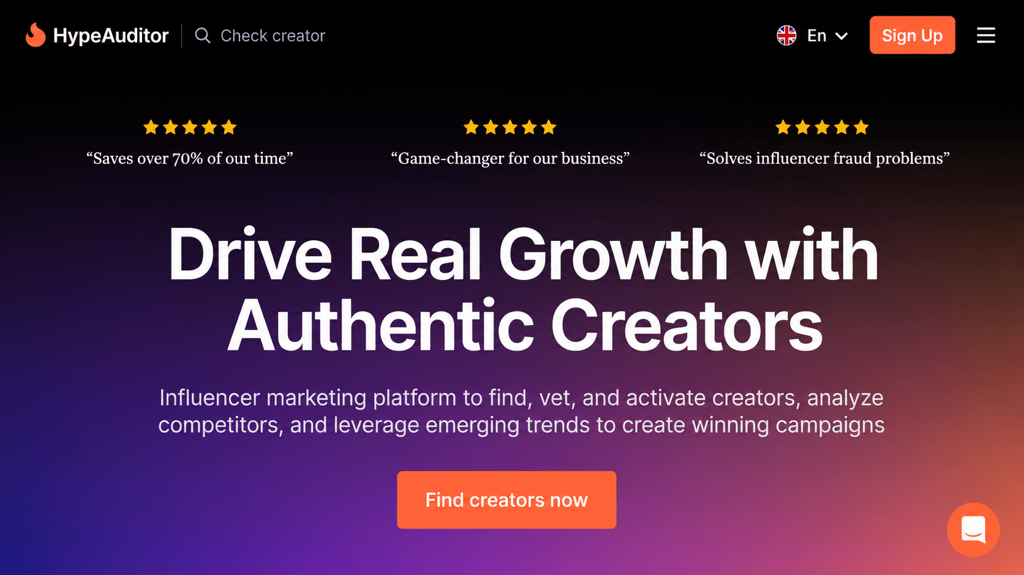
HypeAuditor's database covers 227.5M+ accounts across Instagram, TikTok, YouTube, X and Twitch, with 35+ vetting metrics and AI fraud detection.
It also covers outreach, campaign tracking, PayPal payments and automated contracting, though some tools sit above the Basic plan, so confirm which tier includes the ones you need.
Limitation at mid-size scale: HypeAuditor's own pricing article gives the $299 starting price only for annual billing, with the best rates on two-year agreements. The Basic plan also restricts discovery filters, CRM records and exports, which a team running monthly campaigns will feel first.
6. Influencity
Best for: teams that want to pay only for the modules they use.
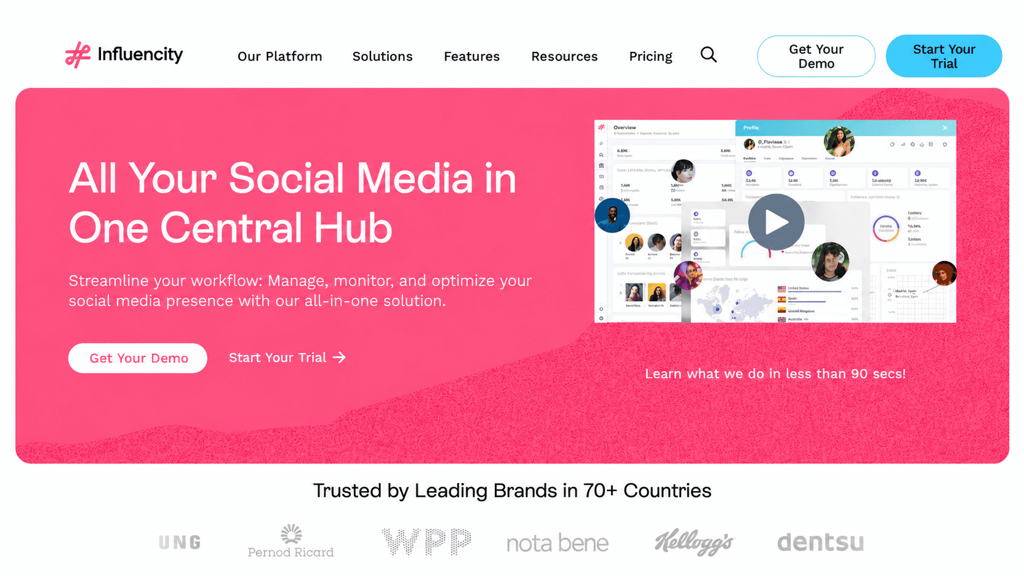
Influencity combines discovery, an influencer relationship management (IRM) hub, casting calls, content validation and payments in 180+ countries.
Plans run from $158 a month on Discover to $318 on Professional and $1,118 on Business billed annually, or $198, $398 and $1,398 on monthly billing, with Enterprise quoted on request.
There's a 7-day free trial on all plans, so check which features your plan includes before you count on payments or reporting.
Limitation at mid-size scale: usage limits apply to creator analyses and tracked creators, so costs rise with campaign volume. Model a busy month before you commit, since the price you see at a quiet month's usage won't hold.
7. Aspire
Best for: eCommerce brands running gifting, affiliate and ambassador programs on Shopify.
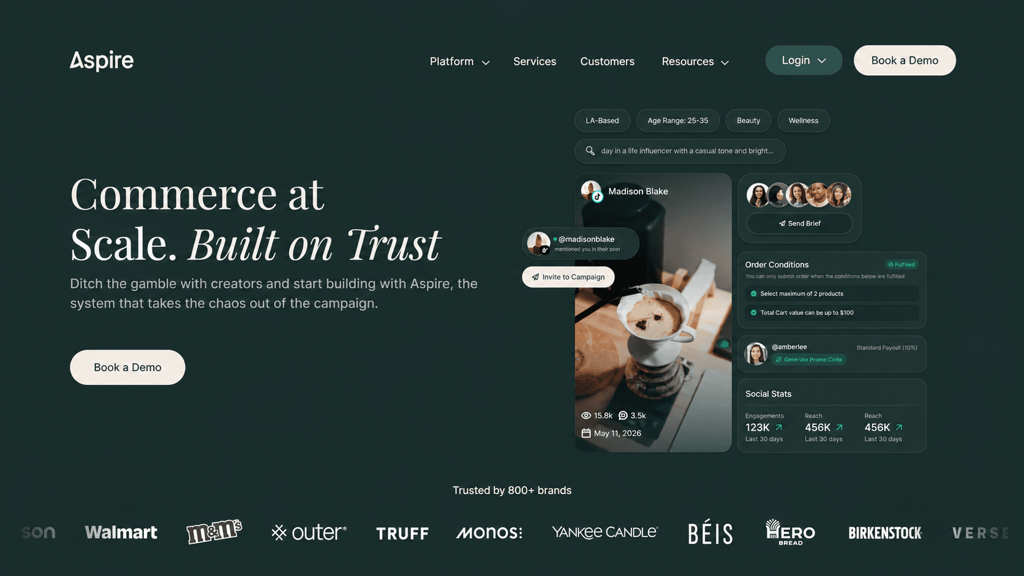
Aspire brings together a creator marketplace, relationship management, product seeding, affiliate tracking and reporting, with a Shopify integration built for gifting at volume.
Limitation at mid-size scale: there's no published price, and the minimum term is set in your order form. Aspire also charges a 2% handling fee on creator payments, so a team that pauses campaigns keeps paying for the term while the fee adds to every campaign it runs.
8. Upfluence
Best for: eCommerce brands tying creators to sales that can commit to 12 months.
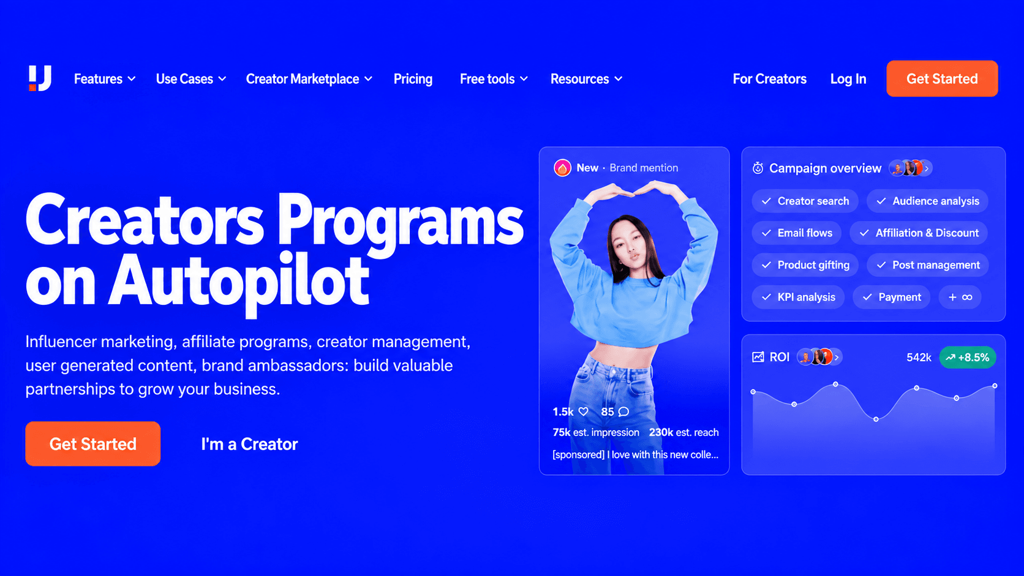
Upfluence connects to Shopify, WooCommerce, Magento and BigCommerce to track sales by creator.
Every client gets a dedicated account manager from day one, which helps a team without an in-house specialist.
Limitation at mid-size scale: the minimum contract is 12 months and pricing is custom-quoted, so you can't budget for it before a sales call or stop paying when campaigns pause.
5 Things Mid-Size Brands Should Prioritize
An enterprise buyer usually judges a platform on depth, such as database size, integrations and user permissions.
A mid-size team is buying capacity rather than features, so judge each platform on how much work it takes off your plate.
If a platform adds three hours of admin a week, it costs more than its price tag when nobody on the team has three spare hours.
1. Usage Limits That Match Real Campaign Volume
Count what your busiest month actually uses, meaning creators opened, emails sent and creators tracked, plus replacements for the ones who drop out. Compare that total with the plan's monthly caps.
Then check what happens at the cap. Some plans bill overage per unit, while others stop until the monthly reset, which can leave a campaign waiting mid-shortlist.
2. A Contract You Can Pause
Count how many months a year you actually run campaigns before you pick a billing term. Divide the annual price by the monthly price to find your break-even point.
If you run campaigns in fewer months than that number, monthly billing comes out cheaper and you stop paying through the quiet months.
3. How Much of the Work the Platform Does
List every step your team handles today, from discovery and outreach to contracts, content approval, payments and reporting. Then mark which steps the platform takes over and which it hands back to you.
Every step handed back still runs on email and spreadsheets, which is where the admin hours come from. Ask the vendor to walk through each step in a live demo rather than on a feature list.
4. How Long a Non-Specialist Takes to Learn It
Have the marketer who'll run campaigns day to day test the platform during the trial. Trial lengths vary, and some platforms offer a free plan instead.
Plan a real shortlist and outreach test before the trial starts, so the trial days go to testing instead of setup.
5. Reporting You Can Hand to a Stakeholder
Your manager will ask for spend, content delivered and results by creator. Ask each vendor for an exported report from a real campaign and check that it answers those questions without being rebuilt in slides.
Shareable and white-label reporting can depend on the plan, so confirm which plan you'd need before you sign.
What Influencer Marketing Platforms Cost at Mid-Size Scale
Published prices, checked in September 2026, fall into three bands.
Entry plans: $158 to $333 a month.
Mid-market plans: $499 to $1,500 a month.
Enterprise plans: $12,000 to $14,700 a year on annual contracts, or quote-only with a 12-month minimum.
Enterprise entry prices overlap with the top of the mid-market band, so the real difference is the annual contract rather than the monthly cost.
Annual Billing Sets the Advertised Rate
Most published prices assume annual billing. On the plans that list both options, monthly billing costs 20% to 50% more, and only one platform in this comparison sells month-to-month alone.
Budget with the monthly figure if you're not sure you'll use the tool all year, and run the break-even check from the section above before you commit.
The Subscription Is Only One Line
Work out the total cost of running a campaign rather than the software's sticker price. Add up these four lines:
The software subscription, at the billing term you'll actually use.
The creator budget, paid to the creators themselves.
Fees on creator payments, which run from 2% to 10% on the platforms compared here that charge them.
Internal hours spent on outreach, contracts, approvals and payments that the tool doesn't cover.
A $5,000 creator budget on an entry plan at $249 a month with a 10% hiring fee comes to $5,749 for that month's campaign, before anyone's hours are counted.
On Hypefy, you set a campaign budget that's allocated across creators, and there's no subscription to pay between campaigns.
Everything before launch is free to use, so you can review a curated list of Instagram and TikTok creators before you commit a budget.
5 Signs You've Outgrown Your Current Setup
Teams rarely decide to switch tools on a set date. The need builds up in small workarounds, such as a second spreadsheet tab, a shared login or an extra hour rebuilding last month's report, until they take up a real share of the week.
Review your setup at the end of each campaign rather than waiting for a renewal date, since that's when the gaps are easiest to see. If two or more of these signs sound familiar, start comparing options.
You hit monthly profile or email limits before the month ends.
You need more seats than your plan allows.
You lose track of which creator is at which stage of a campaign.
You rebuild the same report by hand after every campaign.
You pay for a tool that only covers discovery, while outreach, contracts and payments run on email and spreadsheets.
When to Stay Put
The check works in the other direction too.
If you run campaigns twice a year and your current setup isn't straining, moving up adds a cost without a return. Stay where you are and review the decision when your campaign volume changes.
If you read the list above and realize you're past mid-size, with a dedicated influencer team and campaigns in several markets at once, read our guide to enterprise influencer marketing.
Platform, Agency, or Both
A platform is software your team runs campaigns with, while an agency runs campaigns for you, and mid-size brands often consider an agency precisely because they have no dedicated headcount for influencer work.
The trade-off is time against cost and control. An agency takes the work off your team, while a platform keeps the work and the creator relationships inside the business at a lower cost.
Agencies charge a retainer, a per-project fee, or a markup on creator rates, and the ANA's 2026 agency compensation report found that, on average, 30% of influencer marketing spend goes to the agency and 70% to creators.
A platform that includes execution sits between the two. You keep control of budget and creator choice, while the platform handles outreach, contracts and payments.
Read our guide to [done-for-you influencer marketing] for how that model works.
Where Hypefy Fits for Mid-Size Brands
Hypefy fits a team that runs regular campaigns on Instagram and TikTok without a dedicated influencer manager and doesn't want an annual commitment. Matching, outreach, contracts, content approval, payment and reporting are handled in one place.
There's no subscription, and the cost sits inside the campaign budget you set. Start by building a shortlist in the influencer discovery tool, which is free to use until a campaign goes live.
Coverage is Instagram and TikTok, so if your program depends on YouTube, Twitch or other platforms, pick one of the options above instead.
See what your campaign could look like. Book a demo with our team.
Best Influencer Marketing Platform for Mid-Size Brands FAQs
1. What is the best influencer marketing platform for mid-size brands?
There's no single best platform, since the right fit depends on your campaign volume and how much work your team can absorb.
GRIN suits month-to-month eCommerce teams, Modash suits self-serve discovery, and Hypefy suits teams that want Instagram and TikTok campaigns run without a subscription.
Aspire and Upfluence suit brands ready for an annual commitment.
2. What counts as a mid-size brand?
A mid-size brand runs influencer campaigns regularly but has no dedicated influencer manager and can't justify an annual enterprise contract.
By revenue, the National Center for the Middle Market places US middle-market companies at $10 million to $1 billion, while the EU caps medium-sized firms at fewer than 250 employees and €50 million in turnover.
3. How much should a mid-size brand spend on influencer marketing software?
Published entry plans run $158 to $333 a month, mid-market plans $499 to $1,500 a month, and enterprise plans start around $12,000 a year on annual contracts.
Monthly billing adds 20% to 50% on plans that offer both, so add that, along with creator fees, payment fees and internal hours, to get the real cost of a campaign.
4. Do influencer marketing platforms require annual contracts?
Some do, but most platforms with published prices also offer monthly billing.
Upfluence has a 12-month minimum, and Collabstr's Enterprise plan is annual, while GRIN is month-to-month; Modash and Influencity offer monthly billing, and Hypefy has no subscription at all.
5. What is the best influencer platform for a small marketing team?
Choose a platform that takes work off the team.
If nobody has time for outreach and contracts, look at a platform that handles execution, such as Hypefy or GRIN with its AI agent.
If you have time to run discovery yourself, Modash's Essentials plan is a lower-cost start.
6. When should a mid-size brand move to an enterprise platform?
Move when you have a dedicated influencer team, regularly hit usage caps, need more seats than mid-tier plans allow, or run campaigns in several markets at once.
If campaigns are occasional, stay on your current plan.
7. Is an agency or a platform better for a mid-size brand?
A platform suits a mid-size brand that wants to keep control and cost down, while an agency suits one with no time to run campaigns at all.
Agencies charge a retainer of $3,000 to $25,000+ a month or a per-project fee. A platform that includes execution sits between the two.
8. How many creators can a mid-size brand realistically manage at once?
There's no fixed number, since it depends on how many steps your tool handles for you. As a practical guide, one entry plan tracks 100 creators and its next tier 250.
Without automated contracts and payments, your team's hours will cap that number well before the software does.