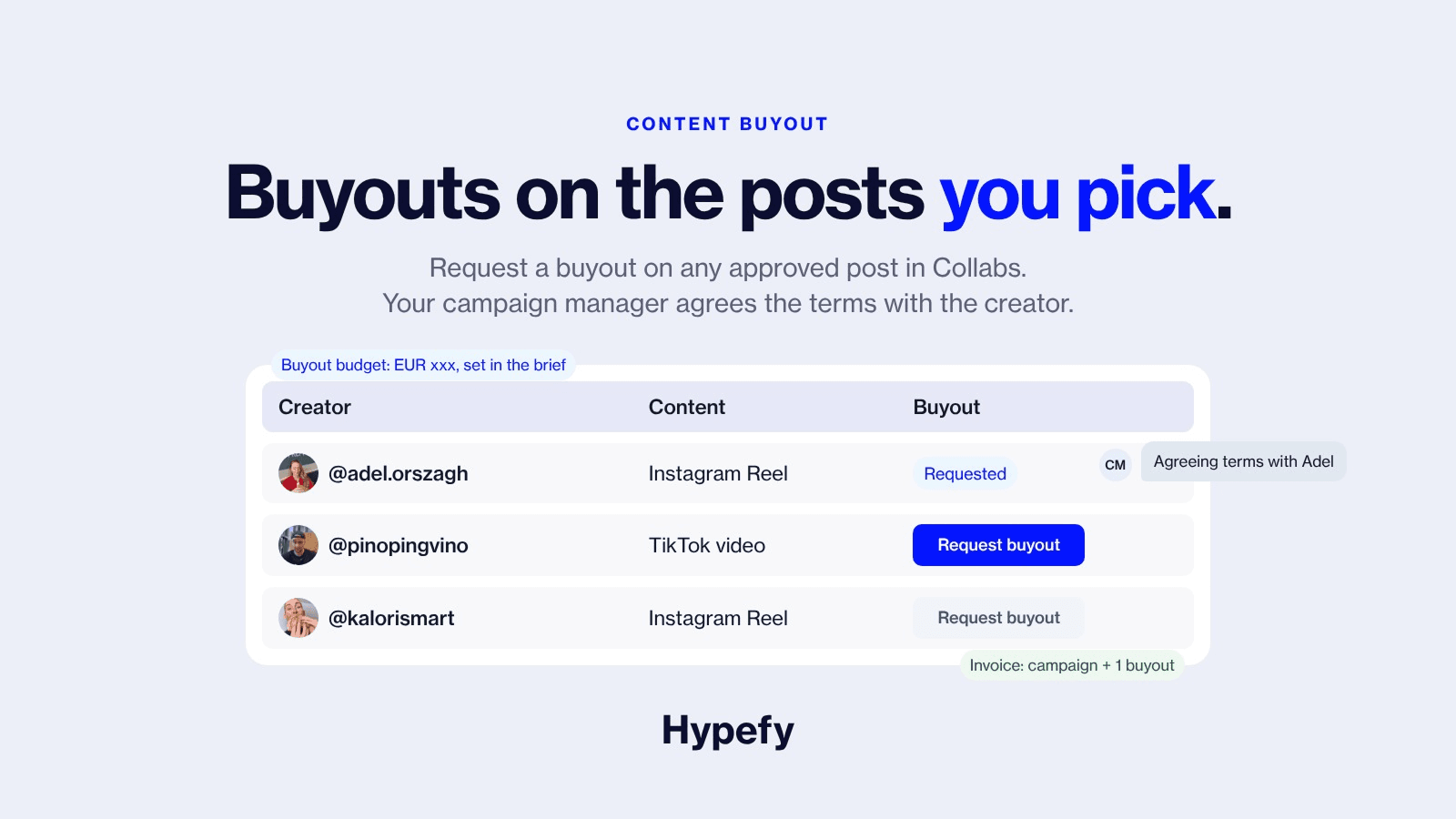
A good creator post rarely stays where it was published.
The brand wants it in a paid campaign, on its own channels, or on a product page. The creator, who owns it, wants to be paid for that second life.
Usage rights are the agreement that sits between those two wishes.
This guide explains:
What influencer content usage rights cover
The ways brands reuse creator content
What the rights tend to cost
Why the budget for them belongs in the brief
We’ll also explain how content buyouts work on Hypefy.
What Influencer Content Usage Rights Cover
When a creator makes a post for your campaign, you've paid for it to appear on their channel for the agreed time.
The content itself still belongs to the creator.
As a rule, copyright stays with the person who made the work unless they sign it over.
Everything beyond that organic post is a usage right, and each one is defined along five lines:
Assets: Which posts, and whether raw files or cutdowns are included.
Channels: The creator's handle through paid ads, your own social channels, your website, email, retail screens, or print.
Duration: How long you may use the content, often set in months.
Territory: Which countries, which matters as soon as a campaign spans several markets.
Exclusivity: Whether the creator can work with a competitor while your ads are live.
The more of these you need, the more the rights cost, and the more a creator will want to know before saying yes.
See how Hypefy handles creator contracts and payments so the terms you agree are the terms that get paid.
Put the five usage-rights questions into your next brief. The influencer brief generator writes the first draft from a sentence.
Three Ways Brands Reuse Creator Content
Brands reuse creator content in three main ways, and the rights get more expensive with each one because the creator gives up more control:
1. Reposting on Your Own Channels
This is the simplest use, and usually the first thing a brand asks for.
The post goes out on your Instagram, TikTok, or LinkedIn with credit to the creator.
It's typically the least expensive right and often part of the first negotiation.
2. Boosting the Creator’s Own Post
Partnership ads on Instagram and Facebook, which Meta used to call branded content ads, and Spark Ads on TikTok put your media budget behind the post exactly as it appeared on the creator's profile.
The creator's name stays on the ad, which is a large part of why the format performs.
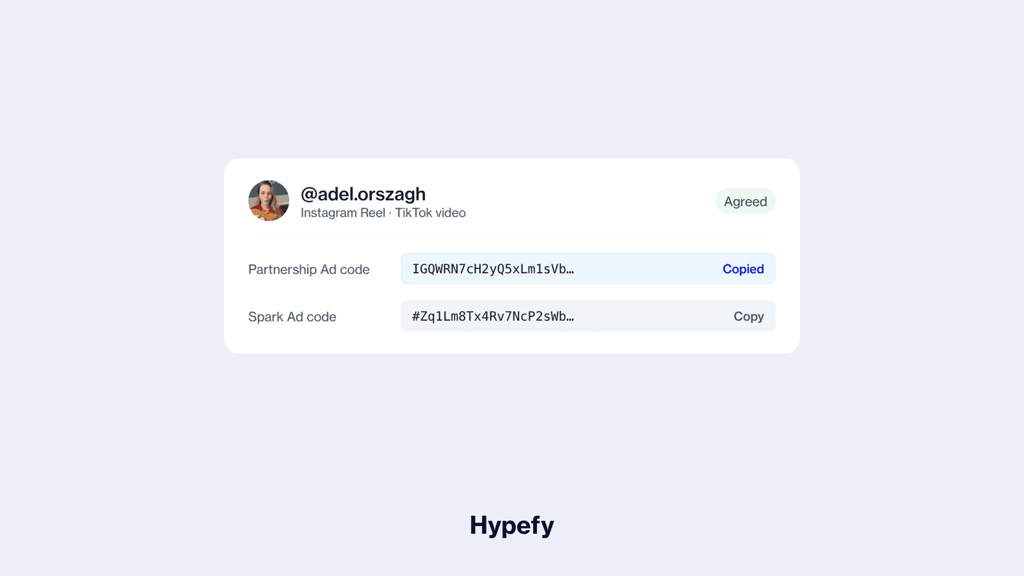
The creator generates a code for the post, a partnership ad code on Instagram or a Spark Ads authorization code on TikTok, and you paste it into the ads manager. This is what people usually mean by whitelisting or allowlisting.
3. Using the File in Your Own Ads
Dark ads under your handle, cutdowns for different placements, a product page video, a retail screen.
This is the widest right and the one creators price most carefully, because the content leaves their hands.
Want creator content you can boost the week it's approved? Start a brief with a buyout budget on Hypefy
What Usage Rights Cost and How They're Negotiated
When it comes to what usage rights cost, there’s no price list, but there’s a pattern.
In Aspire's 2026 survey of nearly 900 marketers and creators, 67% of brands said they include paid usage in the creator's initial contract or rate. The rest pay by duration or add a fee later when a post performs.
On the creator side, many price usage as a share of their base rate, commonly 15% to 35% per 30 days of use, and 30-day windows are emerging as a baseline.
What moves the price is the list above, including duration, how many channels, exclusivity, and whether the content appears under the creator's handle or yours.
A post that performed well costs more to extend than one that didn't, which is fair, and also why brands that wait tend to be surprised.
For the base rates those percentages sit on, see what brands pay for influencer marketing in Central and Eastern Europe and our guide to micro-influencer costs and rates.
One caveat on the survey. It's a US sample, and its price bands are in dollars, so read it for the structure of the market rather than as a rate card for yours.
Model a campaign with a buyout line before you brief anyone. Run the numbers in the marketing budget calculator.
Why the Budget Belongs in the Brief
The content worth buying only shows up after it's made.
At brief stage, you know your product, your audience, and the creators you've approved. You don't yet know which of the forty posts will be the one people share.
By the time you do, the campaign budget is spent, the invoice is closed, and the creator has moved on to the next job.
Rights get negotiated in a hurry, from a weaker position, and often as a separate project with its own paperwork.
Setting money aside in the brief changes that.
The budget is there when the post is, the request can go the same day, and the creator hears about it while the collaboration is still fresh.
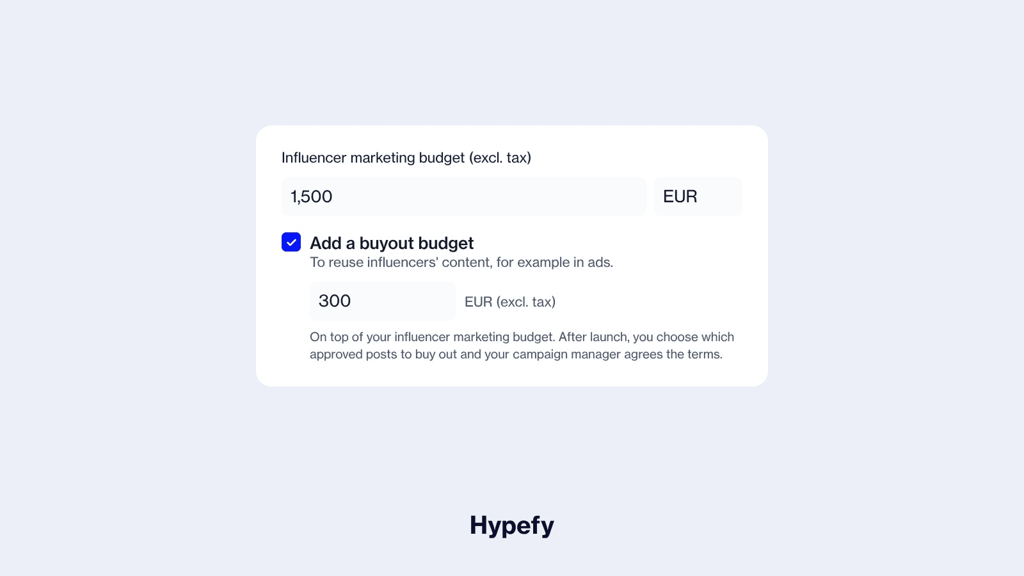
Nothing comes out of the buyout budget until a deal with the creator is agreed.
See how a buyout fits into a Hypefy campaign. Book a demo.
How Content Buyouts Work on Hypefy
Content buyouts are now part of every Hypefy campaign, for brands and agencies alike, in three steps:
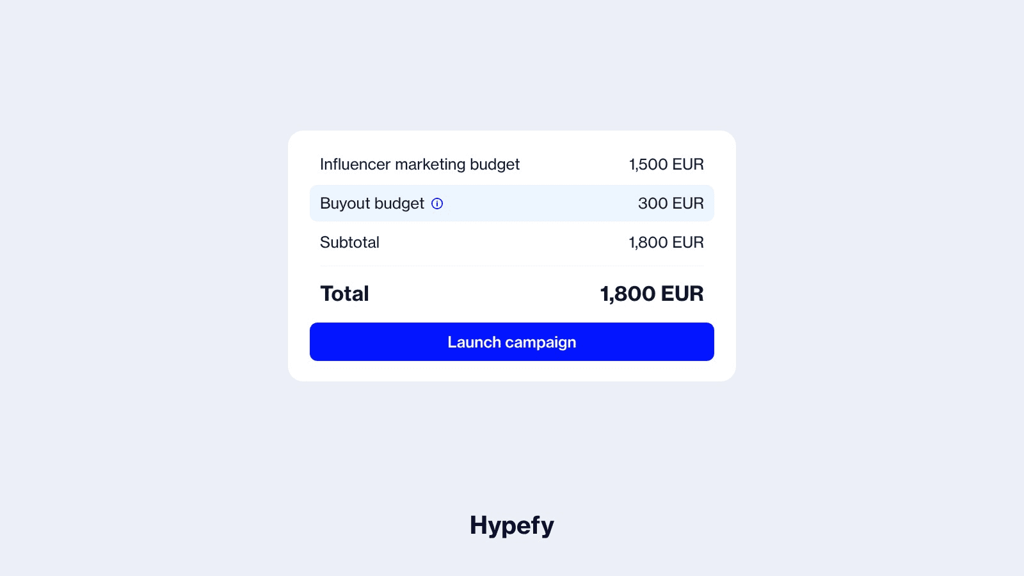
You add a buyout budget when you create a brief. It appears next to your campaign budget at checkout, is billed as a separate line, and is kept aside for buyouts only.
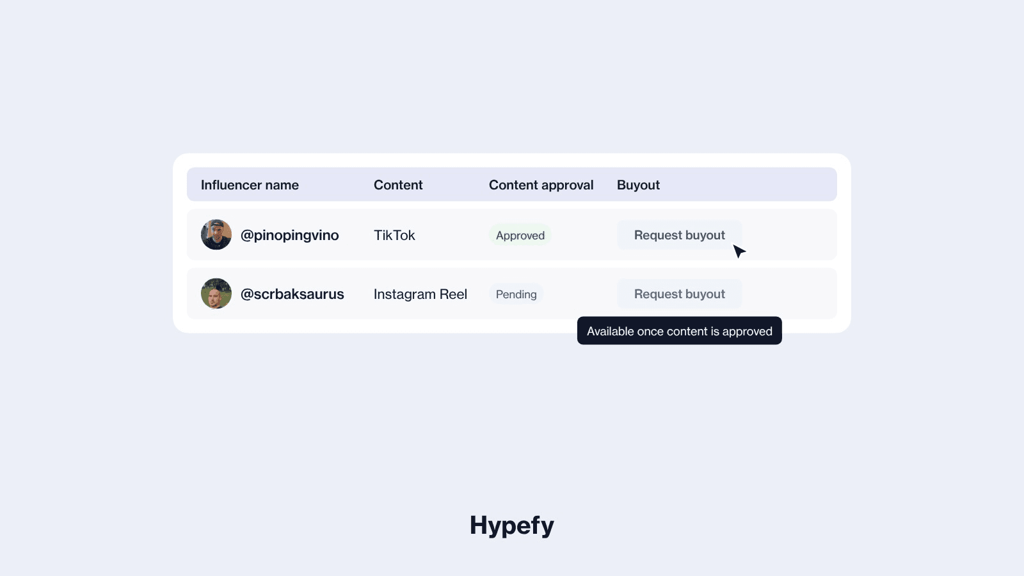
Once you've approved a post, you request its usage rights from the Collabs tab. You choose the posts and describe how you plan to use them, in your own words, and you can edit or withdraw the request until a deal is agreed.
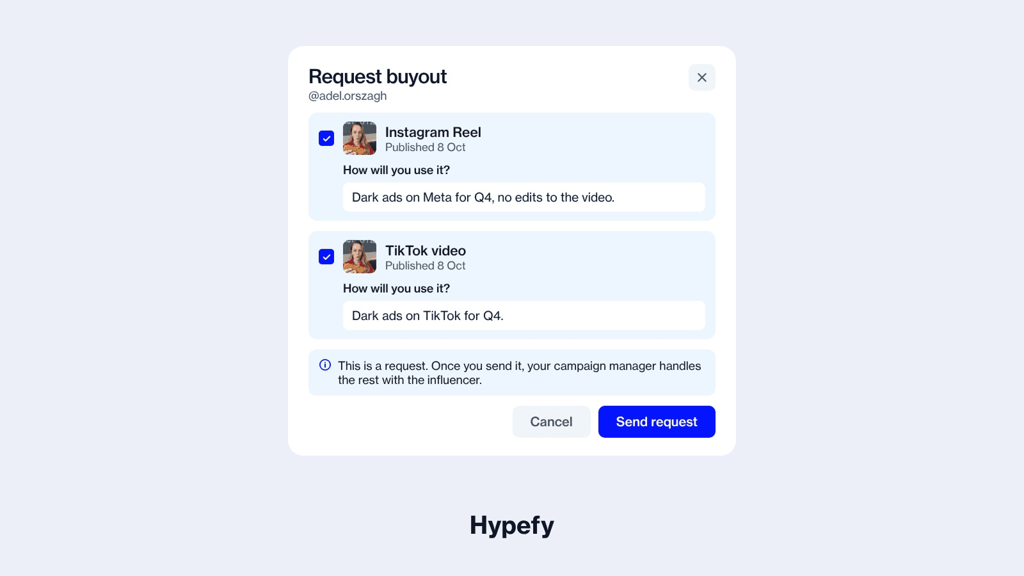
Your campaign manager handles the rest. They agree the price and the terms with the creator, keep the Buyout column in your Collabs tab current, and come back to you either way. Creators can decline. When a boost is part of the deal, the partnership ad code or Spark Ads code appears in the same table, so you can track them in the platform.
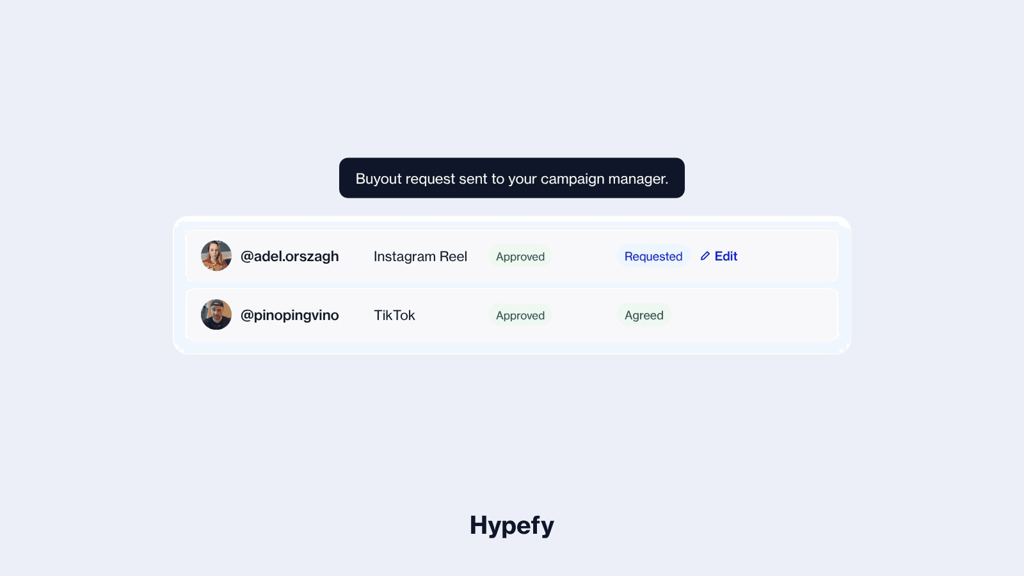
Everything stays on the original campaign and on one invoice, which is the practical difference from how buyouts used to be handled as a second campaign.
To see the kind of content these campaigns produce, browse our case studies.
Start a brief with a buyout budget.
Influencer Content Usage Rights FAQs
1. Do I own the content a creator makes for my campaign?
No. The creator owns it unless the contract transfers copyright, which is uncommon.
What you buy is permission to use it in defined ways for a defined time.
2. What's the difference between usage rights and whitelisting?
Usage rights is the umbrella term. Whitelisting, or allowlisting, is one kind of use, where the creator lets you advertise from their handle.
On Instagram and TikTok that now happens through partnership ads and Spark Ads codes.
3. How long do usage rights last?
Usage rights last as long as the deal says.
Many agreements are set in monthly windows and extended when the content keeps performing.
4. Can a creator refuse a buyout?
Yes. Usage rights are a request, and creators weigh the fee, the exclusivity, and how the content will be used.
A clear description of the intended use makes a yes more likely.
5. How do I start using content buyouts on Hypefy?
Add a buyout budget the next time you create a brief.
Once a post is approved, the Request buyout option appears in your Collabs tab.
If you have a campaign running now and want to talk about buyouts, your customer success manager is the person to ask.