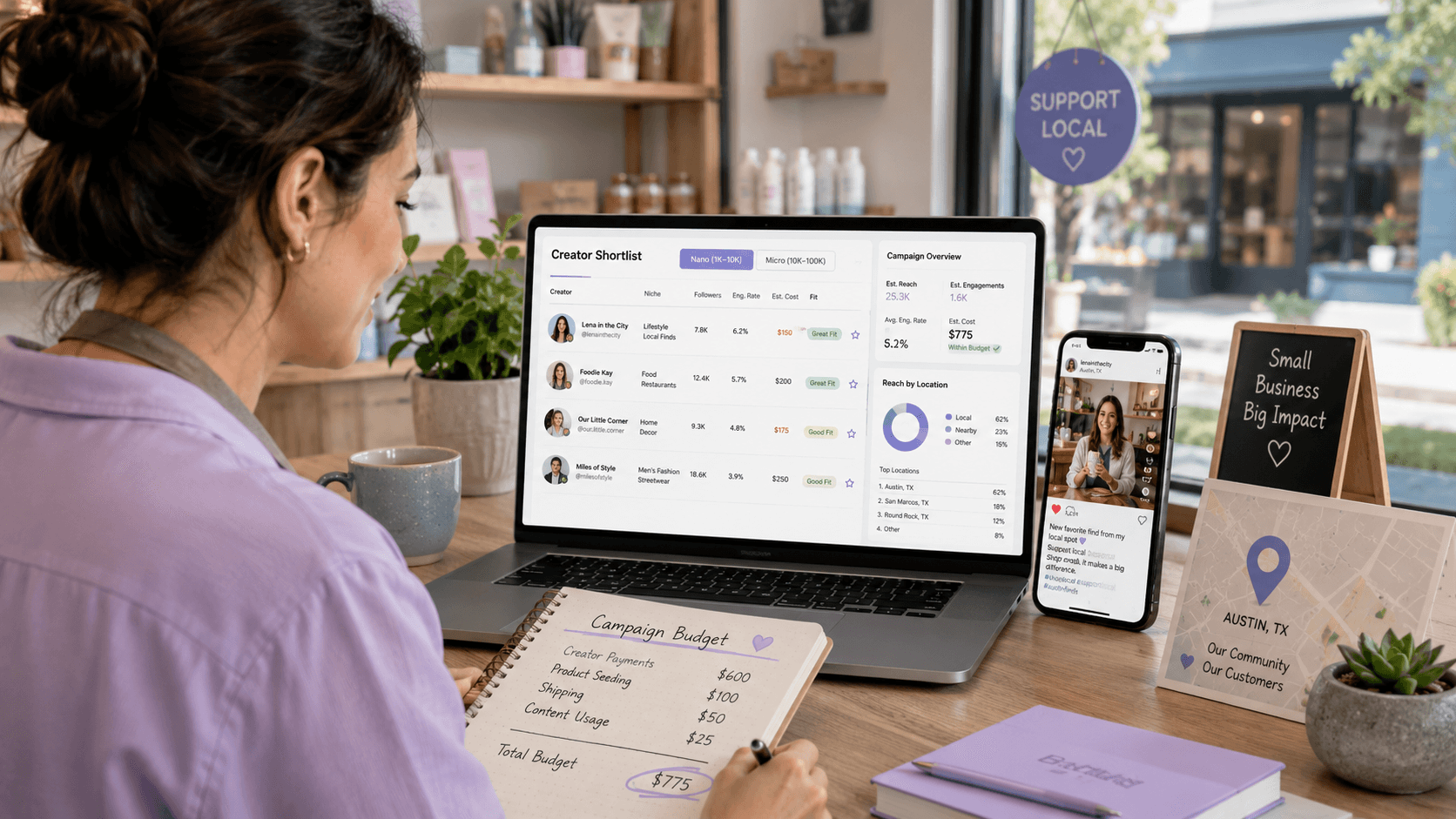
You have seen influencer marketing work for bigger brands. You have watched a product go from unknown to sold out because the right creator posted about it. And you have probably wondered whether any of that is possible for a small business without a big budget or a dedicated marketing team.
It is possible, and small businesses often have a structural advantage here that large brands do not.
Nano and micro creators, the ones with audiences between 1,000 and 100,000 followers, are both affordable and effective. Many will work for gifted products if the brand fit is right.
Their engagement rates are higher than those of larger creators, their audiences trust them more personally, and they are reachable without a talent agent in the middle.
For a small business trying to reach a specific local or niche audience, a handful of the right nano creators can outperform a single expensive macro campaign at a fraction of the cost.
This guide covers how to think about influencer marketing as a small business, simple strategies that work on a tight budget, the tools worth considering, how to find creators without overspending, and how to measure results on your own.
How to Think About Influencer Marketing as a Small Business
Influencer marketing looks different when you are a small business rather than a big brand. Large brands use it for mass awareness. Small businesses usually need something more targeted, such as reaching a specific audience and driving a real action, whether that is a sale, a signup, a store visit, or a booking.
That goal plays to your strengths. Working with nano creators (1K-10K followers) and micro creators (10K-100K followers) is well within reach financially, and those creators tend to produce better results for conversion-focused campaigns than larger ones do.
Audiences at these tiers treat a recommendation as advice from a person they know rather than as an ad, and that difference shows up directly in conversion data.
You also have a credibility advantage. A small local business working with a local creator feels authentic in a way that a national brand campaign rarely does.
The creator’s audience knows both the creator and the area. That familiarity translates directly into purchase intent.
The realistic expectation for a first small business influencer campaign is a handful of well-matched partnerships, steady data on what works, and a clearer picture of which creators to invest in next.
Success comes from testing and reinvesting.
See how other small brands run their first campaigns on Hypefy. See How Hypefy Works
Small Business Marketing Strategies to Keep in Mind
Influencer marketing does not require a large team or a big budget to work. What it does require is a clear approach.
The strategies below are designed for a small business running a practical, affordable operation built around steady testing that turns one good campaign into a repeatable system.
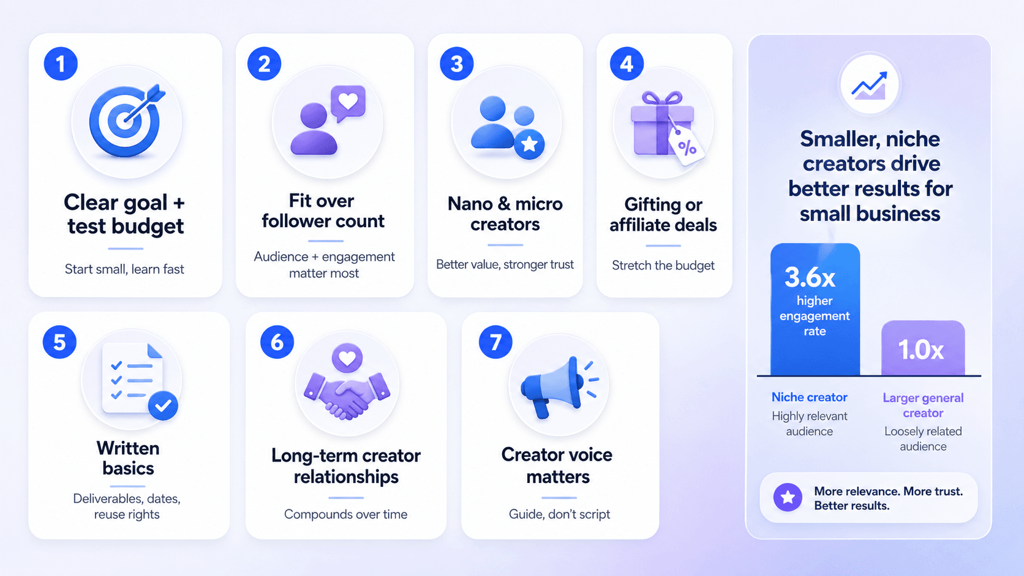
1. Start With a Clear Goal and a Small Test Budget
Before you contact a single creator, define one clear goal for the campaign, e.g., sales, signups, foot traffic, or bookings. Then set a test budget you can afford to learn from. The data from a small first campaign is worth more than the result itself, because it tells you exactly where to put more budget next.
2. Choose Creators by Fit and Engagement
Follower count is the least useful number for evaluating a creator.
What matters is how actively their audience engages with their content, whether that audience matches your target customer, and whether the creator’s content style fits your brand.
A creator with 4,000 followers in your specific niche will typically outperform one with 80,000 followers in a loosely related category.
Use the Instagram engagement rate calculator to check any creator’s rate before reaching out.
3. Lean on Nano and Micro Creators for Better Value
Micro-influencers deliver significantly higher engagement at meaningfully lower cost per post compared to mega-influencers. For a small business, this is the most important dynamic in the whole guide.
You get more genuine engagement, more targeted reach, and more content for the same budget.
Nano-influencers also convert a substantially higher share of engagements into actual sales compared to macro-influencers, because their audiences treat recommendations like advice from someone they actually know.
4. Use Product Gifting or Affiliate Deals to Stretch Your Budget
For a small business selling a physical product, a gifting campaign with the right nano creators is one of the most cost-effective first moves available. Pair it with a unique discount code per creator and you have built-in tracking at no extra cost.
Affiliate arrangements, where the creator earns a percentage of sales they drive, work similarly and align creator incentives directly with your outcomes.
5. Put the Basics in Writing
Even a small collaboration deserves a short written agreement covering the deliverables, posting dates, payment or gifting terms, and whether you can reuse the content in your own ads, emails, or product pages.
Reuse rights matter more than most first-time brands expect, since one good creator video can work across every channel you own.
Make sure every post is clearly disclosed as a partnership as well, Sponsored-content disclosure is a legal requirement, and the responsibility sits with the brand as much as with the creator.
6. Build Longer Relationships With Creators Who Perform
One post is a data point. A three-month partnership with the same creator builds audience familiarity, compounds trust, and drives repeat purchase behavior.
Most creators offer discounts for longer-term partnerships rather than one-off posts, which means sticking with creators who perform more effectively and cheaper over time.
7. Let Creators Make the Content in Their Own Voice
Creators who are given a script produce content that sounds scripted. Their audience can tell, and they scroll past it.
Give creators the message, the disclosure requirement, the deliverable, and what is off-limits, then step back. Content that sounds like the creator performs. Content that sounds like the brand does not.
8 Best Platforms and Tools for Small Businesses
The right tool depends on your budget, how often you plan to run campaigns, and how much of the work you want to handle yourself.
Here is a comparison of the influencer marketing tools for small businesses.
| Platform | Best for | G2 rating | Starting price | Free option | Main strength |
|---|---|---|---|---|---|
| Hypefy | End-to-end campaigns with no monthly subscription | 4.9 | Campaign-based, no subscription | No monthly fee | Fair pricing based on real engagement, full workflow in one place |
| Shopify Collabs | Shopify stores finding creator partners | No rating | Free (Shopify plan required) | Yes | Native Shopify integration, gifting and affiliate built in |
| HypeAuditor | Vetting creator audiences and detecting fake followers | 4.6 | From $299/month | Limited free | Best-in-class audience authenticity data |
| Modash | Discovery and vetting with strong filters | 4.9 | From $299/month | No | Large database, strong geographic filters |
| Heepsy | Finding creators by niche and location | 4.5 | From $69/month | Limited | Affordable discovery with location-based search |
| SARAL | Affiliate and ambassador programs | 4.6 | From $3.6K/quarter | No | Strong affiliate and long-term partnership management |
| Afluencer | Marketplace for brands to post campaigns | 4.6 | Free for influencers and $49 per month for brands | Yes | Free entry point for finding interested creators |
| Later Influence | Social scheduling plus basic influencer features | 4.5 | From $18.75/month | Limited | Useful if you already use Later for social scheduling |
1. Hypefy
Hypefy is an AI-powered influencer marketing platform that covers discovery, outreach, contracts, content review, payments, and reporting without a monthly subscription.
You only pay when you launch your campaign and nothing before it.
The platform negotiates a fair rate based on a creator’s actual engagement from their recent content, which means your budget goes toward creators who are performing rather than ones with inflated follower counts.
For small businesses that cannot commit to monthly software fees, the campaign-based model makes the economics work.
Best for: Small businesses running occasional campaigns who want professional results without fixed fees or monthly subscriptions.
Pricing: Campaign-based. No subscription.
G2 rating: 4.9
2. Shopify Collabs
Shopify Collabs is built directly into the Shopify admin and lets brands offer products to creators in exchange for content.
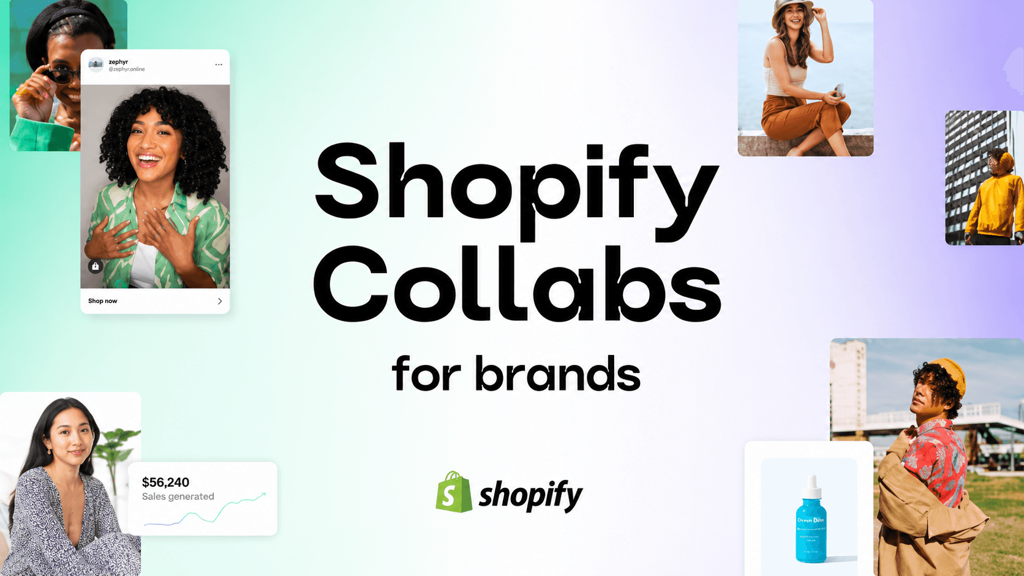
Creators apply to collaborate, and you approve the ones that fit, send products, and they post.
Commission tracking is built in. If your store runs on Shopify, this is the lowest-friction entry point available.
Best for: Shopify stores wanting gifting and affiliate campaigns without leaving their existing platform.
Pricing: Free with a Shopify subscription.
G2 rating: No rating
3. HypeAuditor
HypeAuditor is an audience analytics and fraud detection tool.
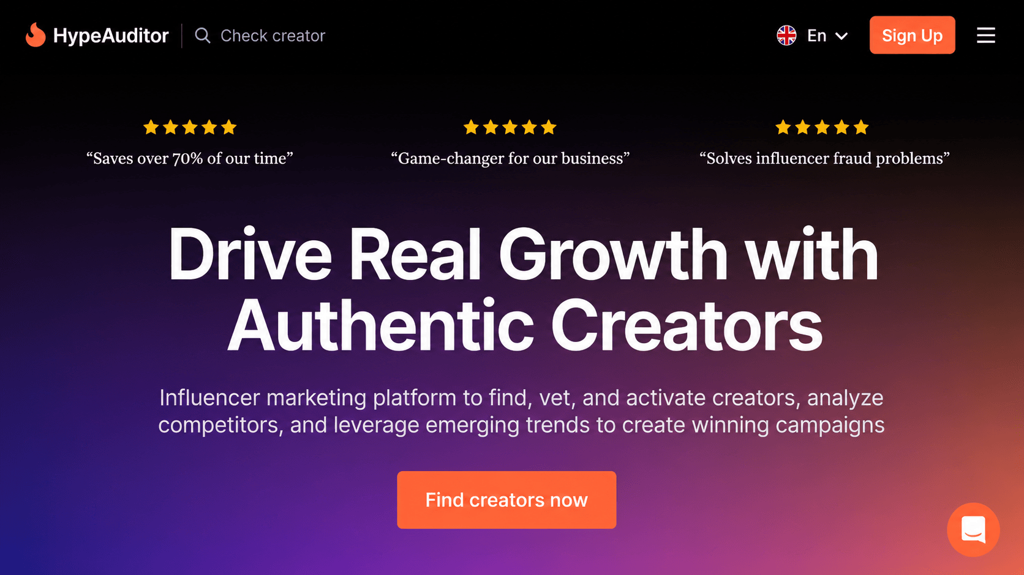
It audits creator audiences for fake followers, bot activity, and geography mismatches before you commit a budget.
It does not manage outreach or payments, but it is the most trusted tool available for making sure you are not buying a reach that does not actually exist.
Best for: Brands that want to verify creator audiences before working with them.
Pricing: From $299/month. Limited free account available.
G2 rating: 4.6
4. Modash
Modash indexes 350M+ creator profiles with strong audience filters for location, demographics, and engagement quality.
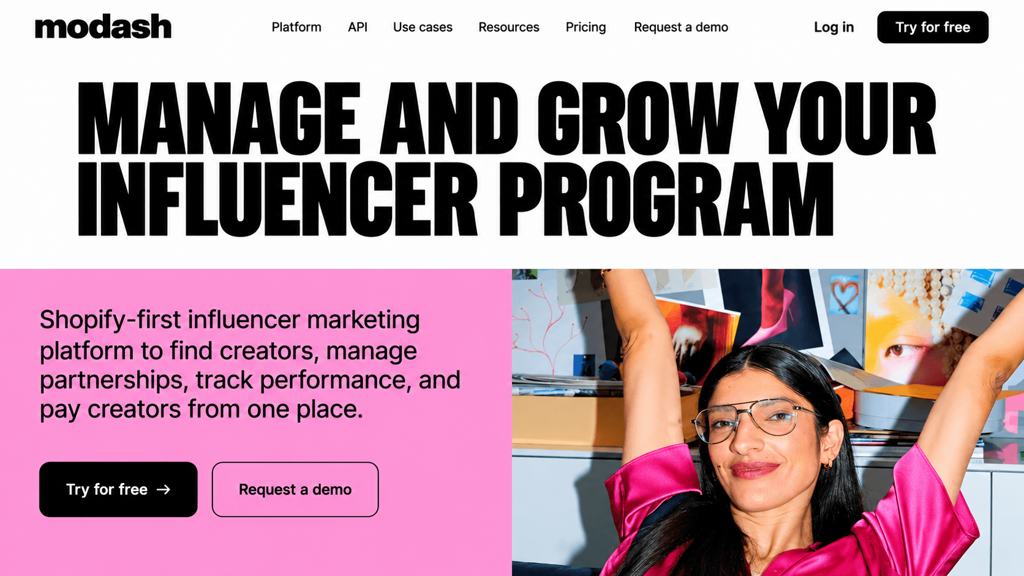
Discovery is strong, but contracts, outreach, and payments happen outside the platform.
Best for: Teams needing volume discovery with strong geographic filtering.
Pricing: From $299/month.
G2 rating: 4.9
5. Heepsy
Heepsy is a more affordable discovery tool with solid location-based search, useful for local businesses looking for creators in a specific city or region.
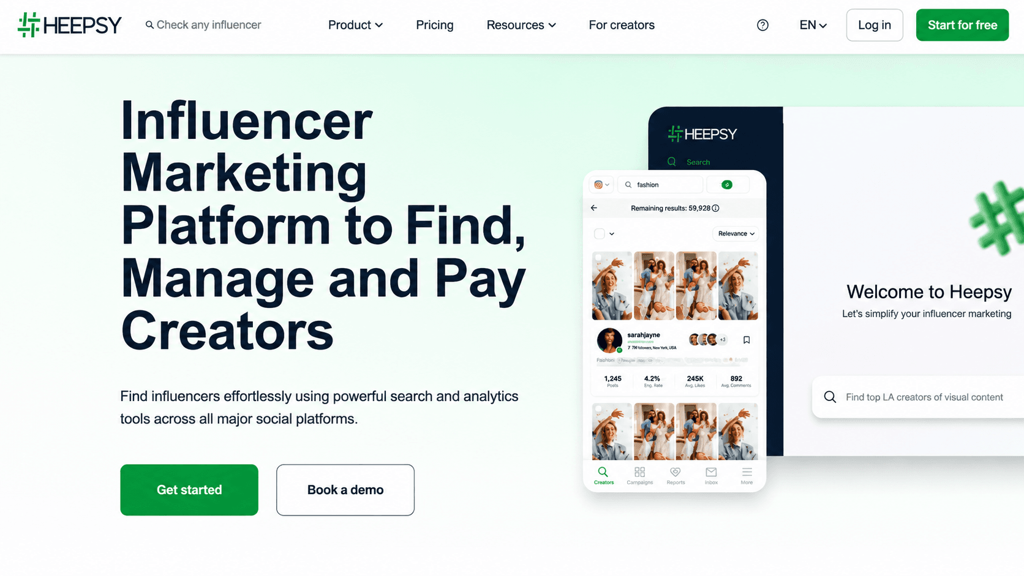
Audience data is less detailed than HypeAuditor, but the price makes it accessible for very small budgets.
Best for: Local businesses looking for creators in a specific geographic area.
Pricing: From $69/month.
G2 rating: 4.5
6. SARAL
SARAL is built for brands running ambassador programs and long-term affiliate relationships.
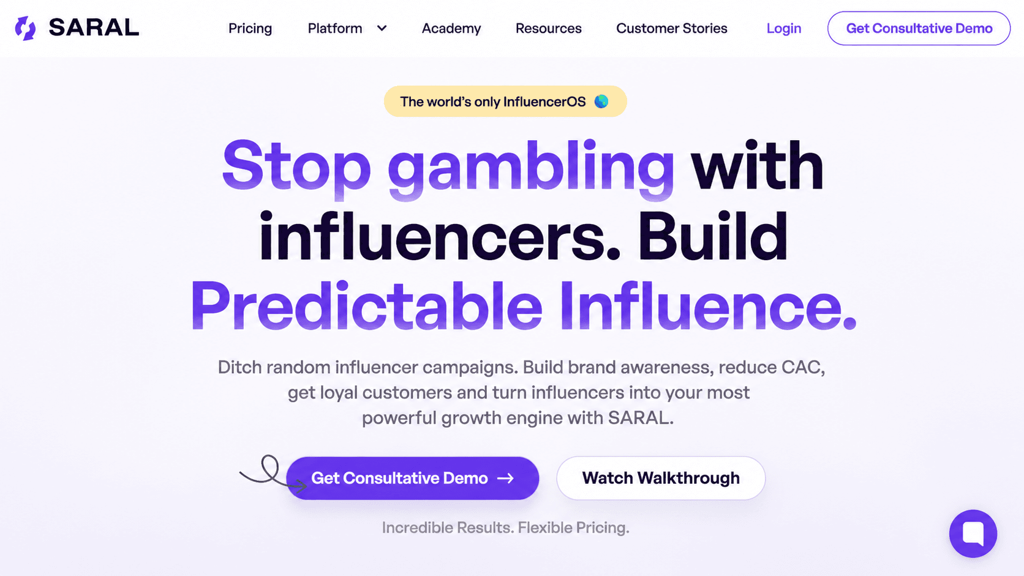
It handles outreach automation, link tracking, and commission management.
SARAL is less useful for one-off campaigns, but strong for brands building a recurring creator roster.
Best for: Brands building ambassador programs with affiliate commission structures.
Pricing: From $3.6K/quarter
G2 rating: 4.6
7. Afluencer
Afluencer lets brands post a campaign brief for free and have creators apply to collaborate.
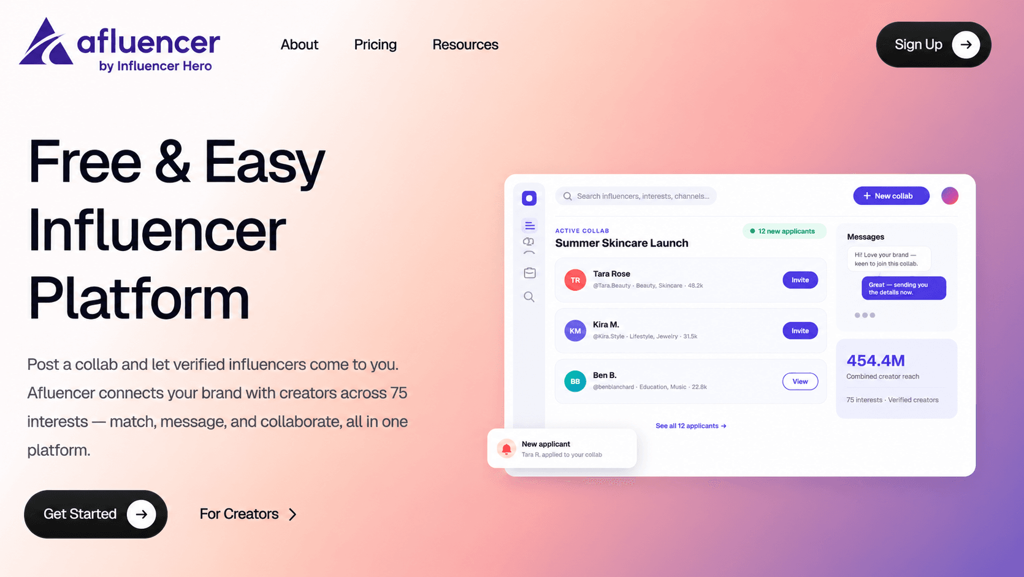
The brand reviews applications and selects those that fit.
The free entry point makes it accessible, but creator quality varies more than on curated platforms.
Best for: Small businesses with very limited budgets looking for their first creator partnerships.
Pricing: Free for influencers and $49 per month for brands
G2 rating: 4.6
8. Later Influence
Later Influence is an add-on to Later’s social scheduling platform.
If you already use Later to manage your social media, the influencer features are a low-friction addition. Limited as a standalone influencer tool.
Best for: Brands already using Later for social scheduling who want basic influencer management in the same platform.
Pricing: From $18.75/month
G2 rating: 4.5
How to Find the Right Influencers When You Don’t Have a Big Budget
Finding good creators without overspending comes down to knowing where to look and what to look for.
For a first campaign, start where your customers already spend time. For instance, Instagram suits most local and product businesses, while TikTok rewards personality-led niches and reaches younger buyers.
Search niche hashtags on Instagram and TikTok. The creators posting consistently in your niche with genuine comment activity are the ones worth reaching out to. Look for creators who respond to comments personally, reference their followers by name, and post about your category without it being their only topic. Those signals predict engagement quality better than follower count does.
Check your own followers. Your existing customers who are also creators are already warm leads. They know your product, they bought it for a reason, and their content about it will be authentic because it is. Search your follower list for accounts that look like active content creators and reach out directly.
Judge by engagement quality rather than engagement rate alone. A high engagement rate built on emoji reactions and single-word comments is not the same as one built on genuine questions, product references, and reply threads. Read the comments before you make contact.
Keep outreach short and specific. A first message needs only four things, who you are, why this creator fits your brand, what you are offering (a gifted product, a flat fee, or an affiliate arrangement), and what you would like them to make.
Send it by email where possible, personalize the first line so it is clearly not a mass message, and expect to follow up once. Creators respond to brands that have clearly watched their content.
Use Smart Pricing to avoid overpaying. Hypefy’s pricing builds a fair rate for each creator based on their actual recent engagement instead of their follower count or stated rate card. For a small business where every dollar matters, this is the difference between a budget that stretches across five creators and one that runs out after two. The platform negotiates the rate on your behalf, so you don’t have to start every outreach conversation from scratch.
Hypefy works within the budget you set and invoices you for the campaign. No monthly fee means no cost between campaigns, which suits businesses that run a few campaigns per year rather than monthly.
Find nano and micro creators that match your niche with Hypefy’s discovery tool.
How to Measure Results Without an Analytics Team
You do not need analytics software or a reporting dashboard to know whether a campaign worked. You need three things:
- A unique way to track what each creator drove
- A record of what each creator cost
- A simple way to compare the two
Unique discount codes per creator. Give every creator a code that is specific to them, not the campaign. When someone uses it, you know exactly which creator sent them. This is the simplest and most reliable attribution method available.
Trackable links per creator. A UTM link takes two minutes to set up and tells you how much traffic each creator sent to your site. Pair it with the discount code, and you have both traffic and sales tracked back to the individual creator.
A basic spreadsheet. Record each creator’s name, their cost, the discount code you gave them, the number of times it was used, the revenue it drove, and the traffic from their link. That is the whole reporting setup. After the campaign, divide the revenue by the cost to get your return on each creator. The ones with a strong return get briefed again. The ones that did not deliver get replaced.
Judge each campaign over a 30 to 60 day window after the last post goes live, since influencer-driven sales often arrive days or weeks later.
For a sense of scale, one local home-services business ran a Hypefy campaign with a €750 budget across three micro creators in the 20,000 to 40,000 follower range. Five posts reached just over 40,000 people and drew nearly 4,900 engagements, an engagement rate above 12% of everyone reached. Results at that size are within reach of a first campaign, and they came from mid-sized local creators rather than big names.
Brands that track results this way improve with every campaign, while brands that stop at likes and shares keep guessing. You do not need a big team to be in the first group, just a system, however simple, that runs consistently.
Once tracking by hand gets tedious, Hypefy handles discovery, payments, and performance tracking in one place, so the numbers come together without the manual work.
Model your test budget by tier before briefing anyone with the marketing budget calculator.
Run Your First Campaign With Hypefy
Hypefy is a practical way to put this guide into action without needing a large internal team.
The platform finds creators that match your brand and audience using AI, negotiates fair rates based on real engagement with no subscription, and manages the whole campaign in one place, with a team that can help when you need it.
You pay when you run a campaign, with nothing due before it and no costs between campaigns.
Influencer Marketing for Small Business FAQs
Is influencer marketing worth it for a small business?
Yes. The case for small businesses is stronger than for large brands in some ways, because nano and micro creators are affordable, their audiences are highly targeted, and conversion rates at the smaller tiers consistently outperform larger ones.
The key is starting with a clear goal, choosing creators by fit rather than size, and tracking results from the first campaign.
How much does influencer marketing cost for a small business?
It depends on the tier and platform. Nano creators often work for gifted products if the brand fit is right, and paid rates where they apply are generally accessible for small budgets.
Micro creators charge more, with rates varying widely by niche and platform. A small first campaign with three to five nano creators can run for little more than the cost of the products you send.
Platforms like Hypefy charge no subscription and build the campaign fee into the budget you set, so there are no costs between campaigns.
What is the best influencer marketing platform for small business?
It depends on how often you run campaigns and how much you want to handle yourself.
Shopify Collabs is the easiest entry point if you sell on Shopify.
Afluencer is free if you want creators to apply to you.
Hypefy is the strongest option for end-to-end campaign management with no monthly subscription, where the platform handles discovery, fair pricing, outreach, content review, and payments in one place.
Do I need a big budget to work with influencers?
No. A gifting campaign with nano creators can start with nothing more than the product cost.
Even a paid nano campaign with three to five creators is within reach for most small businesses.
The budget matters less than choosing the right creators and tracking results carefully enough to improve from one campaign to the next.
How do I find affordable influencers?
Search niche hashtags, check your own customer base for active creators, and use a platform with fair pricing built in.
Hypefy’s Smart Pricing negotiates rates based on actual recent engagement rather than stated rate cards, so you are not overpaying for reach that does not convert.
How do I measure influencer marketing results on my own?
Give each creator a unique discount code and a trackable link.
Record how much each creator cost and the revenue or traffic their code and link generated. Divide revenue by cost to get the return per creator. The ones that deliver get briefed again.
That is the entire measurement system a small business needs to start.
Can I do influencer marketing without a marketing team?
Yes. A single person can manage three to five nano creator relationships, run a campaign end to end, and track the results using the discount code and spreadsheet method described above.
Once the volume grows past ten creators per campaign, a platform like Hypefy handles the coordination so one person can still run the program without getting buried in manual work.