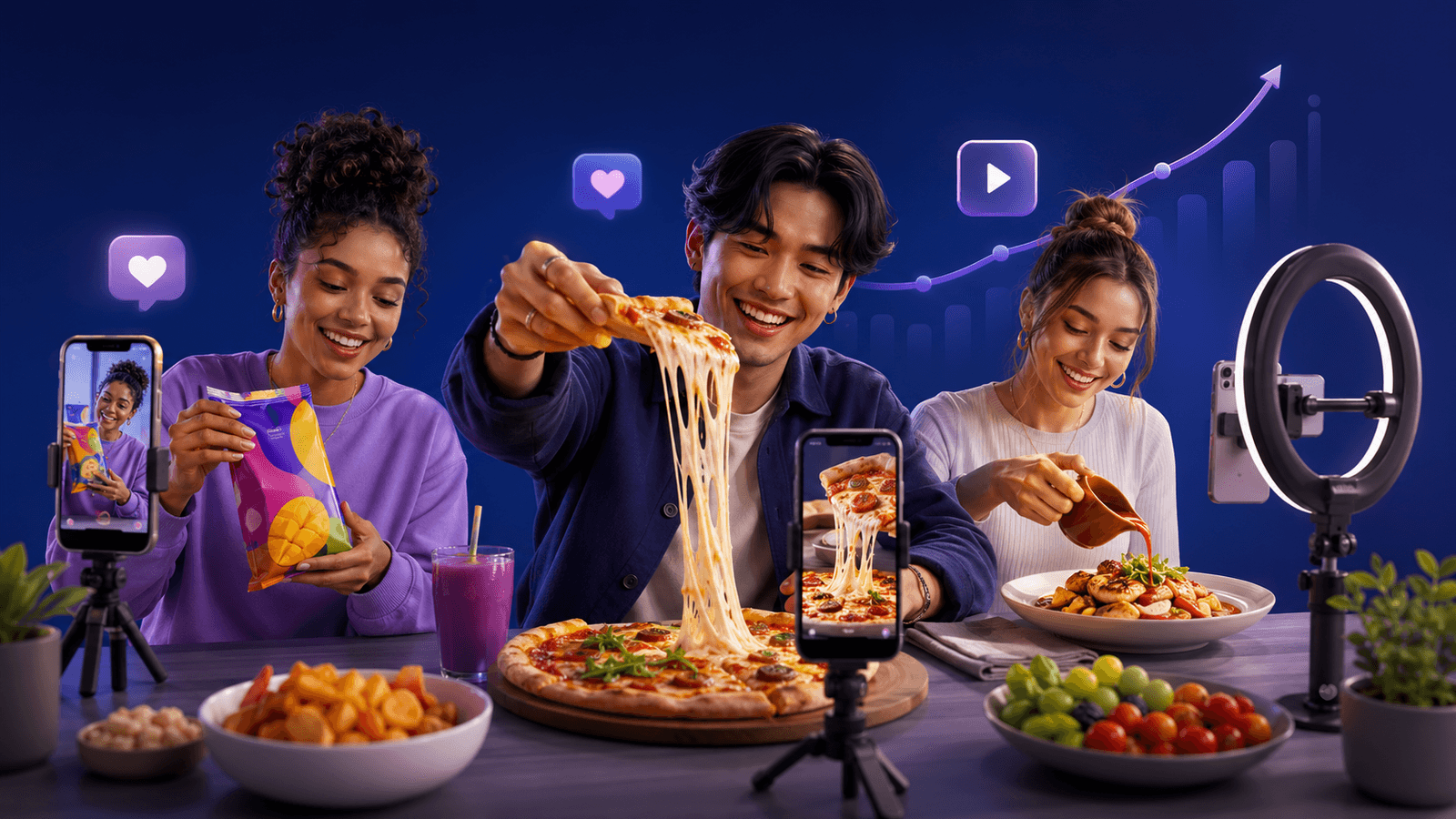
Food influencer marketing works differently from almost every other category because food is inherently sensory and visual. A creator filming a first bite, a cheese pull, a sauce hitting a pan, or a 30-second recipe with a product at the center can drive a craving and a purchase in a way that a banner ad or a packaged photo never will.
That sensory quality is what makes food influencer marketing its own category, with its own strategies, its own cost logic, and its own rules about what content converts.
Food influencer marketing is the practice of partnering with content creators to promote food and beverage products, restaurants, meal kits, CPG brands, and DTC food companies through content that shows the product in use, in context, and in a way that feels real.
It works for established grocery brands, emerging DTC food products, restaurant groups, and everything in between.
The direction of travel is clearest at the top of the market: Unilever, whose food brands include Hellmann’s and Knorr, now works with close to 300,000 creators as part of a social-first marketing shift, according to the company.
This guide covers why it works, the strategies that drive results, what it costs, how to find the right creators, and real campaigns worth learning from.
The State of Food Influencer Marketing in 2026
People discover what to eat and drink through their phones. Short-form video is where younger audiences engage with brands. On Instagram, Facebook, and TikTok, Gen Z is most likely to engage with brand posts built around video under 60 seconds, and that TikTok is their favorite channel for discovering products. Food fits that format well, since a recipe, a first bite, or a sizzle lands in seconds.
A recipe creator’s Reel reaches the right people at the exact moment they are deciding what to cook, order, or put in their cart. Traditional food advertising never had that placement.
The trust dimension is specific to food. When a creator tastes something on camera, and their reaction looks genuine, the viewer is watching someone they follow decide whether food is worth eating.
That credibility transfers to the brand in a way that a product shot on a white background cannot replicate.
Nano and micro food creators consistently outperform celebrity accounts on engagement. A smaller creator whose audience cooks, eats out, or shops for specialty products will typically produce stronger results than a celebrity whose audience is there for something other than food.
Creator content builds awareness, generates trust, produces reusable UGC, and does all of it at a cost per engagement that most paid social channels cannot match.
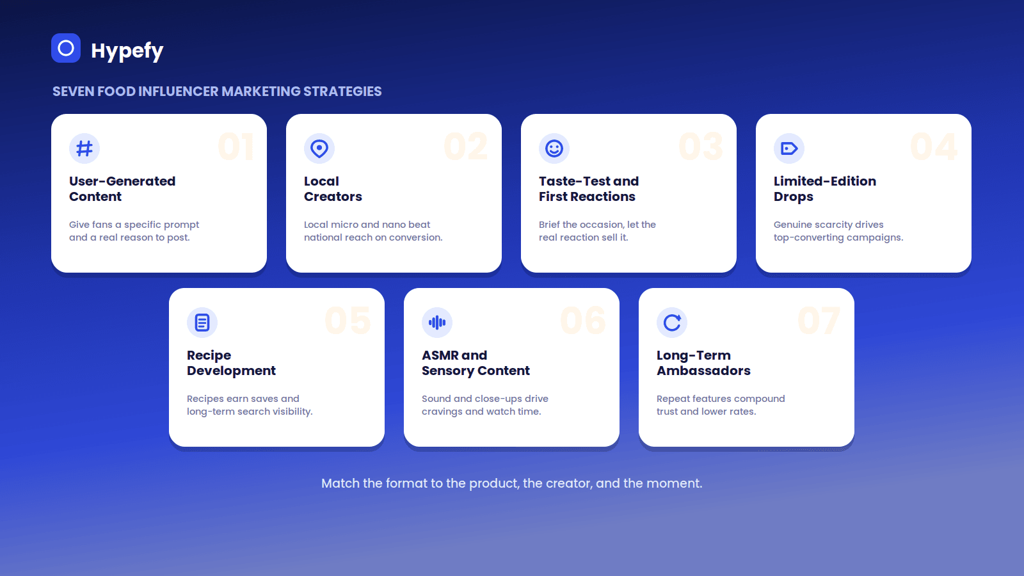
7 Food Influencer Marketing Strategies That Drive Results
Food content wins when it looks craveable and feels real. These are the strategies that deliver both.
1. Encouraging User-Generated Content
UGC campaigns ask customers and fans to post about the product organically, in exchange for recognition, gifted products, or a chance to be featured. For food brands, UGC is particularly powerful because eating is inherently social.
People already share what they cook, order, and eat. A campaign that gives them a reason to tag the brand captures that behavior rather than manufacturing it.
The key is making participation feel natural rather than transactional. A clear hashtag, a specific creative prompt (“show us how you make it yours”), and engagement with the best submissions are usually enough. The brand ends up with a library of authentic content it did not have to produce.
Takeaway: Make the participation prompt specific and the sharing reason genuine.
2. Partnering With Local Creators
Local food creators are the highest-converting tier for restaurants and regionally distributed brands.
A creator posting consistently about restaurants and food products in a specific city delivers something no national campaign can replicate. It is a recommendation that feels like a tip from someone who lives there.
Local influencer campaigns with food creators consistently generate strong ROI and measurable increases in reservations and foot traffic. For restaurants, gifted meals in exchange for content is often the most cost-effective entry point.
Takeaway: For regional distribution or restaurant groups, local micro and nano creators will outperform national reach every time.
Find recipe creators whose content style fits your product with Hypefy’s discovery tool.
3. Taste-Test and First-Reaction Content
First-reaction content works because the response cannot be faked. When a creator tastes something on camera and their expression shifts, the viewer reads that as genuine.
This format is one of the highest-performing content types in the food category, specifically because food is experiential and the viewer cannot taste it themselves.
The brief for this format should specify the product, the desired occasion, and any key talking points, then step back. A scripted reaction reads as fake from the start. The creator’s genuine response is the asset.
Takeaway: Brief the occasion and let the reaction happen. The authenticity is in the content.
4. Limited-Edition and Seasonal Drops
Urgency works in food. A limited-edition flavor, a seasonal menu item, or a holiday bundle gives the creator a genuine news hook and gives the audience a reason to act before it is gone. This format pairs naturally with countdown-style content, unboxing posts, and “you have to try this before it sells out” hooks that perform well on both TikTok and Reels.
The campaign structure that works is simple. Announce early with one or two macro or mid-tier creators for reach, sustain through the launch window with micro and nano creators for engagement and conversion, and document the sell-out to create demand for the next drop.
Takeaway: Seasonal drops with a genuine scarcity angle are some of the highest-converting food campaigns available.
5. Recipe Development
Recipe content shows the product in use, which is the most persuasive format for ingredients, pantry products, and cooking-adjacent brands. A creator developing and filming a recipe with the product as an ingredient answers the practical question every buyer has. What do I actually do with this? It reduces purchase friction and drives saves, which are the highest-intent signal available on Instagram and TikTok.
Recipe content also has the longest shelf life of any food format. A well-shot recipe Reel stays relevant and searchable long after the posting date, generating passive awareness and savings for months.
Takeaway: For ingredients and cooking products, recipe content generates saves and long-term search visibility that no other format matches.
6. ASMR and Sensory Content
ASMR food content is one of the fastest-growing formats in the category. The sounds of food, a crisp bite, a sauce simmering, the crunch of a crust, and a pour activate sensory responses that drive cravings and viewing time.
Content built around sound and close-up visuals consistently outperforms standard product showcase content for time watched and shares.
This format requires a creator who understands audio production, since sound quality is the content. It works best for products with inherent textural appeal, from crunchy snacks and carbonated drinks to fresh bread, anything with a distinctive sound.
Takeaway: ASMR content is worth testing for any food product with textural or sonic appeal. The sound’s production quality determines the result.
7. Long-Term Ambassador Partnerships
One-off posts produce one moment of awareness. Ambassador programs produce compounding trust. When a creator features a product in multiple posts over months, their audience starts to associate the two.
By the fifth post, it reads as part of the creator’s story. That familiarity translates to higher conversion rates and brand recall that one-off campaigns cannot build.
The practical upside for the brand is better content on every campaign, as the creator understands the product range and brief more deeply over time, and lower per-post rates, as most creators offer meaningful discounts for long-term commitments.
Takeaway: For brands serious about a specific creator relationship, lock in a three to six-month ambassador structure. The content and the economics both improve.
What Food Influencers Cost
Creator rates vary by tier, platform, content type, and usage rights, so treat these as planning ranges, not fixed prices. The figures below are per-post rates for a standard sponsored post. A quick story runs lower, and a produced recipe video runs higher (Snippet).
| Platform | Nano (1K–10K) | Micro (10K–100K) | Macro (100K–1M) |
|---|---|---|---|
| $60–$200 | $200–$2,000 | $2,000–$15,000 | |
| TikTok | $50–$180 | $180–$1,800 | $1,800–$14,000 |
| YouTube | $80–$250 | $250–$2,500 | $2,500–$22,000 |
Nano and micro creators usually deliver the best value for food brands, because food content converts on trust and engagement more than raw reach. Gifting and product seeding are common entry points with smaller creators, and many will post for product if the brand fit is right and the product has genuine appeal to their audience.
Recipe videos and other produced content cost more than a simple taste-test clip. At the top tier, the math often favors five micro-creators over one macro, particularly for CPG brands targeting specific dietary or lifestyle segments.
Gifting works especially well for physical food products, where the cost of goods is the main variable. A gifted meal for a restaurant review or a product bundle for a recipe feature is often all it takes to start a creator relationship that can scale.
Use the marketing budget calculator to model your spend by tier before reaching out to the first creator.
How to Choose the Right Food Creators
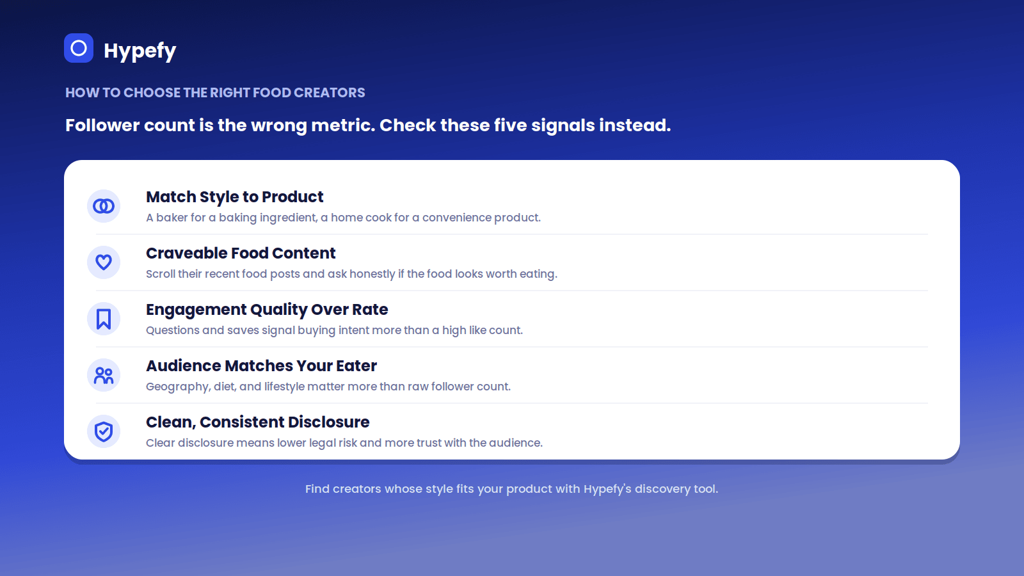
The most common mistake food brands make is reaching for the largest creator they can afford. Follower count is the wrong metric.
Match the creator’s style to the product. A quick-prep home cook is the right match for a convenience product. A baker is the right match for a baking ingredient. A restaurant reviewer is the right match for a new opening. The content that comes from a naturally fitting brief looks different from the content that comes from a brand trying to force a match.
Check whether their food content looks craveable. This sounds obvious, but it is not. Many creators are technically good at producing content, but they don’t create food content that makes viewers want to eat. Scroll through their recent food posts specifically and ask honestly whether the visual quality, the lighting, and the presentation make the food look good.
Evaluate engagement quality, weighing it above the raw rate. A comment section full of questions (“What brand is that sauce?”, “Where can I buy this?”, “Tagging my partner”) is a more useful signal than a high like count. Saves are the clearest signal of intent in the food category. A creator whose recipe posts consistently get saved by their audience has built a relationship with followers that drives purchase.
Check whether their audience matches your target eater. Geography matters for regionally distributed products and restaurants. Dietary preferences and lifestyle signals matter for functional foods, specialty ingredients, and health-positioned products. A creator with a predominantly vegan audience is a poor fit for a meat brand, regardless of follower count.
Look at how they handle disclosure. Creators who disclose branded content clearly and consistently are both legally compliant and more trusted by their audience. Sloppy disclosure is a risk signal for the brand.
Where to Find Food Influencers
The starting points that cost nothing are the ones most brands skip.
Check who already posts about your product. Customers who create content about a brand they genuinely like are the warmest leads available. Search your brand name and relevant hashtags. The creators who show up organically are already advocates.
Search food hashtags and location tags. Food content is tagged specifically and reliably on Instagram and TikTok. Niche tags like a cuisine type, a dietary approach, or a city food scene surface creators who are already deep in the category you need.
Browse food communities. Facebook Groups, Reddit food communities, and food-specific platforms surface engaged enthusiasts who post consistently and have genuine audiences.
Use a discovery platform for scale. Searching manually is viable for a first campaign with a handful of creators. Once the brief requires 15 or more creators, spans multiple markets, or needs specific audience geography filtering, a platform becomes necessary.
Hypefy finds food creators by reading the meaning of what they post, going deeper than category tags.
A creator who posts weekly home-cooked family dinners, recipe experiments, and restaurant visits will surface for a food campaign brief even if their bio says nothing about food. That semantic matching is what makes niche discovery work reliably.
See how food brands structure always-on creator programs. See How Hypefy Works
6 Food Influencer Marketing Trends Shaping 2026
1. Always-on programs are replacing one-off campaigns. Food brands that run consistent creator activity across the year outperform those that activate for a seasonal push and go quiet. The audience builds familiarity with the brand through the creator’s feed over time, and that familiarity is what drives trial.
2. Short-form recipe and reaction content dominate discovery. TikTok and Reels are where food products get found. A well-performing food Reel reaches far beyond the creator’s follower count through algorithm distribution, and the save metric signals intent in a way that almost no other content format does.
3. ASMR and sensory content are growing fastest. The format rewards products with inherent textural and sonic appeal, and the viewing time it generates is among the highest in the food content category.
4. Brands are giving creators more creative freedom. The campaigns that perform best in 2026 are the ones where the creator was given a clear brief and then trusted to execute it their way. The more a brand scripts the content, the less it sounds like the creator, and the less the audience trusts it.
5. Values-driven and clean-label partnerships are increasing. Audiences for health, functional, and clean-ingredient food products have grown significantly, and brands in those categories are building partnerships with creators who share those values, rather than just those who cover food generally.
6. AI is being used to match creators and measure results more precisely. The brands seeing the best return from food creator programs in 2026 are using AI to match creators by content meaning and audience quality, with follower count set aside, and to track performance at the campaign level instead of per post.
Model your influencer marketing for food brands budget by creator tier with the marketing budget calculator.
Food Influencer Campaigns Worth Learning From
Jaffa Crvenka: New Product Launch Across Croatia
Jaffa used Hypefy to launch Buttons, a new chocolate cookie with a peanut butter filling, targeting a 24- to 40-year-old demographic across major Croatian cities. The brief required a balanced audience split across gender, concentrated in urban markets, with content that felt authentic.
Hypefy matched 16 creators to the brief. The campaign produced 41 pieces of content, reached 1.8 million people, and generated 2.6 million impressions. The best-performing single post accounted for nearly 30% of total campaign reach. Every KPI was exceeded.
Over the following year, Jaffa ran 12 more campaigns across four markets through Hypefy, reaching 8.7 million people through 150 creators and generating 427,000 engagements from 280 pieces of content. The first campaign became the brief and the benchmark for everything that followed.
Read the full Jaffa case study
Argeta: 14 Markets, 18 Months, One Workflow
Argeta, a Slovenian food brand and category leader across the Balkans, needed to test fourteen European markets without committing to a separate local setup in each. Over 18 months, the brand ran 21 campaigns across 14 markets through Hypefy.
Hypefy’s own campaign data records reaching more than 4.6 million people, generating 254,000 engagements, and featuring more than 160 pieces of content from more than 90 creators.
The most efficient campaign reached 1.37 million people at a 7.63% engagement rate per reach in Slovakia, a market where the brand had no prior presence. A synchronized launch across five Balkan markets went live on the same day from a single brief.
Read the full Argeta case study
Burgerme: Five Products, Five Months
German food delivery brand burgerme ran five campaigns in five months across Germany. Hypefy’s own campaign data records reaching 1.42 million people through 19 creators and 48 pieces of content. Each campaign was matched to a different product, with a fresh set of creators briefed and matched to it.
The Veggie Burger campaign found creators whose audiences had demonstrated interest in plant-based content. The flagship Cheesy Chicken Bundle campaign hit 3.0% engagement per reach, at the German food category median.
How to Measure Results and Stay Compliant
Measuring Food Influencer Campaigns
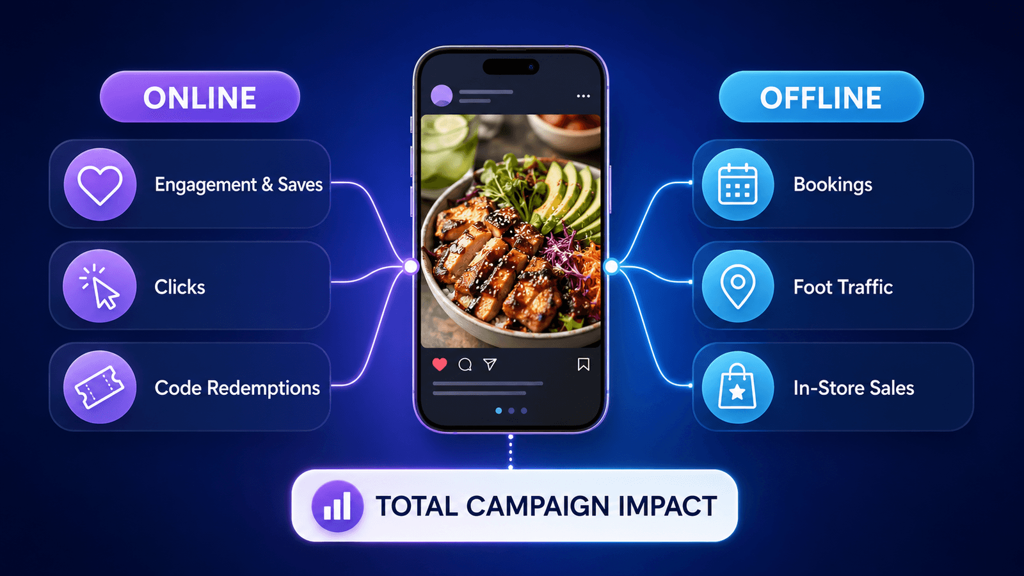
The metrics that matter for food are engagement quality, saves, clicks, and code redemptions. Engagement quality means comment sections where people ask questions, tag friends, and share the post. Saves signal intent, particularly for recipe content, since a saved recipe is a bookmark to a future purchase.
For CPG and DTC food brands, creator-specific discount codes and trackable links are the most reliable attribution method. They connect creator activity directly to sales without relying on platform analytics that disappear after a campaign window closes.
The food-specific reality is that a significant share of impact happens offline. A restaurant gets a booking because someone saw a creator’s post.
A grocery product gets picked off a shelf because someone recognized it from a Reel. Promo codes handle the online attribution. Tracking foot traffic and in-store sales uplift through retail partners captures the offline piece.
Check your cost per engagement and overall campaign ROI with the ROI calculator before and after each campaign.
Staying Compliant
Food marketing carries compliance requirements that go beyond standard disclosure. Sponsored posts must be disclosed clearly, prominently, and before the commercial content, not buried in a caption or hidden below a long hashtag string. This is non-negotiable under FTC guidelines and ASA rules in the UK, and similar requirements apply across EU markets.
Health and nutrition claims are the most common compliance failure in food influencer campaigns. A creator who says a product helps you lose weight, supports immunity, or has clinical benefits without those claims being substantiated creates legal exposure for the brand. These claims need to be reviewed and approved before content goes live, not flagged after.
Content aimed at younger audiences carries additional scrutiny. Food and beverage marketing directed at children and teenagers is subject to stricter rules in most markets. If the creator’s audience skews young, extra care is needed around claims, tone, and product type.
Build disclosure language into the brief, specify it in the contract, and include a content review step before posting. These steps protect both the campaign and the brand.
Run Your Food Campaign With Hypefy
Hypefy matches food and beverage brands with creators whose content genuinely fits the product, sets fair rates based on a creator’s real, recent engagement, and handles discovery, outreach, content review, payments, and performance tracking in one place.
The platform has run food campaigns across Europe for brands including Jaffa, Argeta, and burgerme. It searches creators directly from Instagram and TikTok by the meaning and style of their content, so the brief drives the match instead of a category filter.
How Food Brands Win With Influencer Marketing FAQs
What is food influencer marketing?
Food influencer marketing is the practice of forming partnerships between food and beverage brands and content creators to promote products, restaurants, or brands through content that shows the product being used, tasted, or cooked.
It works across CPG, DTC food brands, restaurants, meal kits, and beverage companies.
How much do food influencers cost?
Food influencer costs vary by tier and platform. Nano creators (1K to 10K followers) typically charge $50 to $250 per post, micro creators (10K to 100K) $180 to $2,500, and macro creators (100K to 1M) $1,800 to $22,000.
Recipe videos and produced content cost more than a simple taste-test clip, and product gifting is a common entry point with nano creators, particularly for restaurant reviews and physical food products.
How do I find food influencers for my brand?
Start with those who already post about the product organically, then search relevant food hashtags and location tags.
For campaigns requiring more than a handful of creators or spanning multiple markets, a discovery platform that searches by content meaning instead of category tags is significantly more efficient. Hypefy’s discovery tool finds food creators by reading what they post.
Do food influencers really drive sales?
Yes, particularly at the nano and micro tiers where engagement is highest and the audience relationship is closest.
Local food creator campaigns have generated meaningful increases in restaurant bookings and in-store traffic. Recipe content drives saves that correlate with purchase intent. Creator-specific discount codes make the attribution trackable.
What content works best for food brands?
First-reaction and taste-test content, recipe development featuring the product, ASMR and sensory content for products with textural appeal, and seasonal or limited-edition drops with genuine urgency. The common thread is that the content looks craveable and feels real.
Do food brands need to disclose sponsored posts?
Yes, always. Disclosure is mandatory under FTC guidelines, ASA rules, and equivalent regulations across EU markets.
Disclosure must be clear and prominent, not buried in hashtags. Health and nutrition claims require additional legal review before going live. Build disclosure requirements into both the brief and the creator contract.
What is food and beverage influencer marketing?
Food and beverage influencer marketing is the same as food influencer marketing, but extended to cover the full category, including alcoholic and non-alcoholic beverages, functional drinks, water brands, coffee, and any packaged or ready-to-drink product.
Beverage campaigns follow the same strategic logic as food campaigns, with the additional consideration that alcohol marketing carries its own platform restrictions and regional regulations.